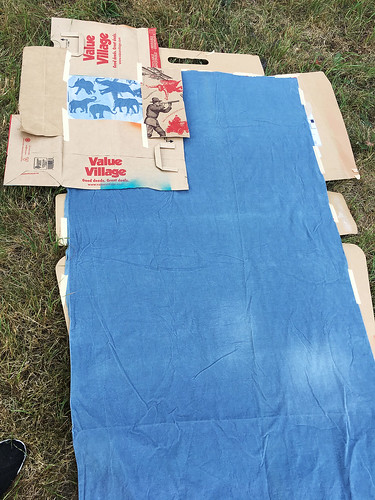
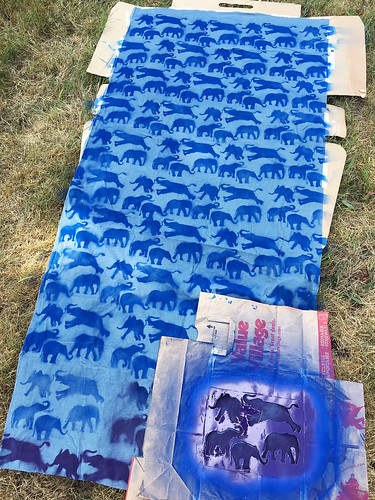
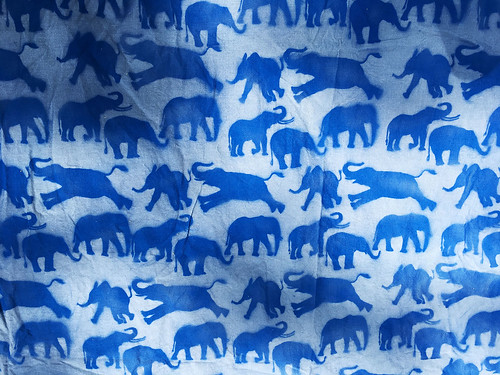
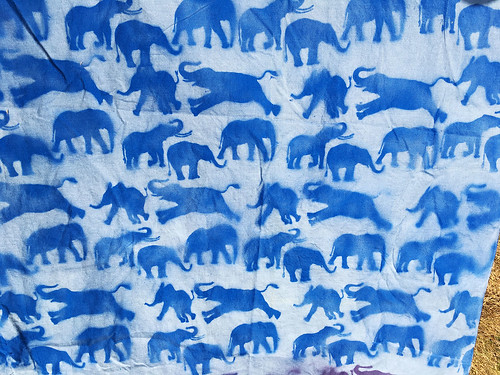
Pizzzzzza!

Around the end of 2021 or maybe the beginning of 2022 I think I saw a video or something on social media where someone made a pizza using a cast iron pan. I thought, hey I recently got a 12″ cast iron pan, I’ll get a pizza dough at Trader Joe’s and try it out. This was the first cast iron pizza I ever made, in January 2022; it was delicious:

an uncut pizza on a wood board with the toppings listed in the caption
mushrooms (sautéed in the pan first), sliced garlic (put on the pizza raw), two kinds of mozzarella, fake pepperoni (put on the pan in oil briefly hoping that would help it get crispier which I think worked), and olives on my half only, then fresh basil added at the end

Six months later, I was attempting to make my own dough, and we were having weekly homemade pizza nights almost every week! I spent nearly a year trying different dough recipes and variations, making tiny adjustments each time and writing everything down, with the goal of perfecting my dough recipe.

closeup of an uncut pizza with the toppings listed in the caption plus lots of cheese
shishito peppers, black olives, mushrooms, and a little pineapple

Around the spring of this year, I felt pretty good about it, and I created a little mini-zine recipe book so others can use it too! The printable, foldable zine is available for free download in my free payhip “shop” here (edit in 2025: I’m phasing out the old free shop, replacing it with a free Patreon, so you can find the zine here now!), but below are all the pages for you to read right here on the blog. Scroll to the bottom for some process photos too.

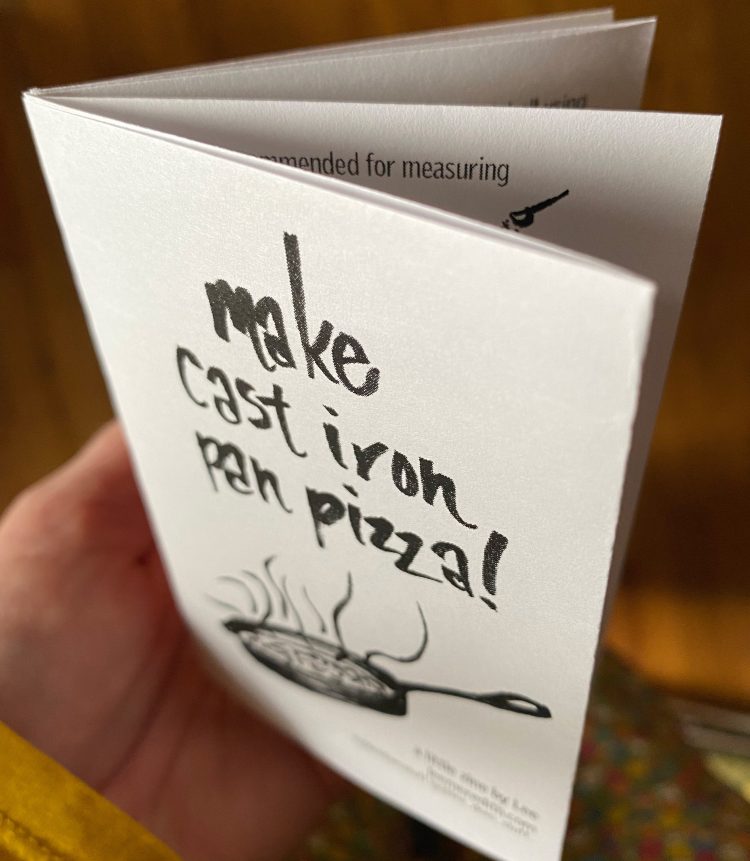
hand holding folded zine with cover saying "make cast iron pan pizza!" in handlettering, with a drawing of a pan with stream lines coming up from it
the printed & folded pizza-making zine
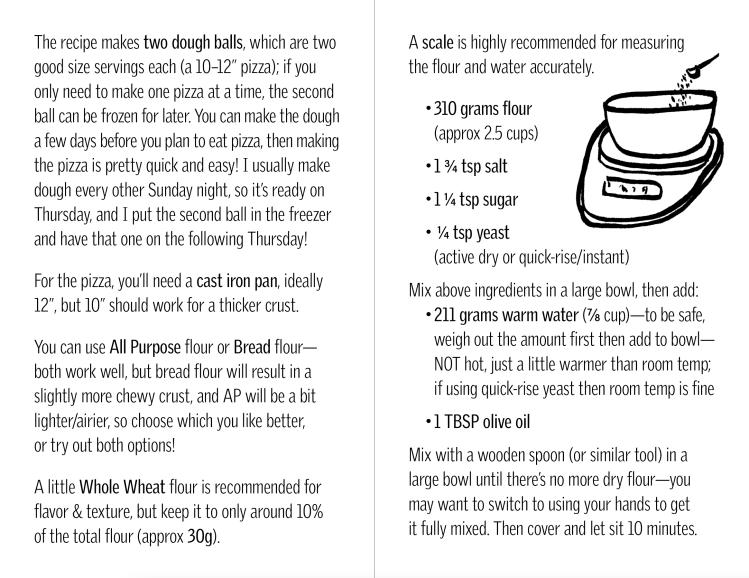
The recipe makes two dough balls, which are two good size servings each (a 10–12” pizza); if you only need to make one pizza at a time, the second ball can be frozen for later. You can make the dough a few days before you plan to eat pizza, then making the pizza is pretty quick and easy! I usually make dough every other Sunday night, so it’s ready on Thursday, and I put the second ball in the freezer and have that one on the following Thursday! For the pizza, you’ll need a cast iron pan, ideally 12”, but 10” should work for a thicker crust. You can use All Purpose flour or Bread flour—both work well, but bread flour will result in a slightly more chewy crust, and AP will be a bit lighter/airier, so choose which you like better, or try out both options! A little Whole Wheat flour is recommended for flavor & texture, but keep it to only around 10% of the total flour (approx 30g). A scale is highly recommended for measuring the flour and water accurately. 310 grams flour (approx 2.5 cups) 1 3/4 tsp salt 1 1/4 tsp sugar 1/4 tsp yeast (active dry or quick-rise/instant) Mix above ingredients in a large bowl, then add: 211 grams warm water (7/8 cup)—to be safe, weigh out the amount first then add to bowl—NOT hot, just a little warmer than room temp; if using quick-rise yeast then room temp is fine 1 TBSP olive oil Mix with a wooden spoon (or similar tool) in a large bowl until there’s no more dry flour—you may want to switch to using your hands to get it fully mixed. Then cover and let sit 10 minutes.
pages 1-2 of the pizza making zine, instructions for mixing your dough ingredients
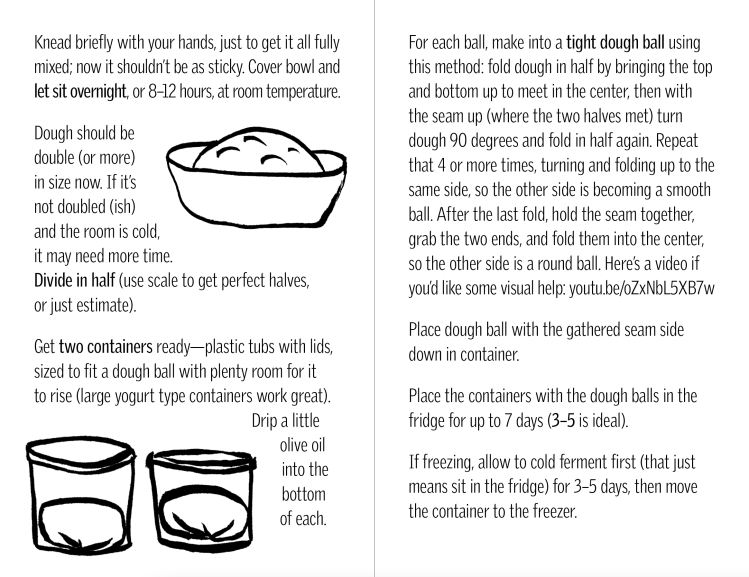
Knead briefly with your hands, just to get it all fully mixed; now it shouldn’t be as sticky. Cover bowl and let sit overnight, or 8–12 hours, at room temperature. Dough should be double (or more) in size now. If it’s not doubled (ish) and the room is cold, it may need more time. Divide in half (use scale to get perfect halves, or just estimate). Get two containers ready—plastic tubs with lids, sized to fit a dough ball with plenty room for it to rise (large yogurt type containers work great). Drip a little olive oil into the bottom of each. For each ball, make into a tight dough ball using this method: fold dough in half by bringing the top and bottom up to meet in the center, then with the seam up (where the two halves met) turn dough 90 degrees and fold in half again. Repeat that 4 or more times, turning and folding up to the same side, so the other side is becoming a smooth ball. After the last fold, hold the seam together, grab the two ends, and fold them into the center, so the other side is a round ball. Here’s a video if you’d like some visual help: youtu.be/oZxNbL5XB7w Place dough ball with the gathered seam side down in container. Place the containers with the dough balls in the fridge for up to 7 days (3–5 is ideal). If freezing, allow to cold ferment first (that just means sit in the fridge) for 3–5 days, then move the container to the freezer.
pages 3-4 of the pizza making zine, instructions for kneading, balling, and cold fermenting
On the day you’ll use the dough ball, take it out of the fridge about 2 hours before using (or 3–5 hours if it was frozen). Let sit in container on the counter for 30–60 minutes first, then put a little olive oil on work surface (like a large cutting board), place dough ball on it, and cover with a damp towel or upside-down large bowl. Let rest until ready to use. Move oven rack to highest position. Preheat oven to 550°F/290°C (or highest possible temp) and heat large cast iron pan on stove as follows. If cooking any toppings (meat, mushrooms, etc), heat pan to appropriate temp (medium or medium-high), add olive oil and cook. Then remove toppings and keep surface coated with a little oil. If not pre-cooking toppings, then heat pan to medium and coat with a little olive oil. Turn pan heat down to low or medium-low heat. Stretch dough to pan size by pushing out into pizza shape on work surface, focusing the pulling around the edges so the center doesn’t get too thin, then pick it up and stretch it more, tossing it back and forth in your hands and/or rotating it around until the size is approx the size of your pan. (There are lots of videos on youtube for visual help!) Place dough into hot pan—this it tricky and you’ll probably need to adjust in the pan. It’s fine if it’s not perfect! If any holes rip, cover with dough. Sprinkle a little salt onto dough then add sauce, cheese, and toppings. No rush adding stuff—during this time, the bottom is pre-cooking a bit, to help get a crispy bottom, so it’s good for it to take several minutes.
pages 5-6 of the pizza making zine, instructions for using the dough
Once pizza is topped and oven is preheated, bake for 7–10 minutes on top rack, then turn oven to broiler setting for 1–2 more minutes (try 1 minute first—some ovens will burn if you give it longer than a minute!). Your times may need adjusting to achieve pizza perfection. Take out of oven and top with anything that didn’t need to be cooked (fresh basil, parmesan, etc). Let sit for a minute, then transfer from the pan to a cutting board by grabbing the pizza with tongs and sliding it onto the board. Let rest for another minute then cut and enjoy!
last page of pizza zine, instructions for baking pizza

The zine includes brief cooking instructions, but I’ll also point to you to this Bon Appétit video which is basically the method I use, first using the cast-iron pan to cook toppings (like mushrooms, peppers, and fake meat), to pre-heat the pan and get it coated with flavored olive oil, before using it for the pizza. Another very helpful youtube video is this one that’s mentioned in the zine, for balling your dough.

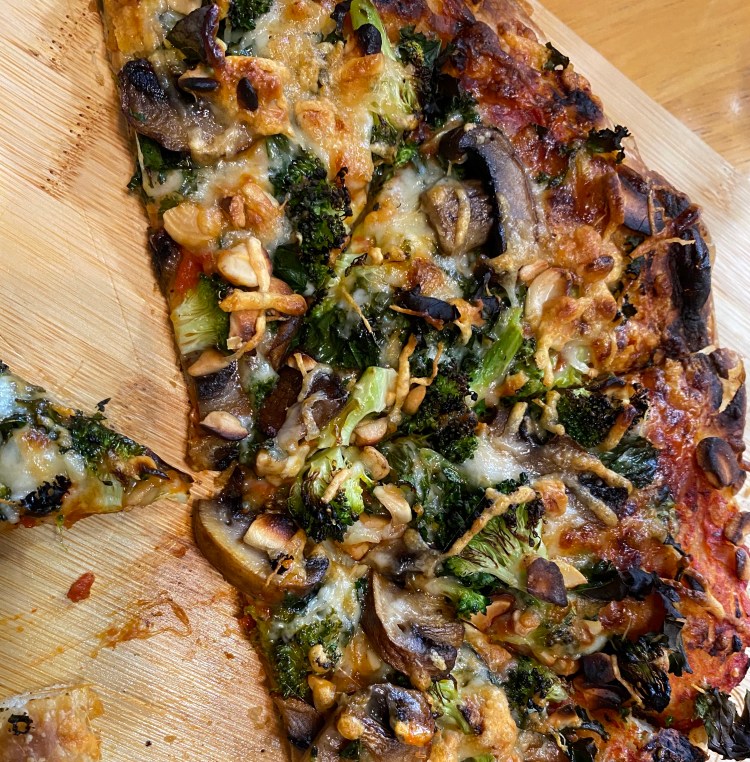
a cut pizza on a wood board with the toppings listed in the caption plus lots of cheese
mushrooms, broccoli, cashews, and red sauce

Of course there are lots of great reasons to make your own delicious pizza at home (save money, don’t have to leave the house, pizza night is fun and a great way to end the work week, you can make choices based on allergies/sensitivities/limitations/healthfulness) but my personal favorite reason is toppings!

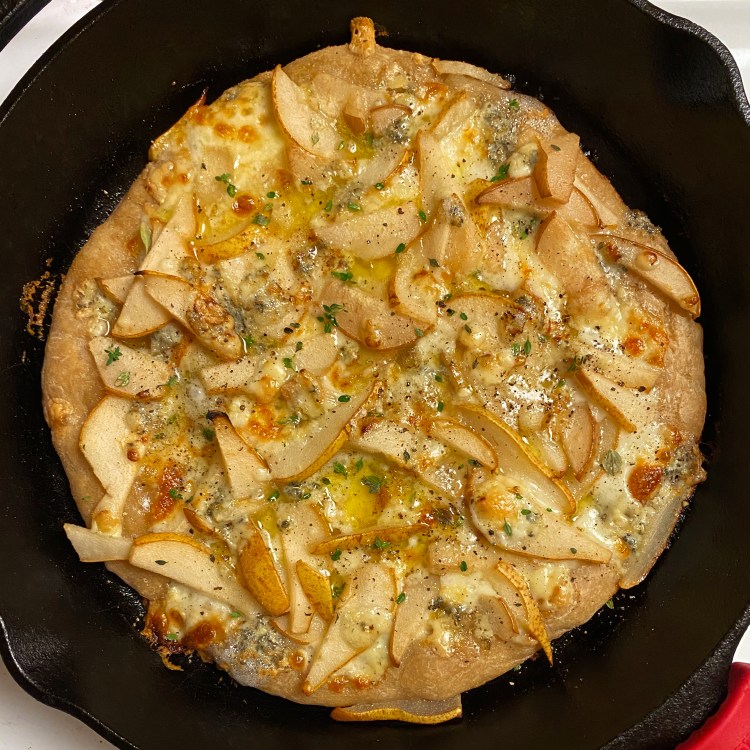
an uncut pizza in a black cast iron pan with the toppings listed in the caption
pear and gorgonzola with olive oil, mozzarella, and fresh lemon thyme sprinkled on top after baking

I love experimenting with different topping combinations, using ingredients from my garden when possible (or my friend’s feral orchard or local farms, etc), and using things like fake meats that are uncommon at restaurants.

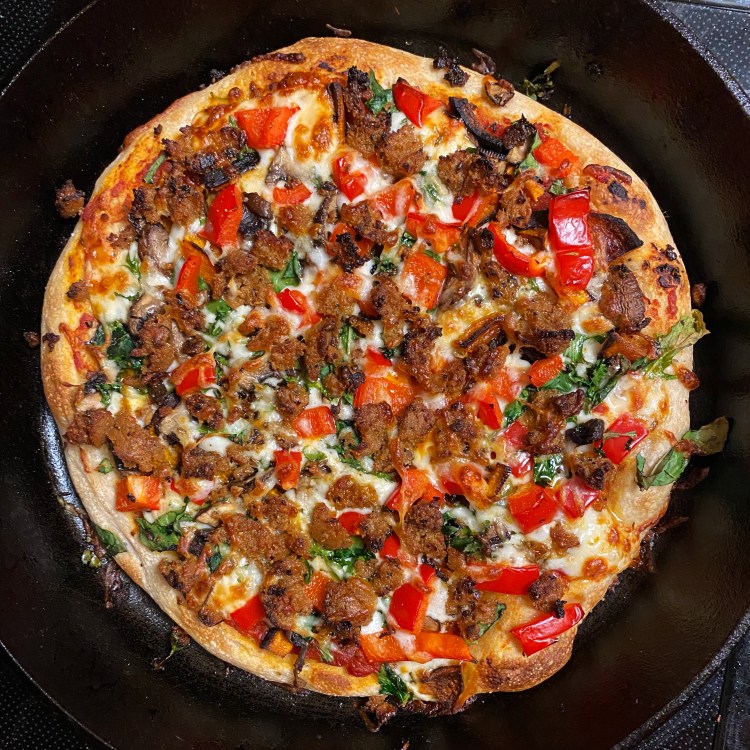
an uncut pizza in a black cast iron pan with the toppings listed in the caption plus lots of cheese
crumbled up Field Roast fake Italian sausage (to make it more like classic pizza sausage), red bell peppers, mushrooms, a little roasted squash from the freezer stash, and a little kale, with homemade pomodoro sauce I made and froze

This blog post features a huge assortment of successful pizzas from the last 2-ish years. I do occasionally make not-so-successful pies, like the time I tried to make a taco pizza by using salsa as the sauce. That one wasn’t good, mostly texturally, but the taco pizza using queso as the sauce was VERY good!

three pizza slices on a plate with toppings listed in caption
leftover homemade gochujang queso as the sauce, potatoes, fake chorizo, peppers, a little salsa, cherry tomatoes, and fresh cilantro added after baking

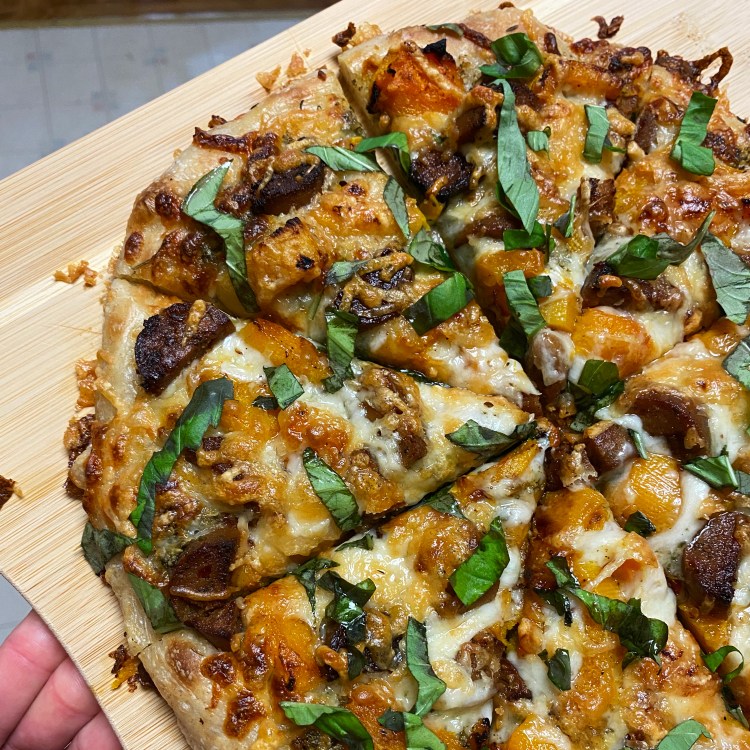
One of my absolute most favorite topping combos I’ve discovered is some kind of roasted winter squash + some kind of fake sausage (or bacon works too), and it works great with pesto as the sauce, or olive oil & garlic, or red sauce. Fresh basil and good quality parmesan makes is extra amazing.

a cut pizza on a wood board with the toppings listed in the caption plus lots of cheese
roasted butternut squash, fake sausage, carrot top pesto as the sauce, and fresh basil added after baking—one of my all time favorites!

So, all the photos have the toppings listed in their captions. Some of the pizzas are older so the crust may be from a store-bought dough or a different dough recipe. Every topping combination I’m posting here is one that I liked and would recommend copying, even the ones that seem weird!

closeup of a cut pizza with the toppings listed in the caption plus lots of cheese
broccoli, cashews, pomodoro sauce, and I threw on the carrots that simmered in the sauce as well as the parmesan rind cut into small bits, which was a real winning ingredient!

And hey, if you do eat meat, you might want to consider trying out fake meat on your pizza — when it’s combined with all the other elements, especially if it’s not really the star of the pizza but just an extra bonus flavor, you probably won’t even know it’s fake. I fed my midwest-raised meat-loving parents a fake sausage & squash pizza and they claimed to love it! Field Roast makes great sausages, in the refrigerated section of most grocery stores; unfortunately they’ve gotten more pricey lately (as so many things have) but 4 big sausages are plenty for 4 pizzas so it’s not toooo bad, and the cut, cooked sausage freezes well for future pizzas.

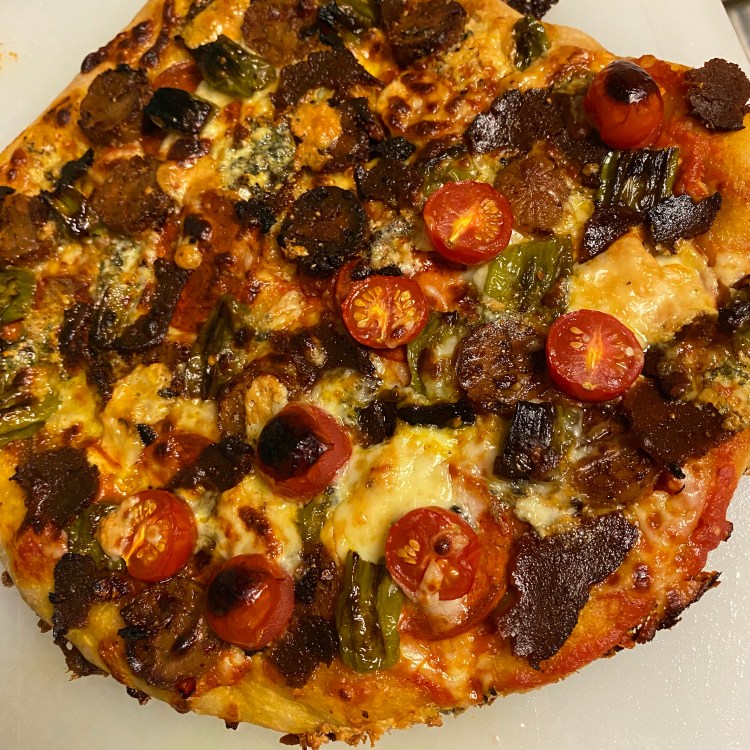
closeup of an uncut pizza with the toppings listed in the caption
fake bacon, pepperoni, and sausage, shishito peppers, tomatoes on my half only, mozzarella, Gorgonzola, and (jarred) vodka sauce

Oh that reminds me of another thing. First, the recipe makes 2 pizzas worth of dough, and it freezes well, so I always make a batch and one gets used that week, and the second gets frozen for the next week (or whenever). And I use the freezer for toppings a lot too! I’ll usually cook double or triple the sausage I need for a pizza, and the rest goes in the freezer; I’ll often do that with mushrooms, peppers, squash, and other things. That way, on a night when I have less time, all I need to do is take the toppings (and dough, if it’s frozen) out of the freezer awhile before pizza-making time, and everything is ready to go!

three pizza slices on a plate with toppings listed in caption plus lots of cheese
fake sausage, summer squash from the freezer from when I cooked up extra when it was in season and froze a couple of pizza’s worth, and a jalapeño

Okay I’m just going to post a bunch more pizzas with different toppings now… keep scrolling for more instructional content at the bottom…

three pizza slices on a plate with toppings listed in caption plus lots of cheese
roasted rutabagas, turnips, black radishes, kohlrabi, carrots, and broccoli stem
three pizza slices on a plate with toppings listed in caption
pear and gorgonzola with olive oil, mozzarella, and fresh lemon thyme sprinkled on top after baking
an uncut pizza in a black cast iron pan with the toppings listed in the caption plus lots of cheese
whole shishito peppers, cubed summer squash, mushrooms, and fresh basil added after baking
three pizza slices on a plate with toppings listed in caption plus lots of cheese
roasted little carrots, turnips & radishes, dandelion pesto, plus two kinds of basil, green onion, and lemon thyme, ALL from my garden
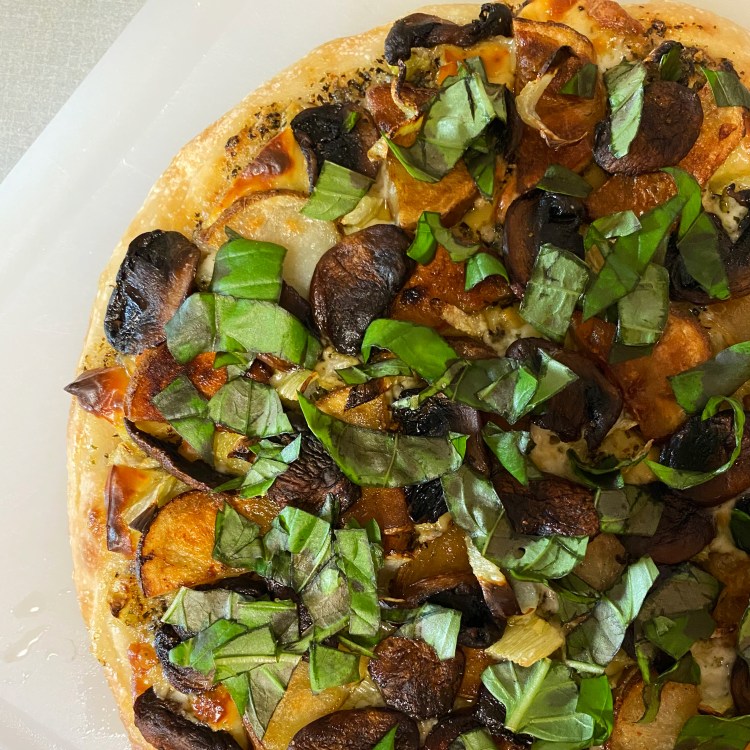
closeup of an uncut pizza with the toppings listed in the caption
potatoes, mushrooms, fennel, pesto, smoked Gouda, and basil added at the end
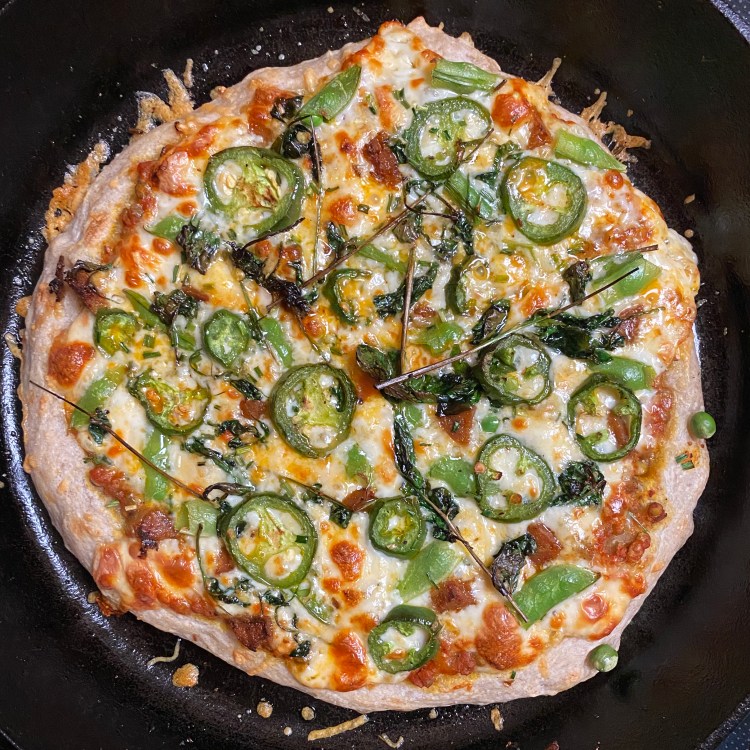
an uncut pizza in a black cast iron pan with the toppings listed in the caption plus lots of cheese
sauce with lentils added (imitates a meat sauce), fake sausage, jalapeños, snap peas, and sautéed pea shoots from the garden, plus some young leeks that I accidentally pulled out so I used them like chives
an uncut pizza on a white cutting board with the toppings listed in the caption plus lots of cheese
homemade red sauce with canned lentils mixed in to make a fake meat sauce, topped with mushrooms, jalapenos, and kale
three pizza slices on a plate with toppings listed in caption
roasted potatoes, olive oil, fresh dill & garlic, and three cheeses (mozzarella, white cheddar, sharp cheddar), drizzled after baking with some homemade ranch — this one was REALLY good
closeup of an uncut pizza with the toppings listed in the caption plus lots of cheese
coconut flake fake bacon and winter squash
closeup of an uncut pizza with the toppings listed in the caption plus lots of cheese
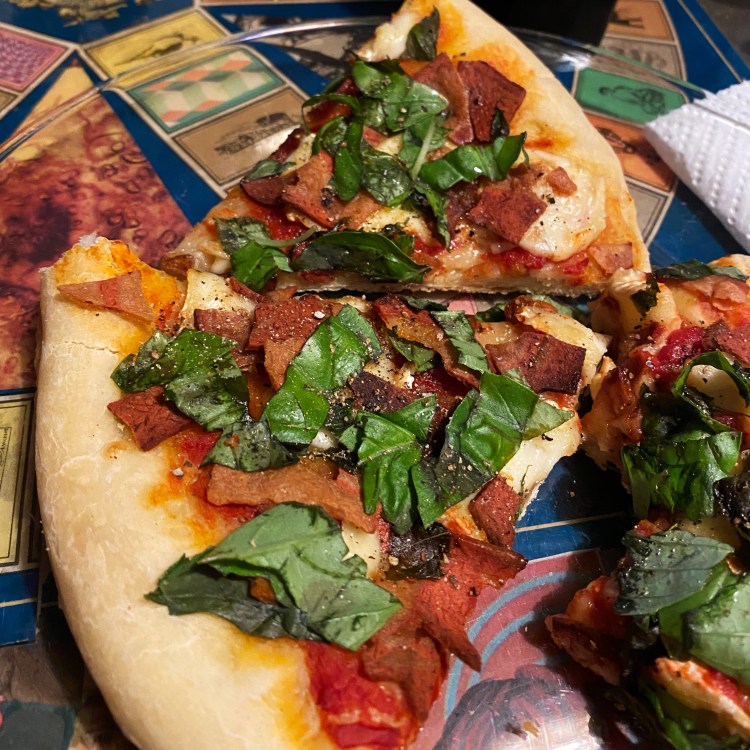
kale chips, sautéed garlic, fake pepperoni, Calabrian chilis, ricotta, and parmesan
an uncut pizza in a black cast iron pan with the toppings listed in the caption plus lots of cheese
buffalo “chicken” made with soy curls, cauliflower, and ranch added after baking
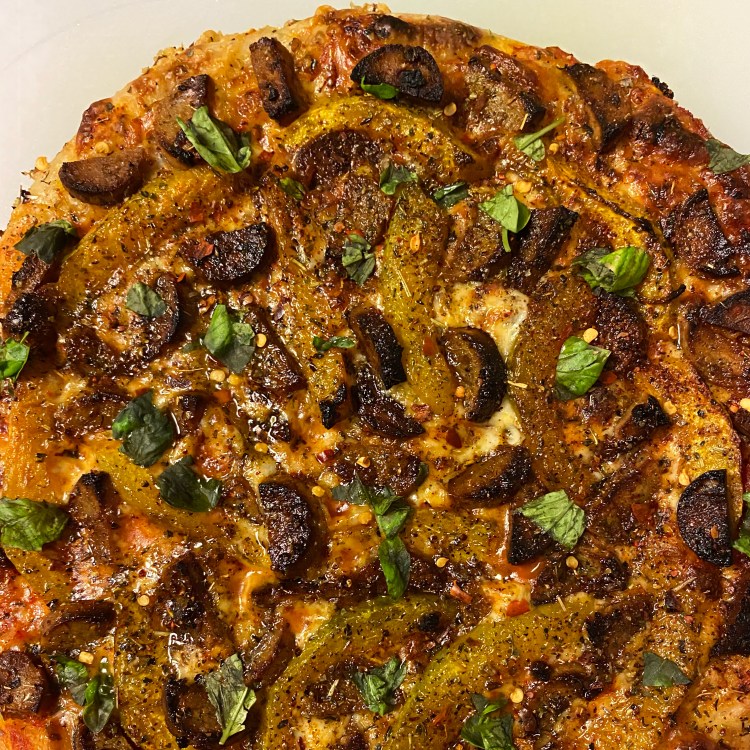
closeup of an uncut pizza with the toppings listed in the caption plus lots of cheese
kabocha squash and fake sausage with some fresh basil added after baking
three pizza slices on a plate with toppings listed in caption plus lots of cheese
peanut sauce, “chicken” (soy curls), carrots, a little broccoli stem, peanuts, and cilantro added after baking
an uncut pizza in a black cast iron pan with the toppings listed in the caption plus lots of cheese
fennel, peppers, and garlic from my farm share, plus fake sausage and (jarred) vodka sauce
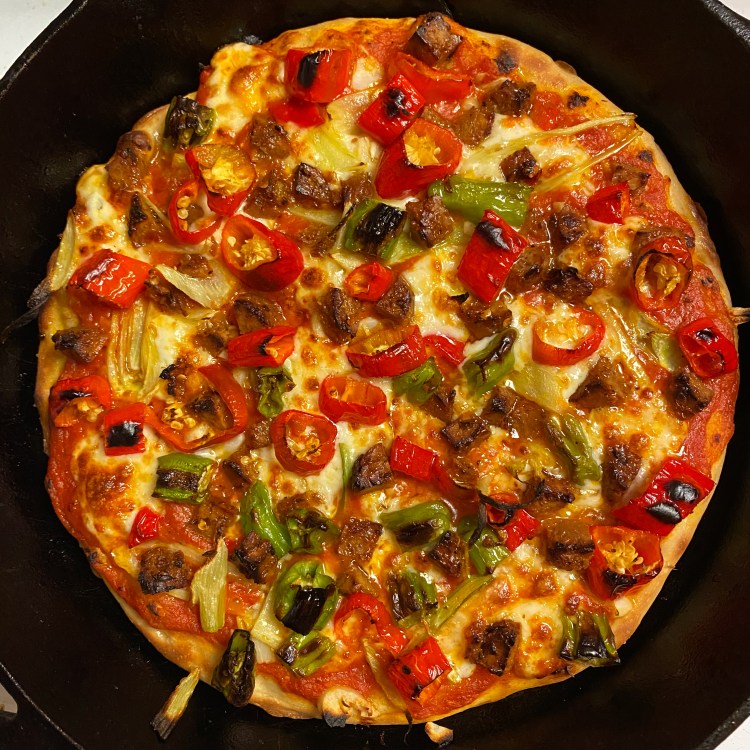
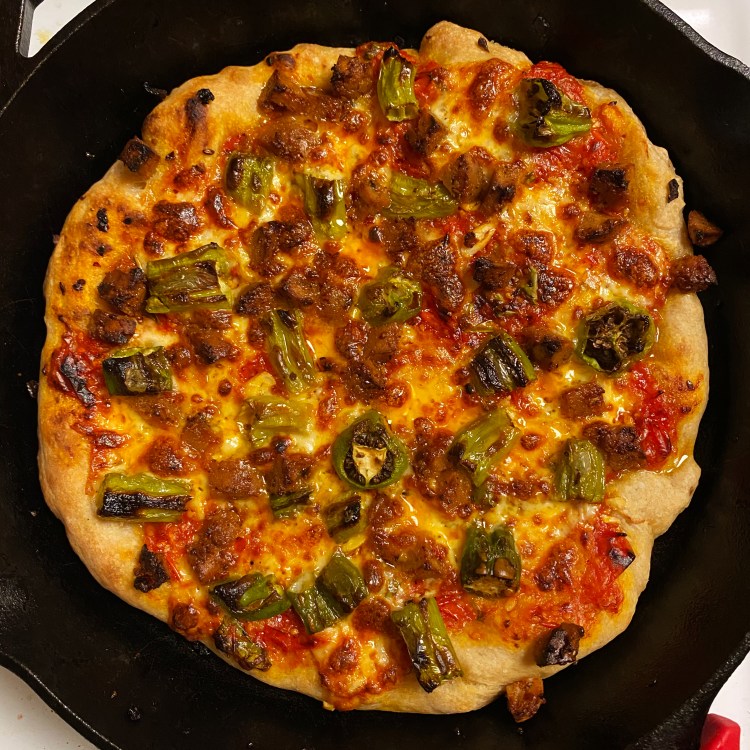
an uncut pizza in a black cast iron pan with the toppings listed in the caption plus lots of cheese
shishito peppers and fake sausage with sauce that I made from cherry tomatoes from my garden
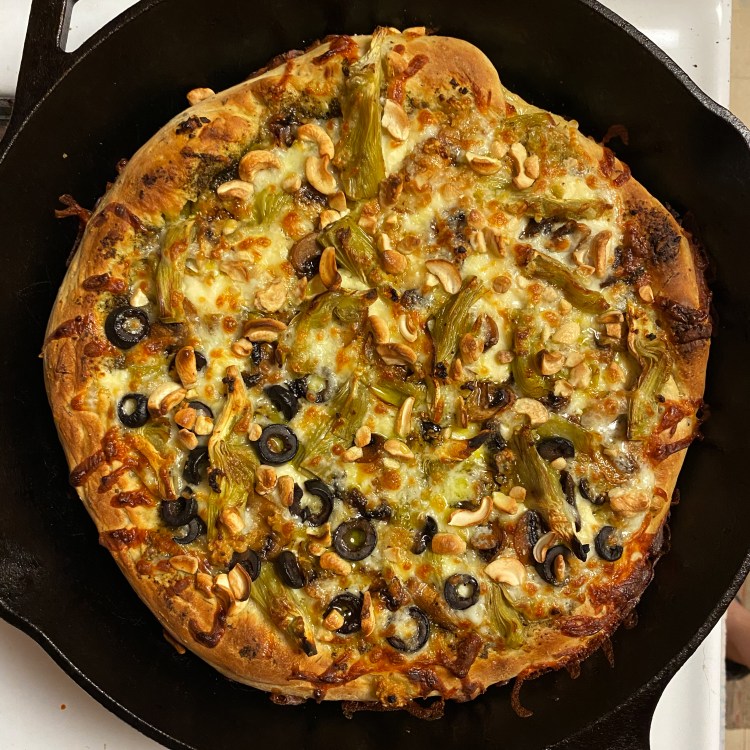
an uncut pizza in a black cast iron pan with the toppings listed in the caption plus lots of cheese
pesto, mushrooms, artichoke hearts, cashews, ricotta, and olives on my half only
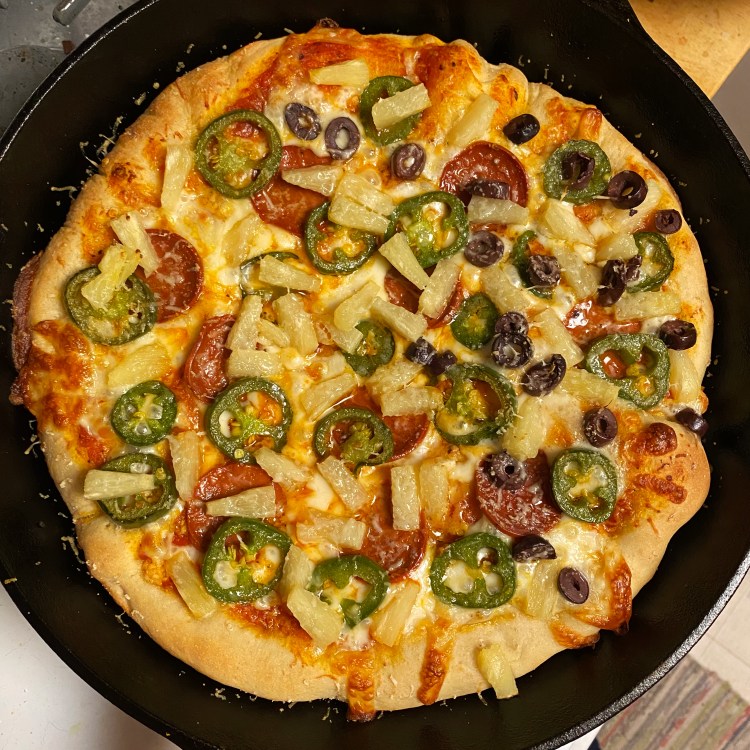
an uncut pizza in a black cast iron pan with the toppings listed in the caption plus lots of cheese
fake pepperoni, pineapple, jalapenos, and black olives on half, with red sauce
three pizza slices on a plate with toppings listed in caption
(fake) bacon, Brie, and basil, inspired by Waffle Window’s “Triple B” (note: this combo makes an awesome sandwich too!)
closeup of an uncut pizza with the toppings listed in the caption
(frozen) mac & cheese, peas, spinach, garlic, tomato, and fake bacon

This one was made with fancy birthday-present ingredients from one of our favorite local pizza spots!!

an uncut pizza in a black cast iron pan with the toppings listed in the caption plus lots of cheese, and part of the lid of the Scottie's sauce container
beech mushrooms, fake sausage, and garlic, using fancy dough and sauce from Scottie’s Pizza Parlor

And here’s a calzone made with my dough, not nearly as photogenic as pizza but a fun variation and also delicious!

an uncut calzone on a glass plate
calzone with kale and radicchio sauteed with garlic, plus fake meat, pesto, and cheese — not so pretty but delicious!

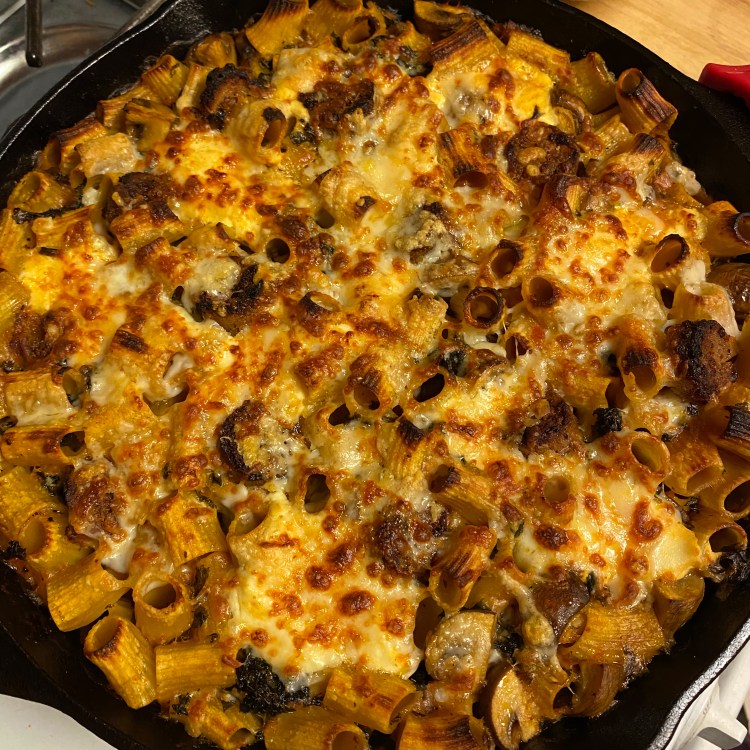
As a bonus, below is a cast iron pan baked pasta — I used the method in this video to toast the dry pasta, cook everything as one-pan pasta in the cast-iron pan, then bake the whole thing in the pan, works so well! This one has mushrooms and fake sausage, and I think some kale or other green thing; I’ve also made this with that winter squash + sausage combo, which works just as well with pasta as it does with pizza, unsurprisingly. Sooo good!

baked rigatoni pasta covered in bubbly baked cheese, in a cast iron pan
baked rigatoni with mushrooms and fake sausage, covered in baked cheese

And now, some pizza-making process photos (and a “what not to do” example)…

bowl with flour, on scale reading 310g, with bread flour and whole wheat flour (both King Arthur brand) on the counter
measuring out the flour on a scale
bowl with dense dough ball inside
after kneading and forming ball, ready to sit at room temperature for 8-12 hours
bubbly big dough in the same bowl
dough after sitting 8-12 hours
two tight dough balls sitting at the bottoms of plastic yogurt containers
dough divided into two balls, each balled tightly and sitting at the bottom of a plastic yogurt container, with lots of empty space above
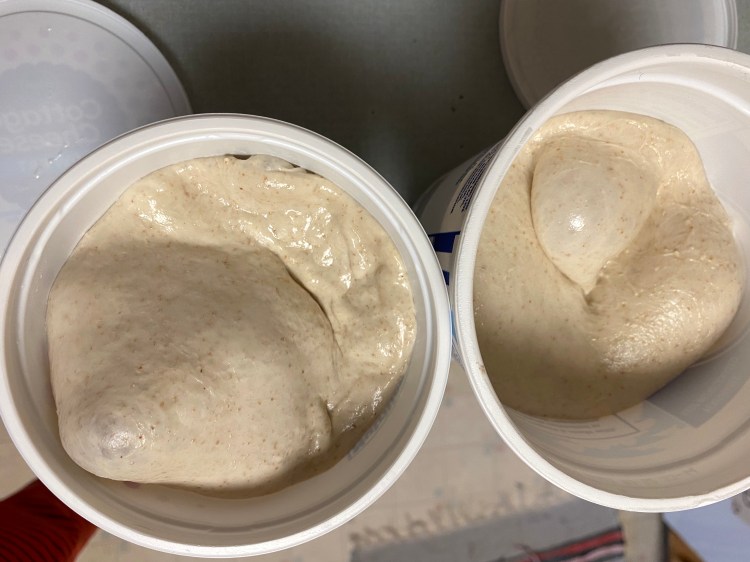
2 containers of bubbling dough up near the tops of the plastic yogurt containers
dough balls after sitting in the fridge for a day or two

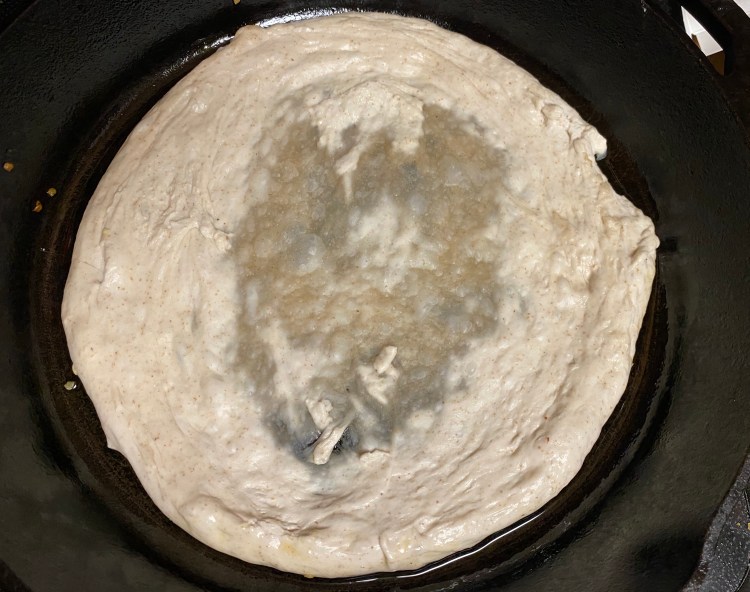
The zine instructs you to let the dough sit out at least a couple of hours before making your pizza. Sometimes when I’m using a frozen dough ball, I’ll take it out of the freezer several hours early, and leave it sitting on the counter in the container, then forget to move it from the container to the cutting board an hour or so before using… a couple nights ago I did this, I moved it from the container to the board basically when I wanted to use it. I let it sit for only about 10 minutes instead of an hour+. The result is that the dough has a hard time stretching to pizza size; it rips in the middle, and it just won’t stretch to full size. I took bits of dough from the edges to patch the holes, and we just had a small pizza. The crust also doesn’t rise as much. So don’t be like me, let your dough rest before using!!

pizza dough stretched in cast iron pan, with some rips patched up by torn off pieces of dough
dough stretched badly in the pan with some patched-up rips, a cautionary image

The pizza was still delicious, just not quite as delicious as it would’ve been if I’d followed my own instructions!

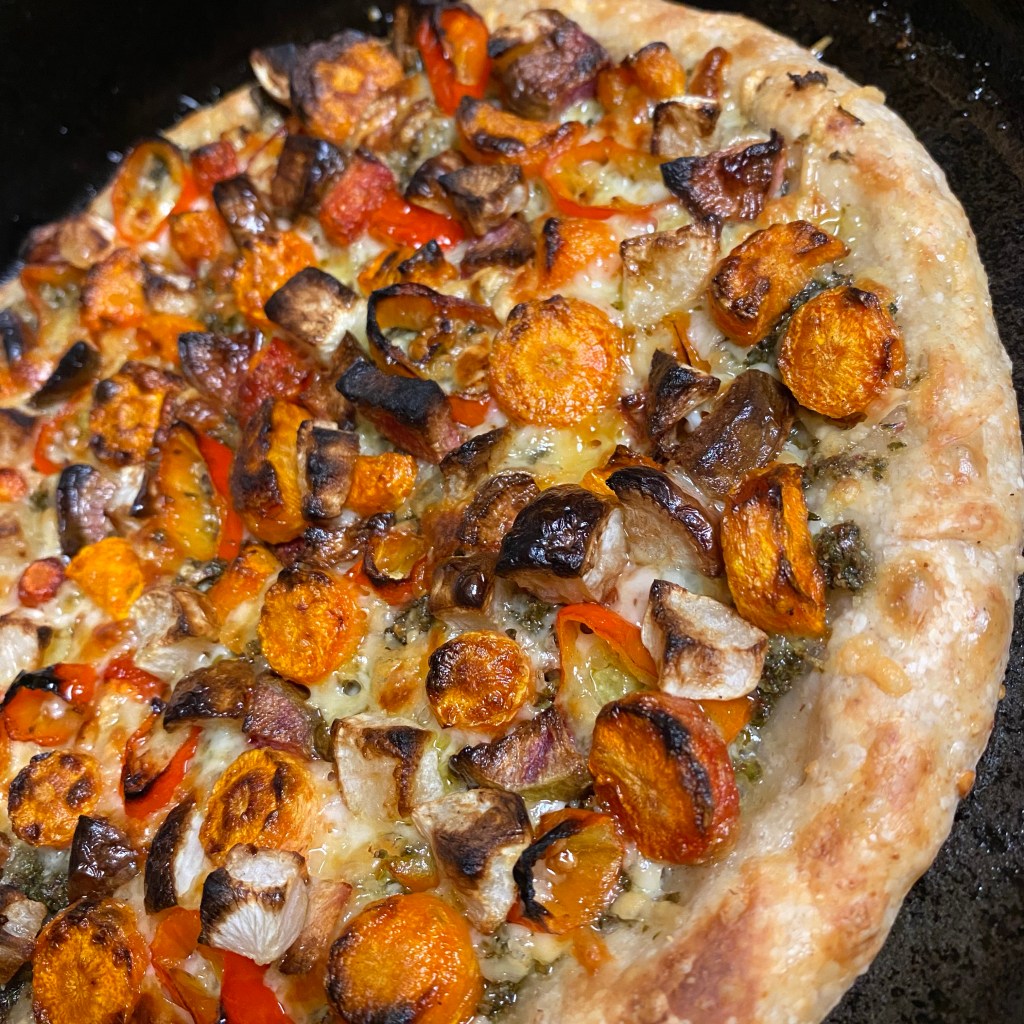
an uncut pizza in a black cast iron pan with the toppings listed in the caption
roasted carrots, turnips, and watermelon radish, peppers, and pesto as the sauce

If you like seeing my toppings, I usually post my pizzas in my instagram stories, and there’s a pizza story highlight on my page. I’d LOVE to see your pizzas, so it would be awesome if you wanted to tag me on instagram, or comment here. Always up for new topping ideas too!! Happy pizza making & eating!

Blogs are back, right?

I have no idea, but I miss mine, so I’m bringing it back. New name (sort of) & domain for the new decade, but the old posts are all still in the archive and searchable, all the way back to 2007. When I started the blog back then, it was meant to accompany my printed zine, do stuff!, and then it evolved into a place to talk about my knitting patterns, and sometimes review books and stuff… and then when I switched careers I wanted it to kind of keep going as what it used to be (just posting stuff I do, basically) but that just kinda never happened.

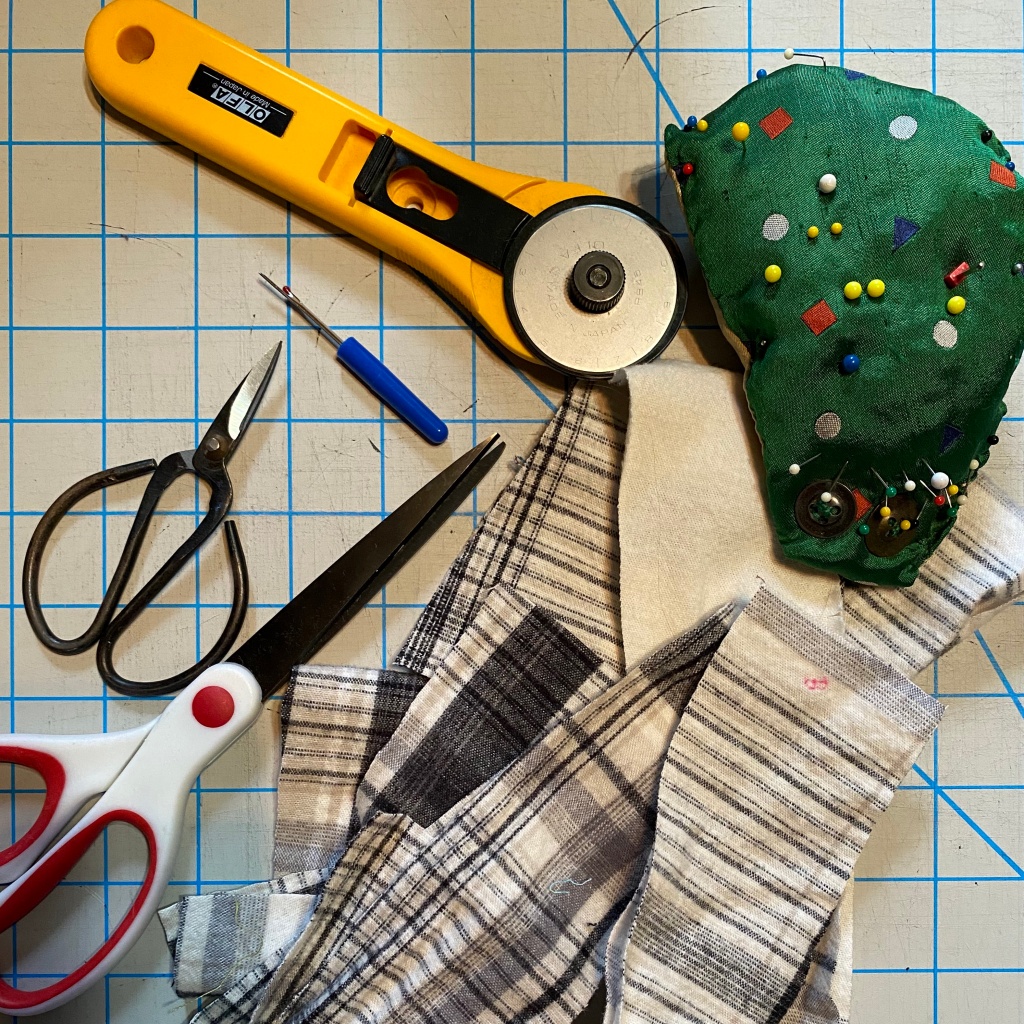
top-down photo of a cutting mat with some flannel fabric strips, 2 pairs of scissors, a seam ripper, a rotary cutter, and a pin cushion

Around the beginning of this year, I started thinking about it again, wanting to use it again, but different. I’d started dropping the old leethal name sometime last year, switching to LeeDoesStuff (or some variation of that) on social media, and making my knitting pattern store just Knitting Patterns by Lee Meredith instead of leethal knits. So I didn’t want to start blogging on the old “leethal blog” again… I considered maybe starting a substack, but dropped that quickly once I started looking into it… I bought the domain leedoesstuff.com, and then transferred the old blog to the new domain and spent months redesigning it, only to have my server glitch out so badly that I can’t use them anymore. So in the end I wound up signing up for a wordpress.com paid blog, with the new domain, and redesigning it again, and I actually like the new new redesign better than the first redesign anyway, so yay for that. I kept it extremely similar to the old blog, with the very simple one-column style, but now searchability is good, and there’s the new header/footer and archive page, stuff like that. I’m letting my old leethal.net and leethalknits.com domains die and leaving my old server behind. So I now have my leemeredith.com website, which links to everything and includes my graphic design portfolio website, hosted by carrd, my knitting pattern website on payhip, and now this blog on wordpress, with my only two domains (that I’m keeping) being leemeredith.com and leedoesstuff.com. A little online decluttering!

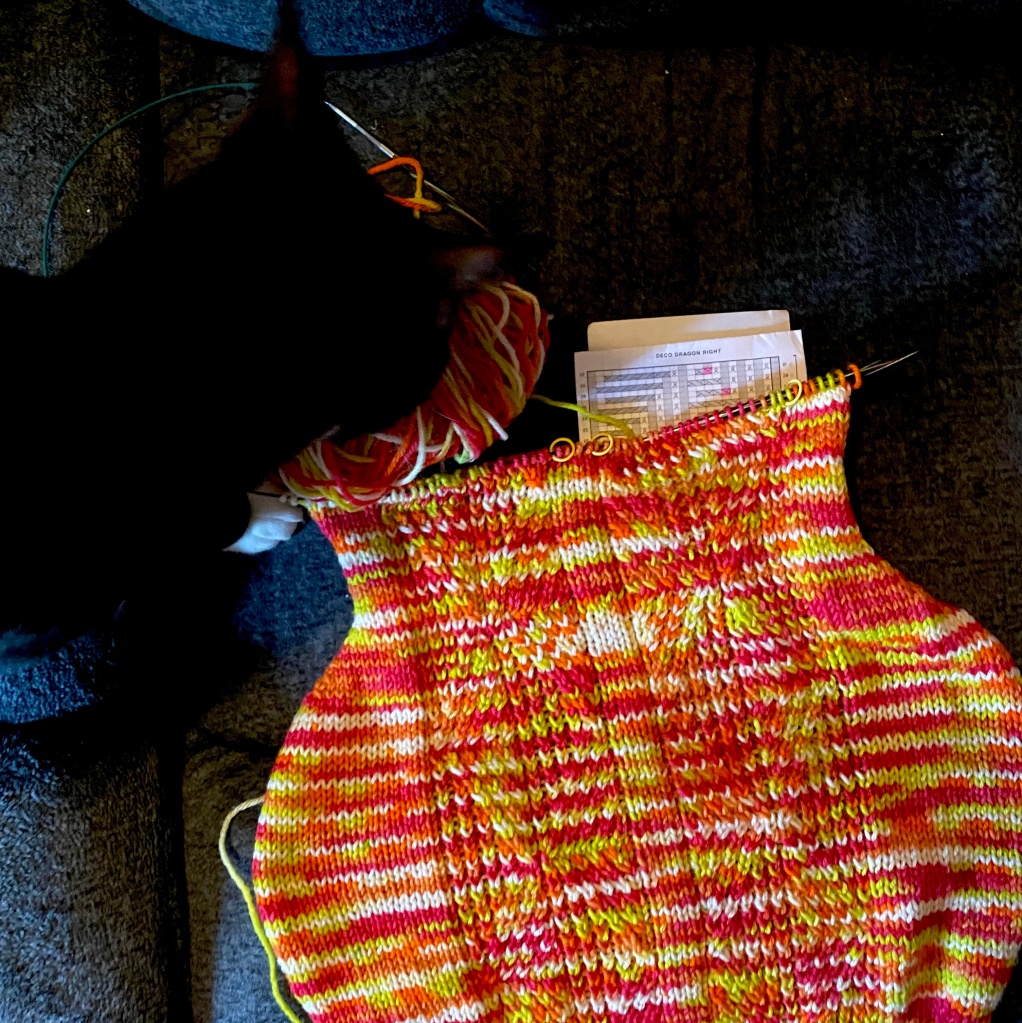
an in-progress knit in orange, pink, white, and green, and a cat sniffing the yarn

So, what’s this gonna be now? I’m not totally sure, but the reason I’m reviving it is I sometimes hate how fleeting social media is with certain things; I wanted somewhere more permanent to share some stuff. For example, I made a couple of music playlists in 2021-22 that I put SO MUCH time and thought into, and then for each one, I posted them on twitter and instagram, and if people saw them cool, and if not, they were basically gone in a day. So I plan to put those up as blog posts soon now. And other stuff like that, that I want to exist as more than a twitter thread, or whatever.

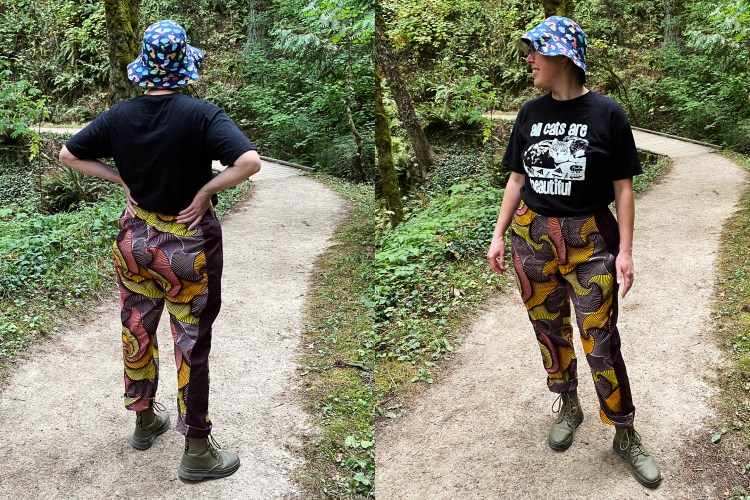
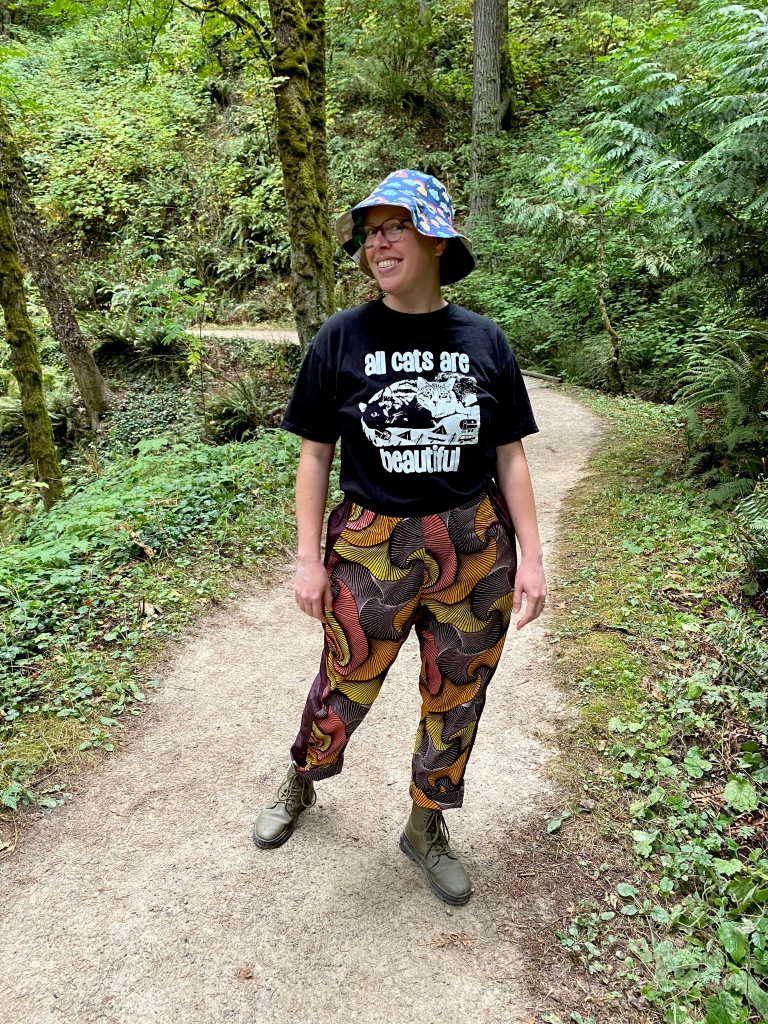
Lee wearing colorful pants, a tee that says All Cats Are Beautiful, and a bucket hat, on a trail in the forest

For this “oh hai I’m back” post I thought about what to post, or what to show, what photos to include, and since it’s been so damn long since I’ve been here, it’s kinda overwhelming. So I decided, let’s stick with today, basically. I started this Sunday morning with a hike in Forest Park, where I wore some pants I recently(ish) sewed, as well as a new bucket hat. We snapped a few photos of those, which I’ll post on instagram at some point, where I still attempt to post every single thing I sew (eventually).

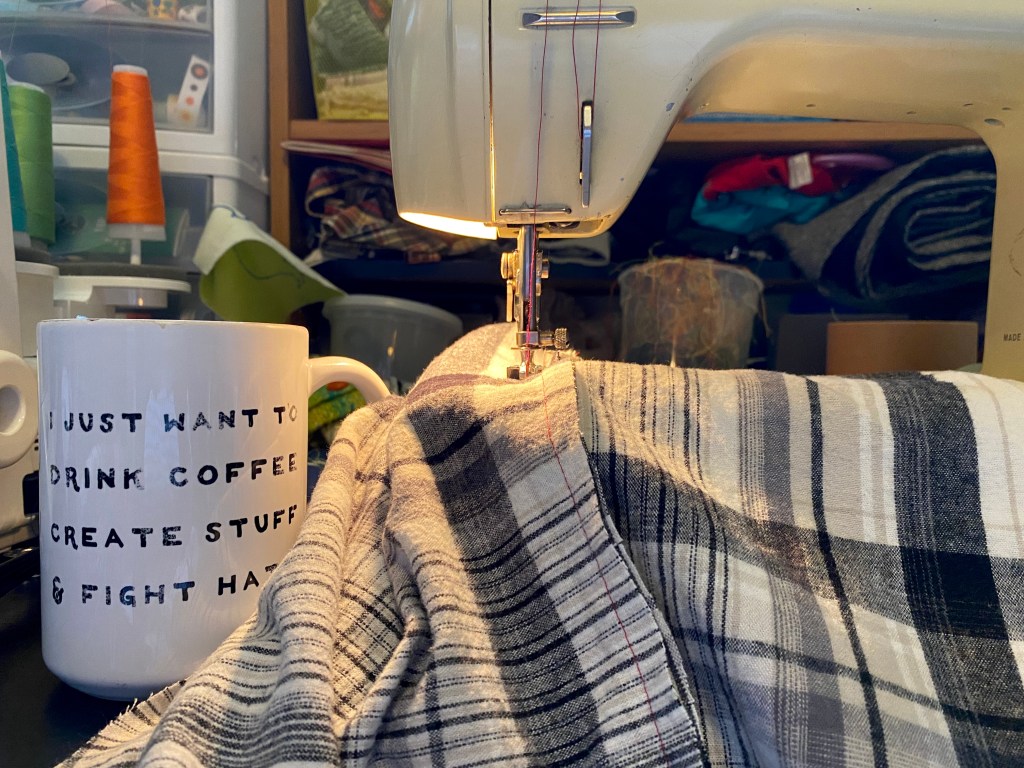
a vintage sewing machine with flannel fabric going through it, and a mug sitting next to it that says "I just want to drink coffee, create stuff & fight hate"

I’m working on sewing some new flannel pants. The fall weather kicked in this weekend and I’m wanting to wear flannel pants at home every day now. I’m using the Luna Pants pattern and a couple of thrifted flannel sheets to make two pairs.

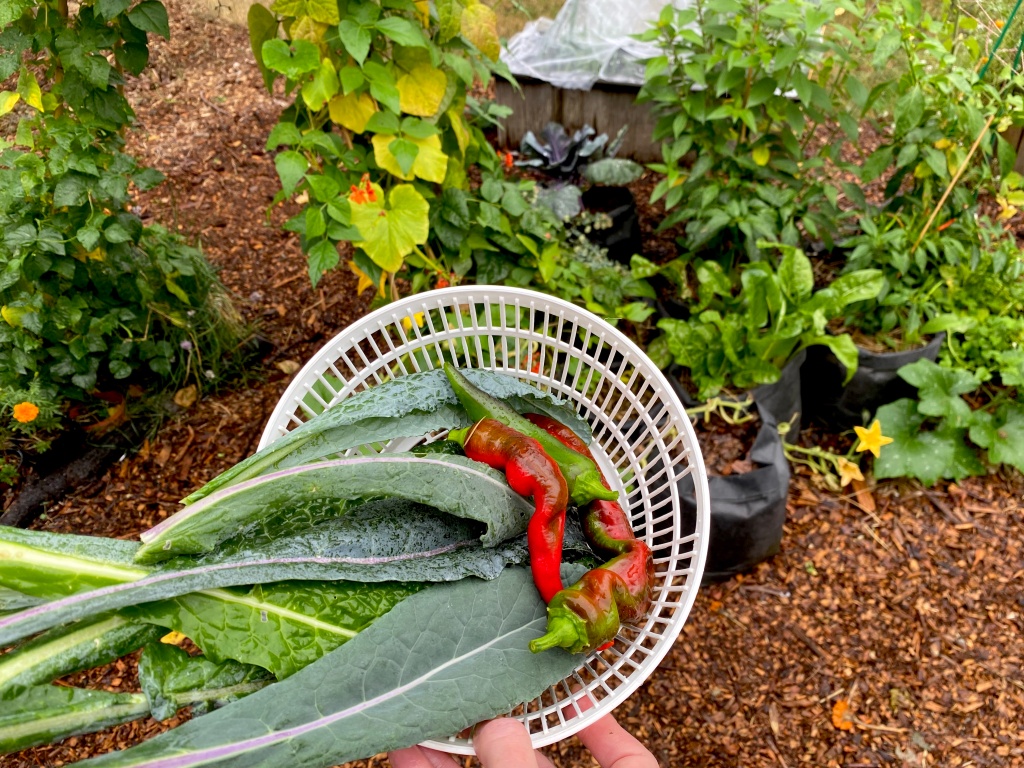
kale and peppers in a bowl being held in a garden with plants and woodchips below

In a short while, I’ll be cooking dinner, which will be like a pasta e fagioli hack with soy chorizo, plus lots of peppers, tomatoes, and kale from my backyard garden. It’ll be kind of a mashup of the Pasta Fazool recipe from the Rancho Gordo beans cookbook and this Off-Script with Sohla Any Green, Any Bean, Any Pasta video/post.

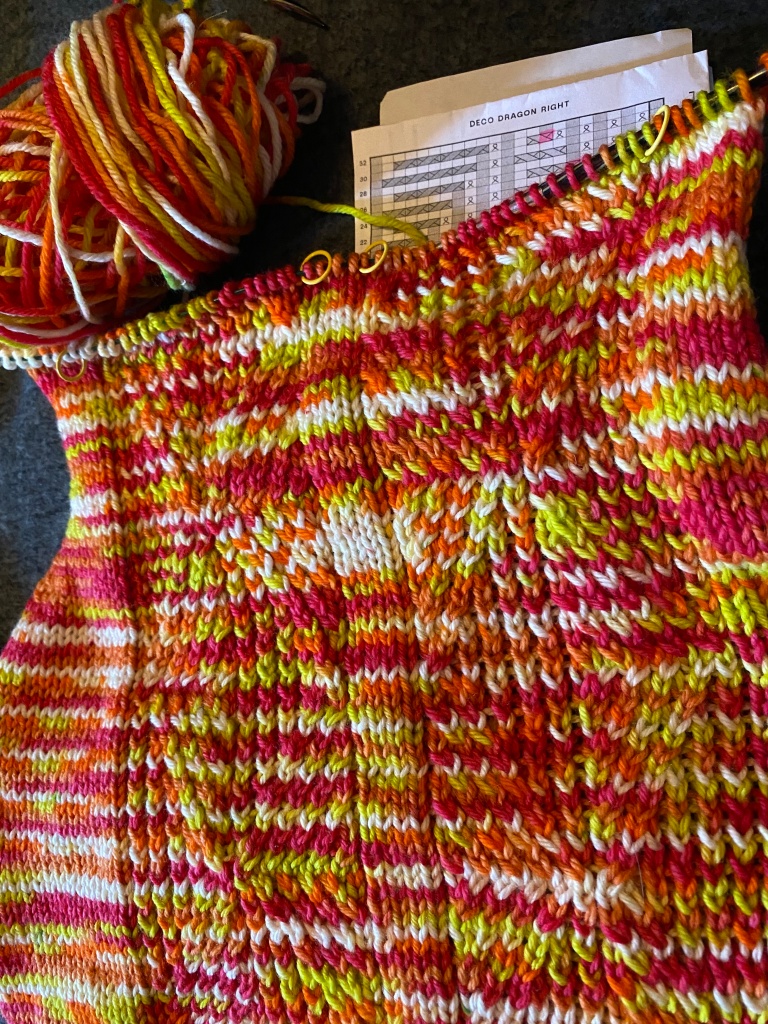
an in-progress knit in orange, pink, white, and green, with a textured twisted stitch pattern

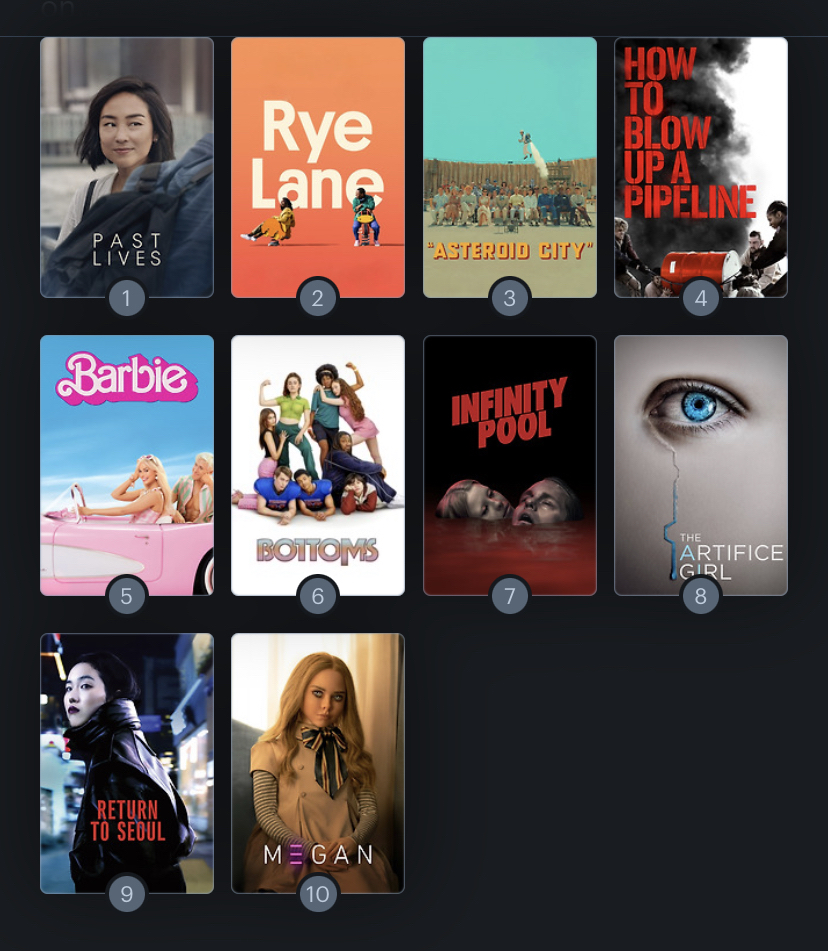
Later tonight, I plan to watch a movie while knitting on my current cardigan project. I’ve been watching a lot of 2023 movies lately so yesterday I started putting together my work-in-progress faves of the year list (on Letterboxd) which I’ll keep adjusting as the year goes on of course. I’ve always been into movies but I’ve been more obsessively into movies since the end of last year, so I’ll for sure be putting some top lists here in the blog at some point.

Letterboxd screenshot of 10 movie thumbnails, from 1 to 10: Past Lives, Rye Lane, Asteroid City, How to Blow Up a Pipeline, Barbie, Bottoms, Infinity Pool, The Artifice Girl, Return to Seoul, M3gan

I thought what I’m up to today was a good little glimpse at the stuff I might talk about here on the blog… cooking, gardening, sewing, knitting, movies… I’ll be trying to keep things useful, like recipes you can try, patterns that I liked using, playlists you can check out, etc. This’ll be a place for things that I want to give a bit more long-lasting life to than the insta grid, so hopefully it’ll be posts worth checking out.

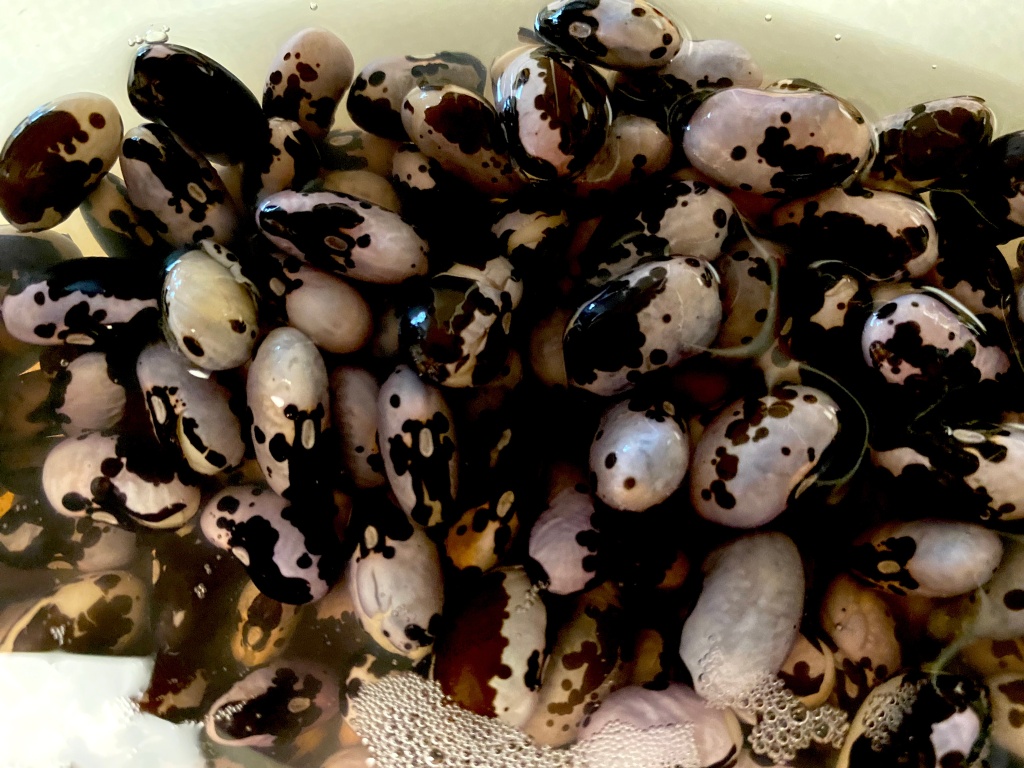
black and white beans soaking in water

If you got this in your email inbox, it’s because you’re still subscribed to my old leethal knits mailing list. I set up the new blog to go out as emails for anyone who wants that. If you already got it and you want to keep getting it, do nothing; if you want to stop getting it, there should be an unsubscribe link at the bottom of the email. If you’re reading this on the blog site and you want posts in your email inbox in the future, there’s a subscribe link at the bottom of the blog.

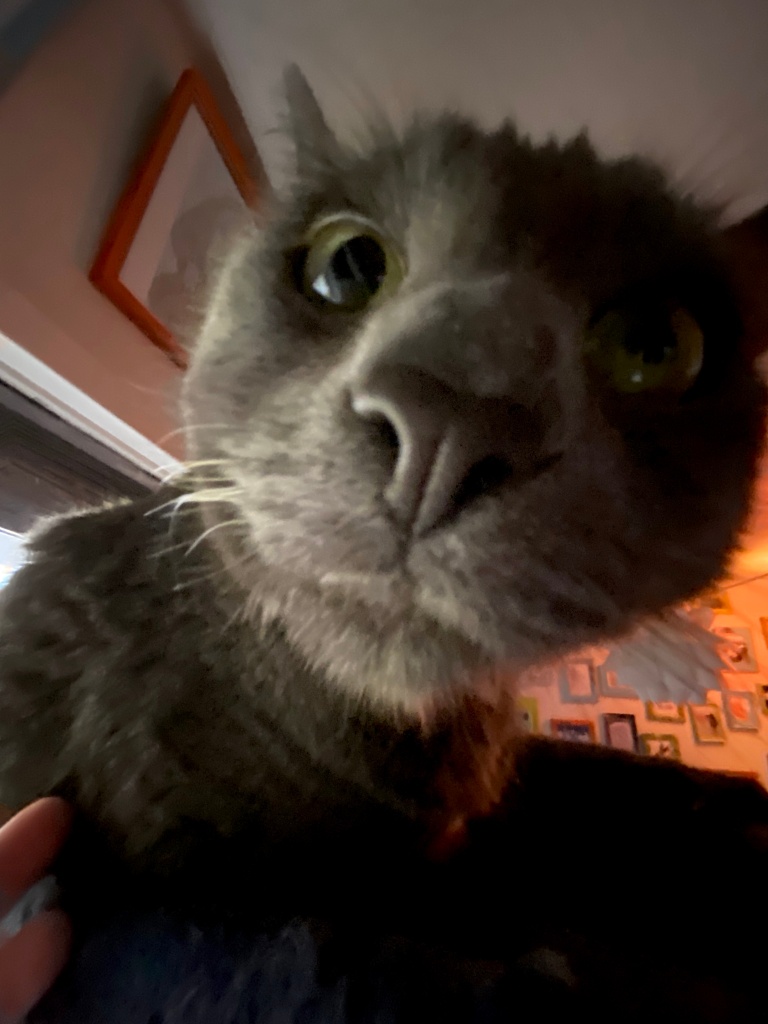
close-up wide-angle photo of a grey cat sniffing the camera

I honestly don’t know if anyone will be interested in this resurrected little personal project, but let’s give it a shot and see what it becomes! As always, since it started in 2007, there will be no ads or monetization (of the blog itself; my knitting patterns still exist for sale, but all sales are donated now), just me sharing stuff with you. Maybe blogs are indeed having a comeback and you will actually be on the other side reading this. If so, hi! Feel free to comment. So happy to be here with you!

It’s Me Made May and I am Ready! (Or, my first full year as a garment sewist)

Oh hi blog! Since I only pop in here once in awhile, I’m going to start with a little life catch-up, then I’ll get on to garment sewing! Wait but FIRST, I have been blogging a little bit, for my work! I did a post for my work blog that I’d been meaning to do here on my own blog for YEARS and had never found the time to do: all about my UK-Ireland trip sweater project! Check it out!

travel sweater with labels

And I did a pretty in-depth Kool-Aid yarn-dyeing in the microwave tutorial, which is a different method from all the old blog tutorials I did years ago.

kool-aid dyed yarn

It’s now the beginning of May, so I’ve been working at Knit Picks for over SEVEN months wow! I still feel kinda new. BUT, my position changed halfway through that time, so I am relatively new to my actual job. The good news is I like my new position a lot better than the first one! Yay! My company is awesome because they paid attention to me and a co-worker who started at the same time as me, watching our strengths, and decided that hey, she would be a better fit in a different position and I would be a better fit in her position as book designer. And it’s true! So I’m designing print books now instead of emails & web graphics and I feel more confident in my work, happier with the workflow, and just all-around like I’m better and the job is better for me. Yay! I just finished the first batch of books that I fully designed, which will be out in the summer. The set of books coming out very soon was the first round I was in charge of, but the positions were all kind of mid-transition, so it was all hands on deck. Another designer did the covers and title treatments, and another helped a ton with photo selection and layout, so while I had a huge hand in those books, they were a team effort. Luckily, my team is great! But I’ll be really excited when the first all-me books come out in a few months! (Maybe I should add, don’t be TOO excited—I’m working within a set template, on a very tight timeline, so my creative freedom isn’t wide with these books. I’m actually super cool with the restrictions; since I don’t need to make design choices about everything, because most of the basic layout stuff is already decided for me, I can put a little extra time into fun design details, and, more importantly?, put plenty of time into proofreading, fine-tuning, and trying to make the books as perfect as possible for knitters to use! But yeah, they won’t actually LOOK very different from all the other Knit Picks pattern books.)

Taku sweater

So, I started my job at the beginning of October; I was so overwhelmed by the huge life change of working full-time in an office that I had little weekend energy and I didn’t sew anything for the first couple of months, and didn’t knit very much either really. I finished that Norah Gaughan sweater above, which I’d started in June, and I started another sweater that I still haven’t finished yet:

Spiral pullover

In November, I got started thinking about gift projects, which I didn’t really start until December, and I finished them by the end of January, so all my creative time and energy was spent on those until February. Here are a couple of those gift knits.

gift knits

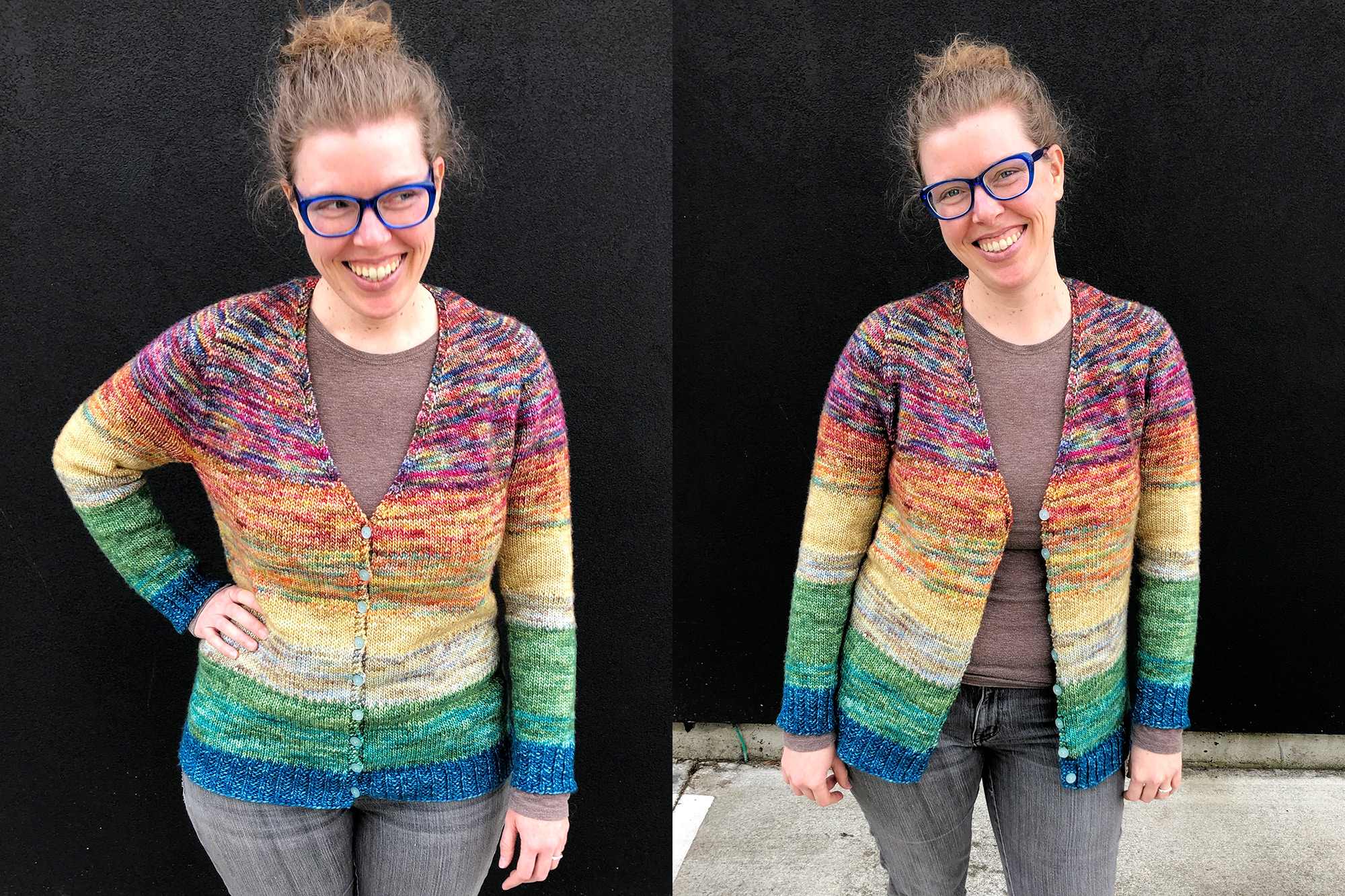
And then February was the month from hell. On February 2nd, Banzo died, unexpectedly at only ten years old. I was so completely heartbroken and devastated (still am) that I could barely sleep or eat in the days after it happened, and my body reacted to all that by getting the worst cold I’ve had in years. So then I was heartsick and body-sick through most of the month … and just to top it all off with a cherry on top, the month ended with learning we had rats living in our attic. I did knit a lot that month, therapeutic stockinette in pretty colors. I got most of the body done in February, and then finished it at the end of March:

Gaugeless Cardigan

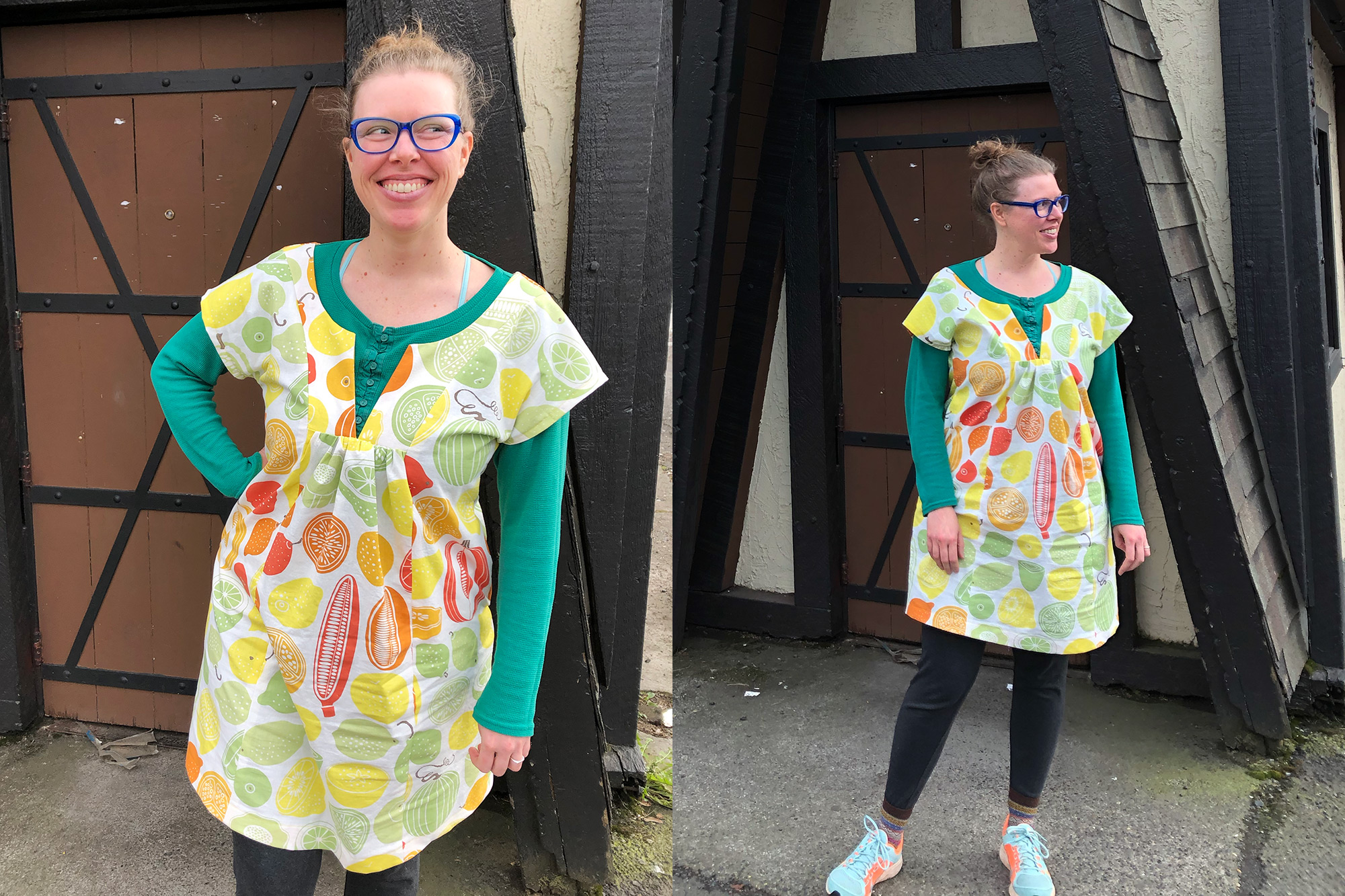
Finally in mid-March I gathered up some sewjo and made a dress. For some reason, the thing I was motivated to make was a summery caftan dress, so I had to style it up warm to be able to wear it in early spring.

Mojave caftan

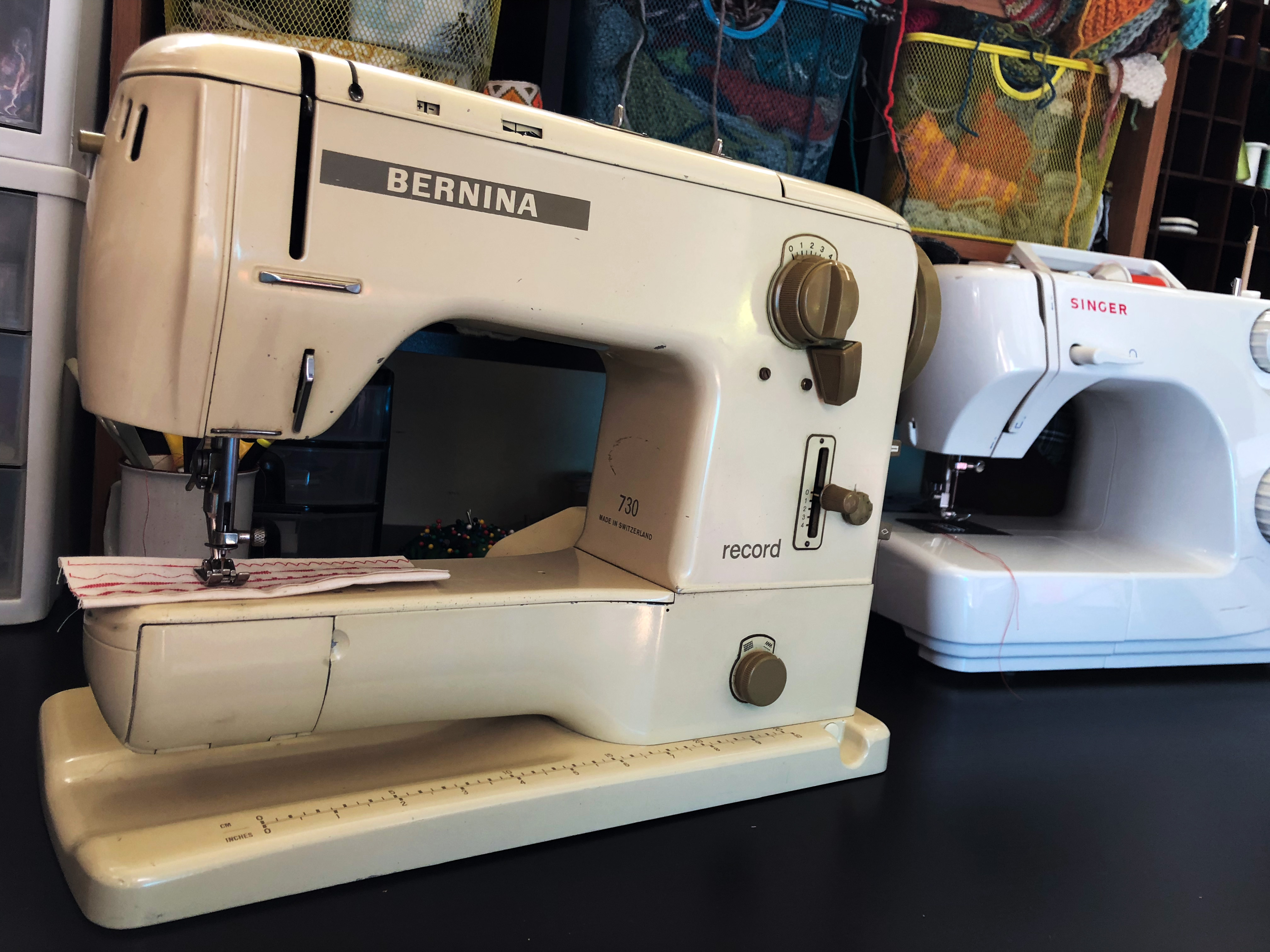
That weekend was the first of seven in a row now that I’ve made one item per week! This weekend will be the eighth if I make one of the things I want to make soon… but I JUST picked up my freshly up-and-running new old Bernina Record so I’ll be practicing on that this weekend and might not actually complete a project. We’ll see! (In the background there is my cheapo Singer which is what I used to make everything you see in this post!)

sewing machines

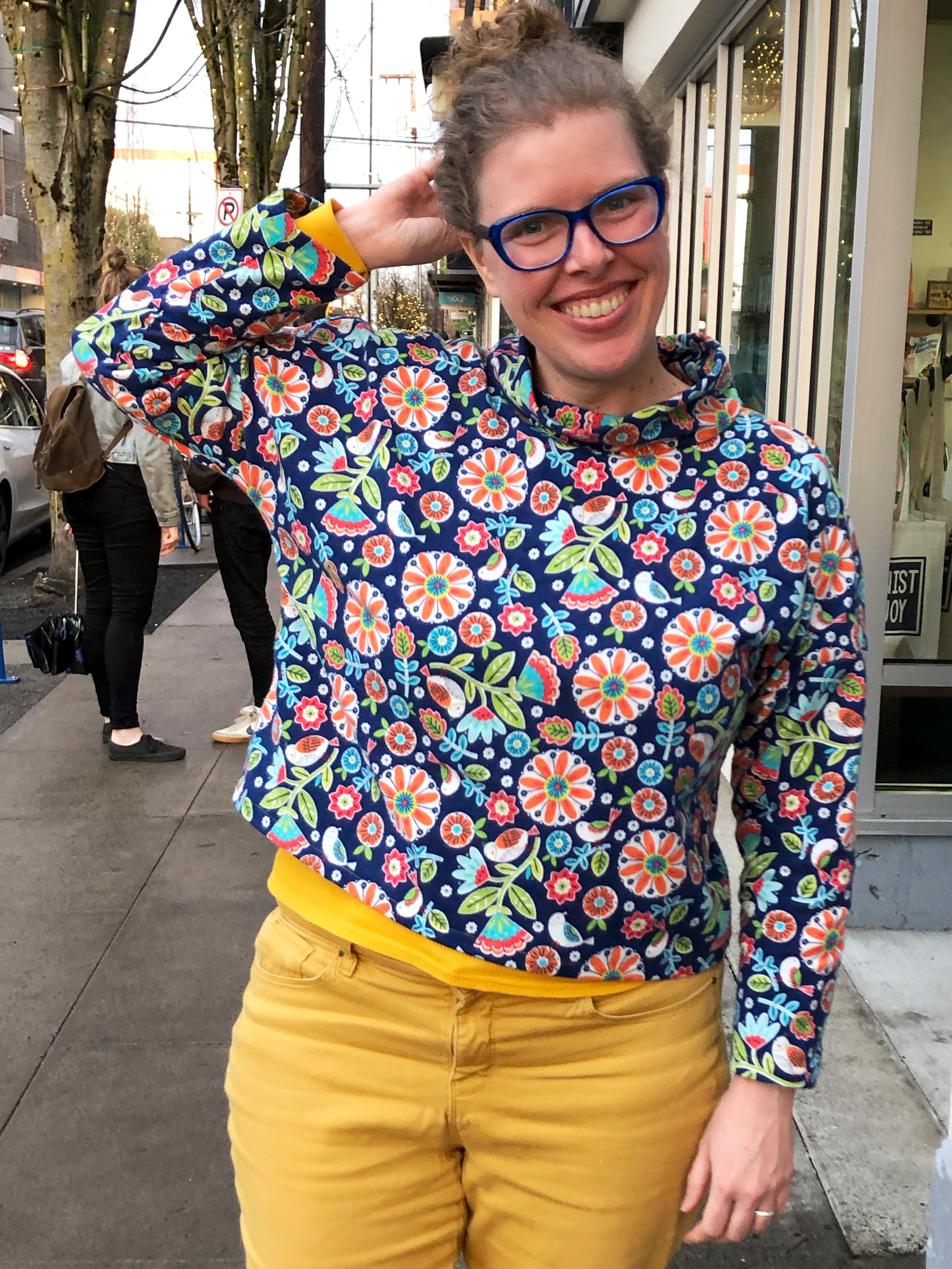
Anyway, here are the things I’ve made each week lately: that first dress above was Mojave in a thrifted sheet. Then I made a flannel LB Pullover.

flannel top

Zinnia skirt in a thrifted sheet. My first pleats!

pleated skirt

One Hour Top in a thrifted knit sheet. (First time using a twin needle.)

simple top

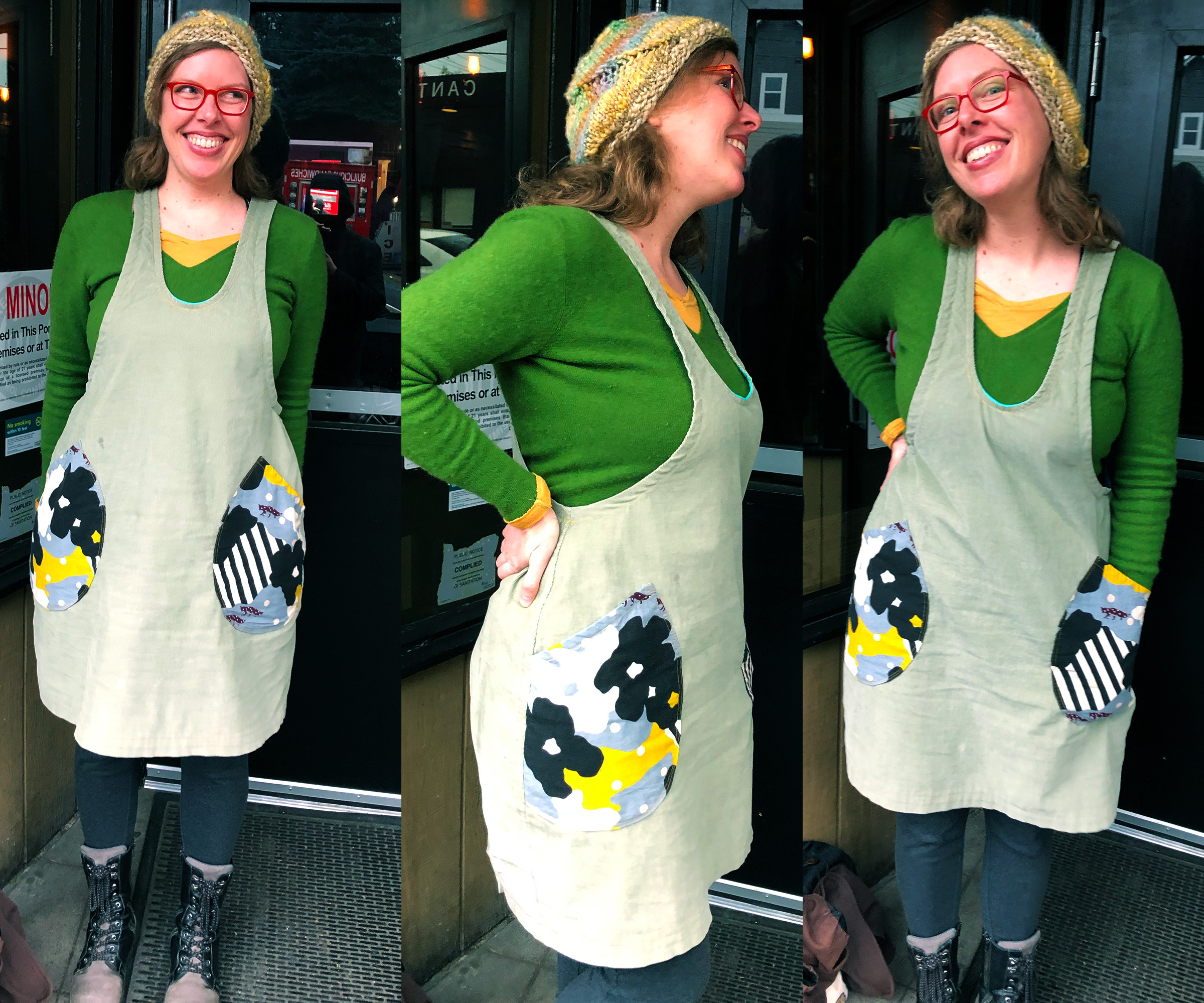
York Pinafore in reclaimed corduroy and a fabric scrap for the pockets, both from Scrap.

pinafore with patterned pockets

Another Mojave in a thrifted flannel sheet with a couple of Connecting Threads bits.

flannel caftan

And lastly, last weekend I made an LB Pullover dress hack in a thrifted duvet cover. Whew!

bright big dress

But hey, that’s just the last two months! My garment sewing journey began in earnest one year ago, when I decided I wanted to wear something that matched my graphic design portfolio for my graduation portfolio show. I’d been using a sewing machine since I was… 6, 7, 8? Not sure… and I’d done clothing re-construction projects and simple improvised garment sewing, but I’d never actually used a pattern until the summer before that (July 2017) when I sewed my first Dress No.1.

simple dress with patch pockets

After that, I made another Dress No.1…

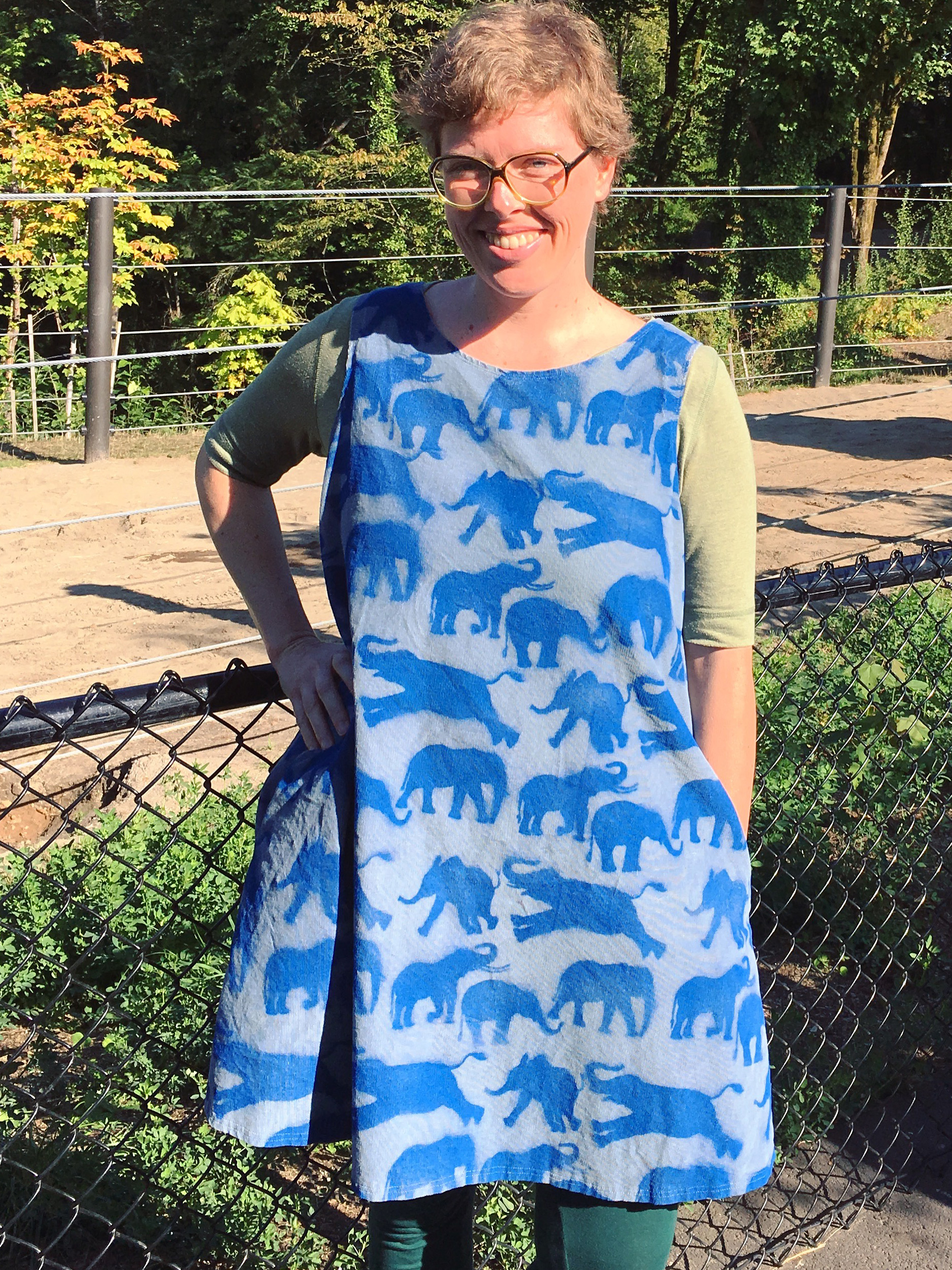
simple dress with elephant stencils

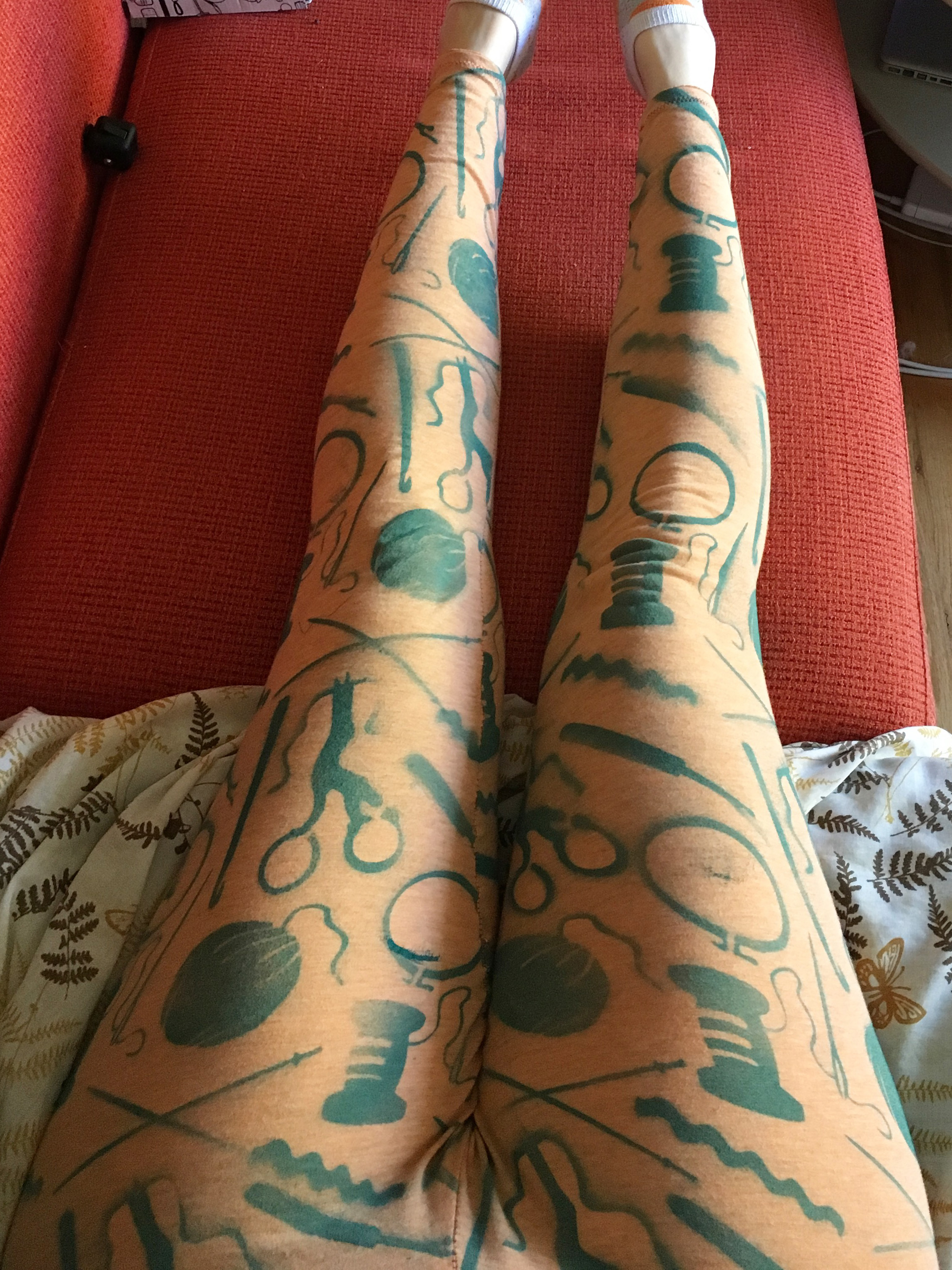
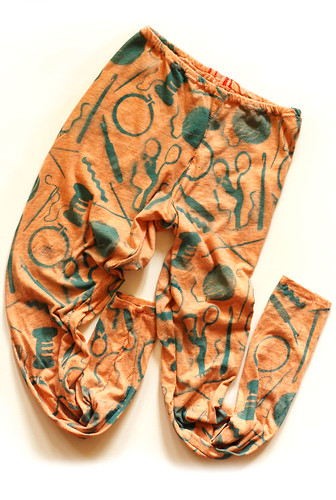
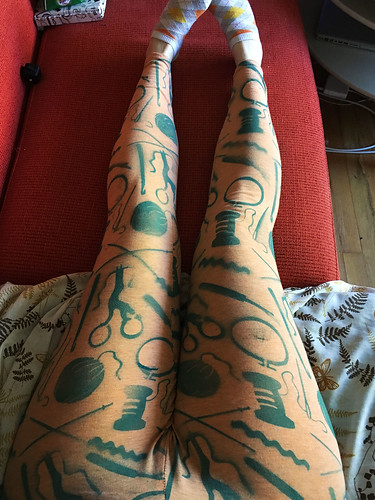
…and I also made some leggings using a self-drafted pattern.

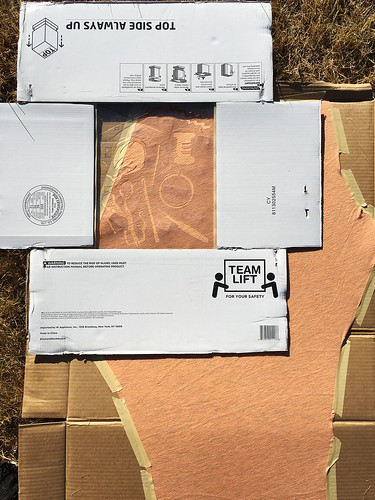
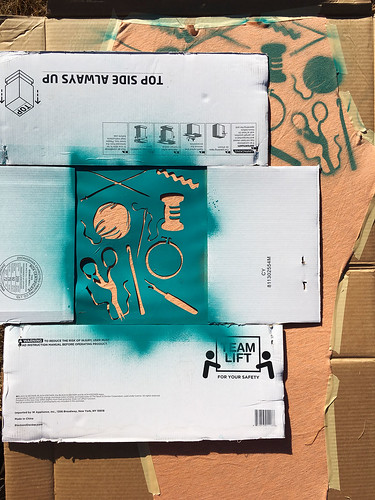
leggings with craft stencils

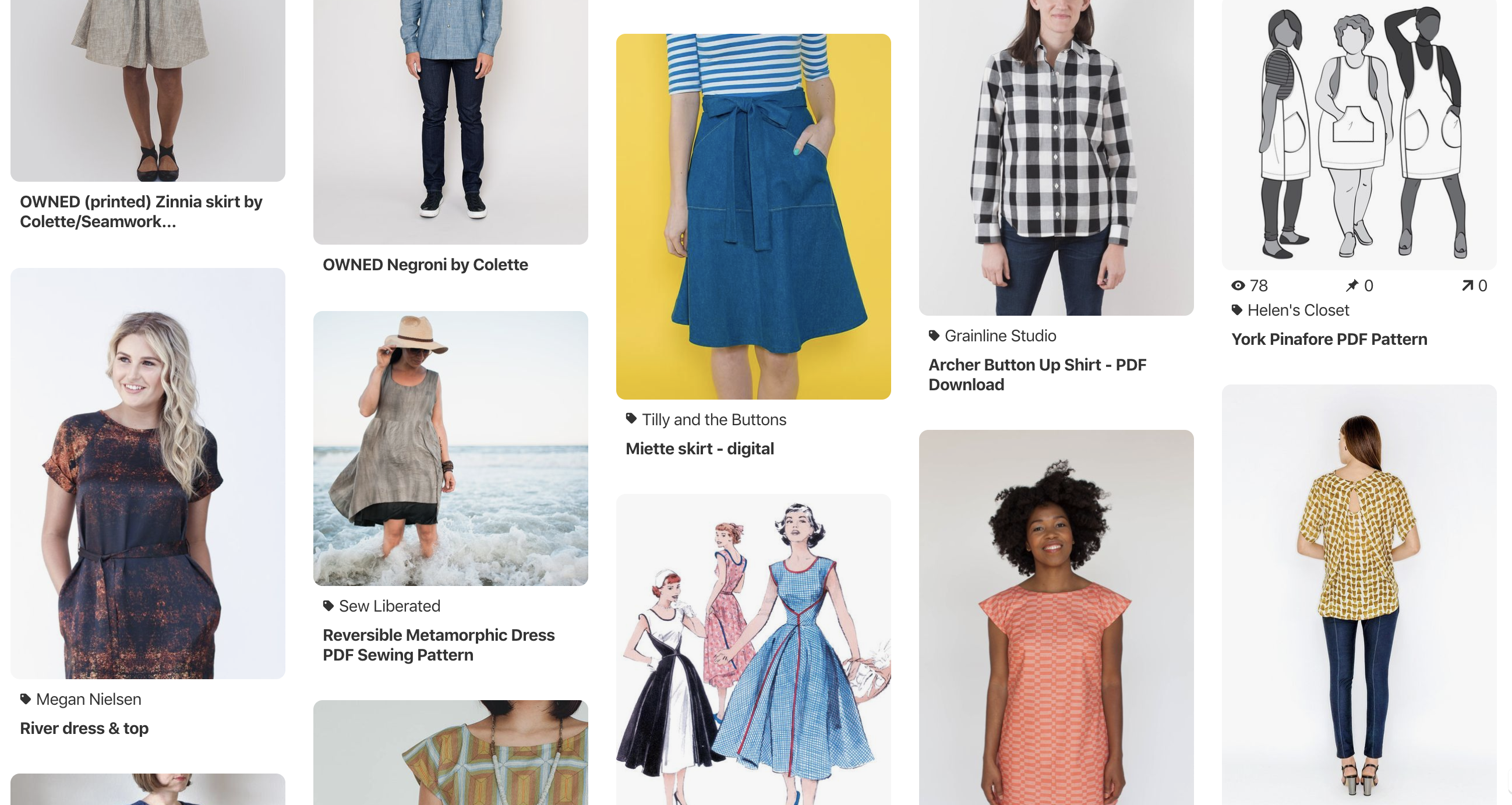
I kept planning to get more into using patterns and making cool clothes, but I just kept not having the motivation to devote time and energy to the learning process; there were always too many things on my plate. But then, I was using these hand-drawn patterns in my portfolio, which I thought would look so cool on fabric, so I had the idea of sewing something with the fabric to wear and I got obsessed and HAD to do it! It was the motivating factor I needed to finally learn how to make clothes! Because I wanted to make something that looked good—not improvised, not scrappy, using a pattern more complex than Dress No.1 … so I needed to teach myself how to do it. And find a pattern to use, starting from scratch, not really knowing anything about the sewing community and indie patterns, etc, etc. This happened to be around the beginning of May that I started brainstorming this idea. So I stalked the #memademay instagram hashtag to start collecting patterns I wanted to make. I use Pinterest to keep track of patterns (this is the only thing I use pinterest for anymore!), so you can browse the patterns I want to make, the ones I now own, interesting free ones, vintage ones I like, and sewing tutorials & inspiration.

pinterest screenshot

So right away, after deciding to do this thing, I started practicing using patterns, first by sewing an Endless Summer tunic, which was a pattern recommended by a friend as an easy beginner-level pattern (it’s quite a step up from Dress No.1 though!)—my first one was a bit messy but pretty good for how much I was still learning:

first tunic

And then I played around with this Mix and Match Wrap Dress pattern… the first half I made was way too big, so then I made another half in the smaller size and it fit fine but was still kinda weird… but all that was good practice!

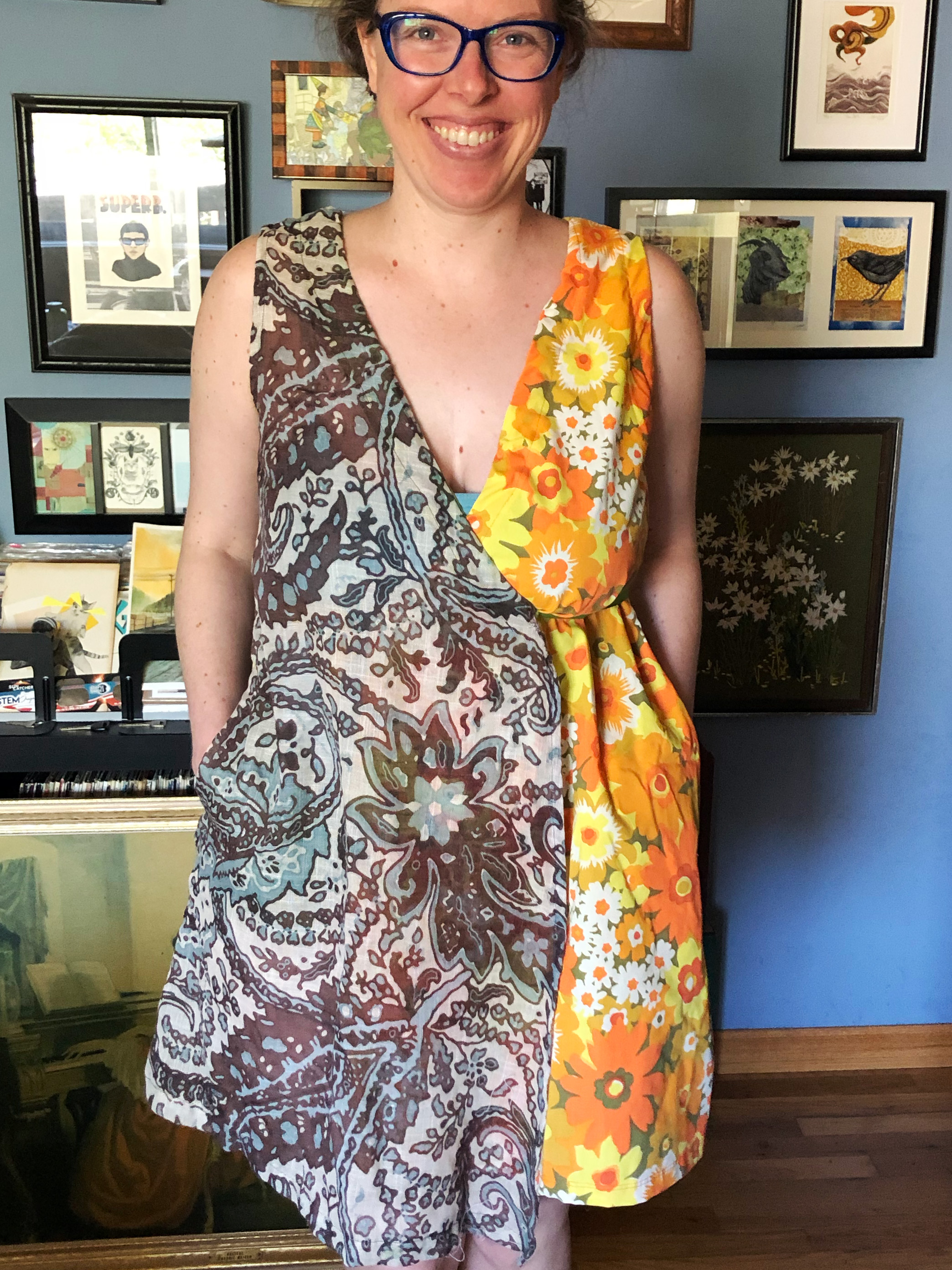
two-part wrap dress

And I made a self-drafted Boxy Tee as more sewing practice. Funny thing about this: I made the pocket to exactly fit my phone, and then like a month later I got a new phone, and of course it’s bigger and doesn’t fit! I still like it though.

multi-sheet fabric top

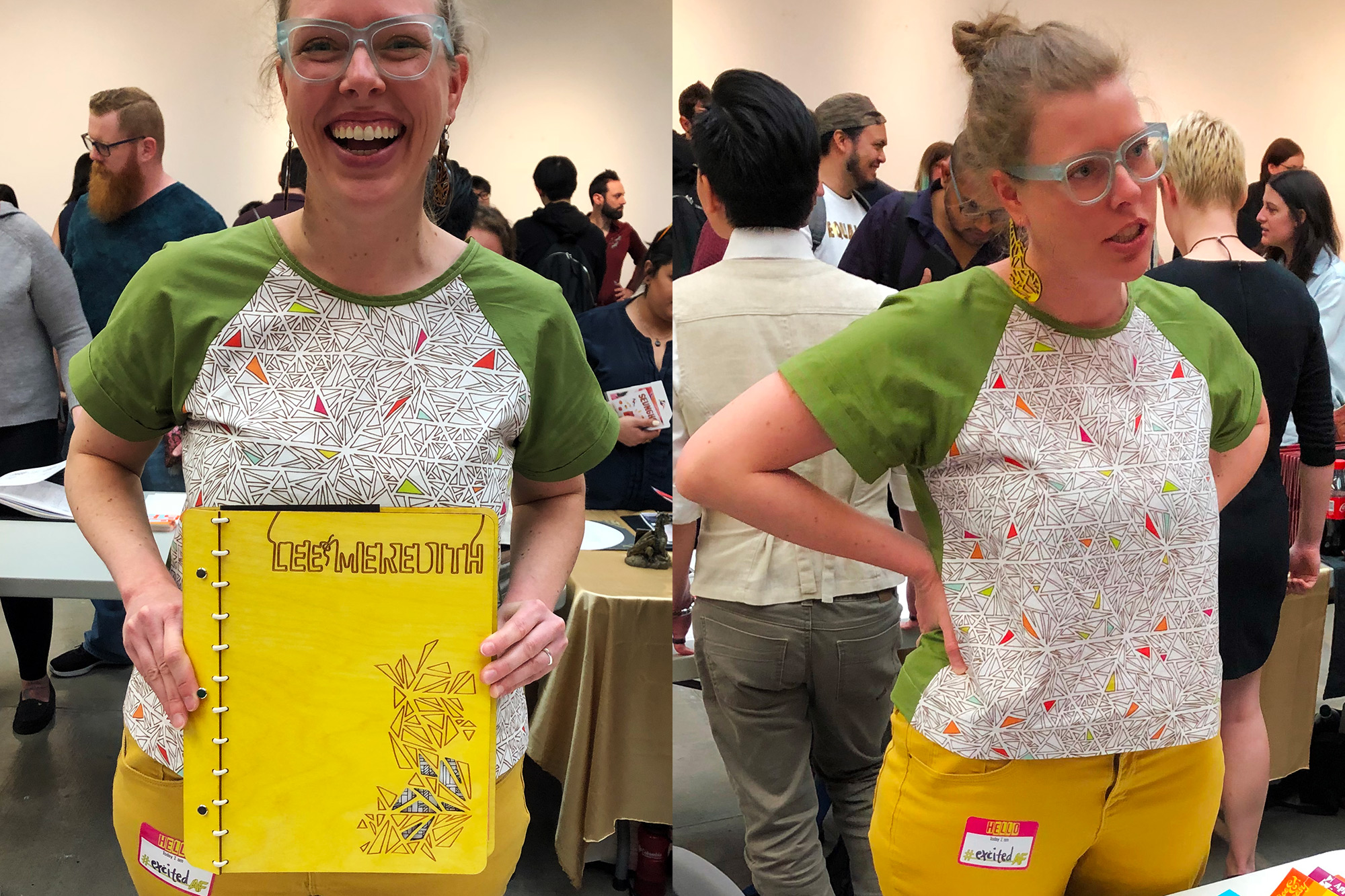
And then I pretty much just went for it with my chosen pattern and nice Spoonflower fabric! Eek I should have made a wearable muslin first, but I was short on time and heavy on confidence. I went very slowly, and it all turned out well! My chosen pattern was the River top, and here is my portfolio top, in action at my portfolio show:

portfolio top

It worked! Here’s my matching portfolio, front and back laser-cut wood covers (stained with turmeric):

portfolio covers

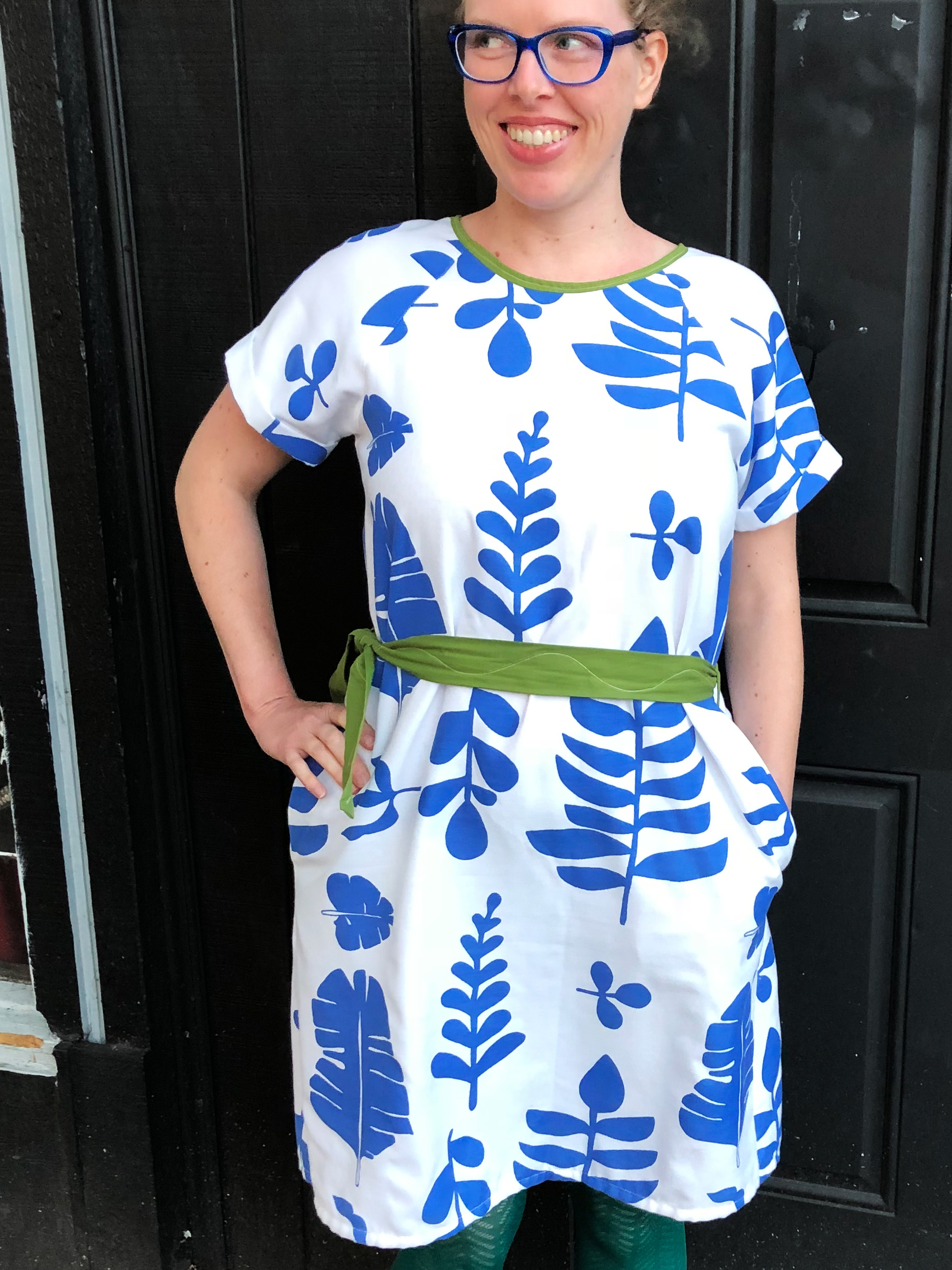
So that was it, I now knew how to use a pattern, and I had bookmarked a ton of patterns I wanted to make, and I’d started collecting fabric (from thrift stores, mostly), so I was officially a garment sewist! I made another River as a dress from a thrifted curtain:

white and blue dress

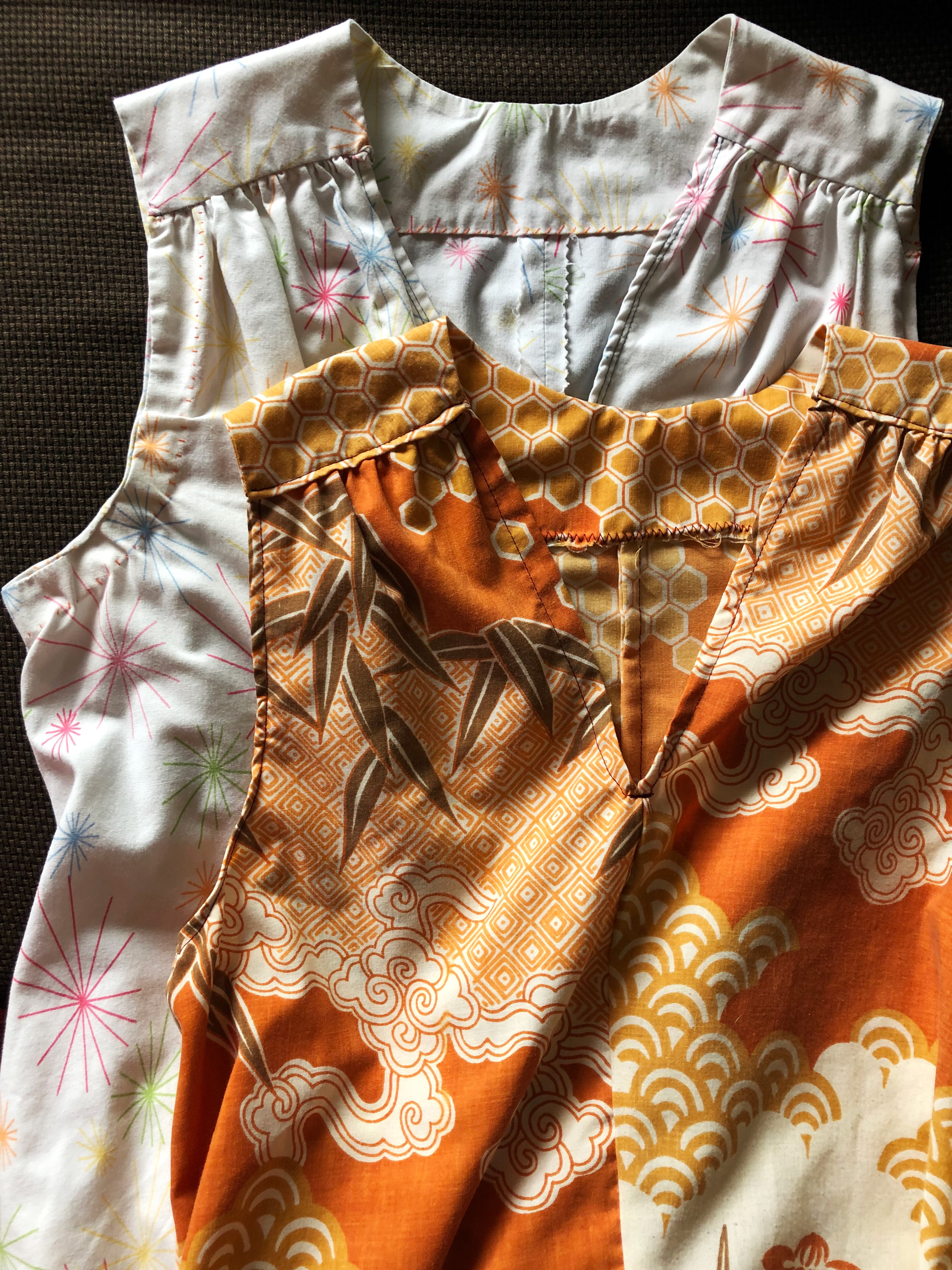
And I made two more Endless Summers: the first two I made are basically only for wearing around the house in the summer…

two tunics

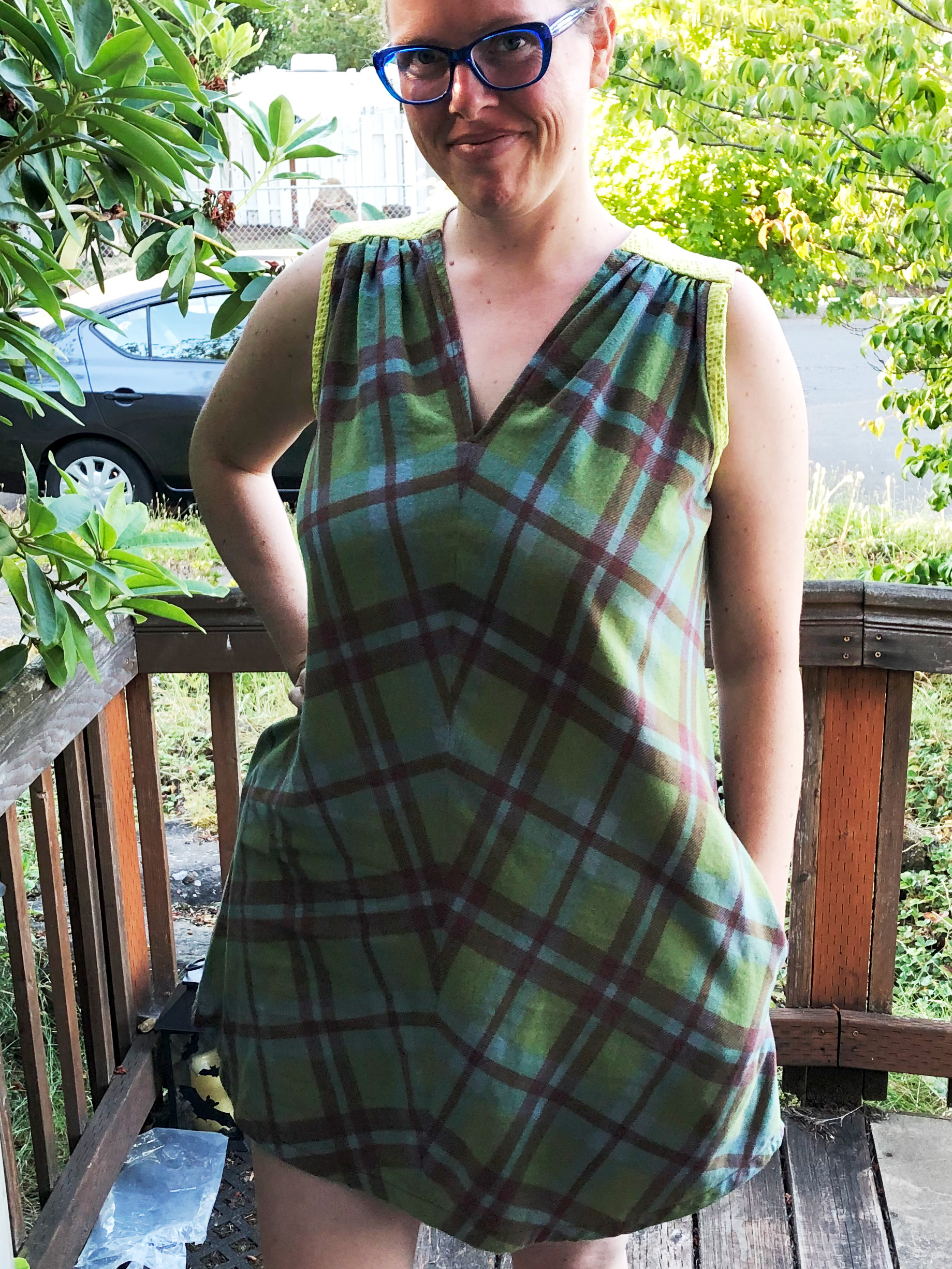
…and then I made a flannel one that I LOVE and is one of my fave things I’ve made so far (all three of these are from thrifted sheets):

plaid flannel dress

I made another fun Boxy Tee:

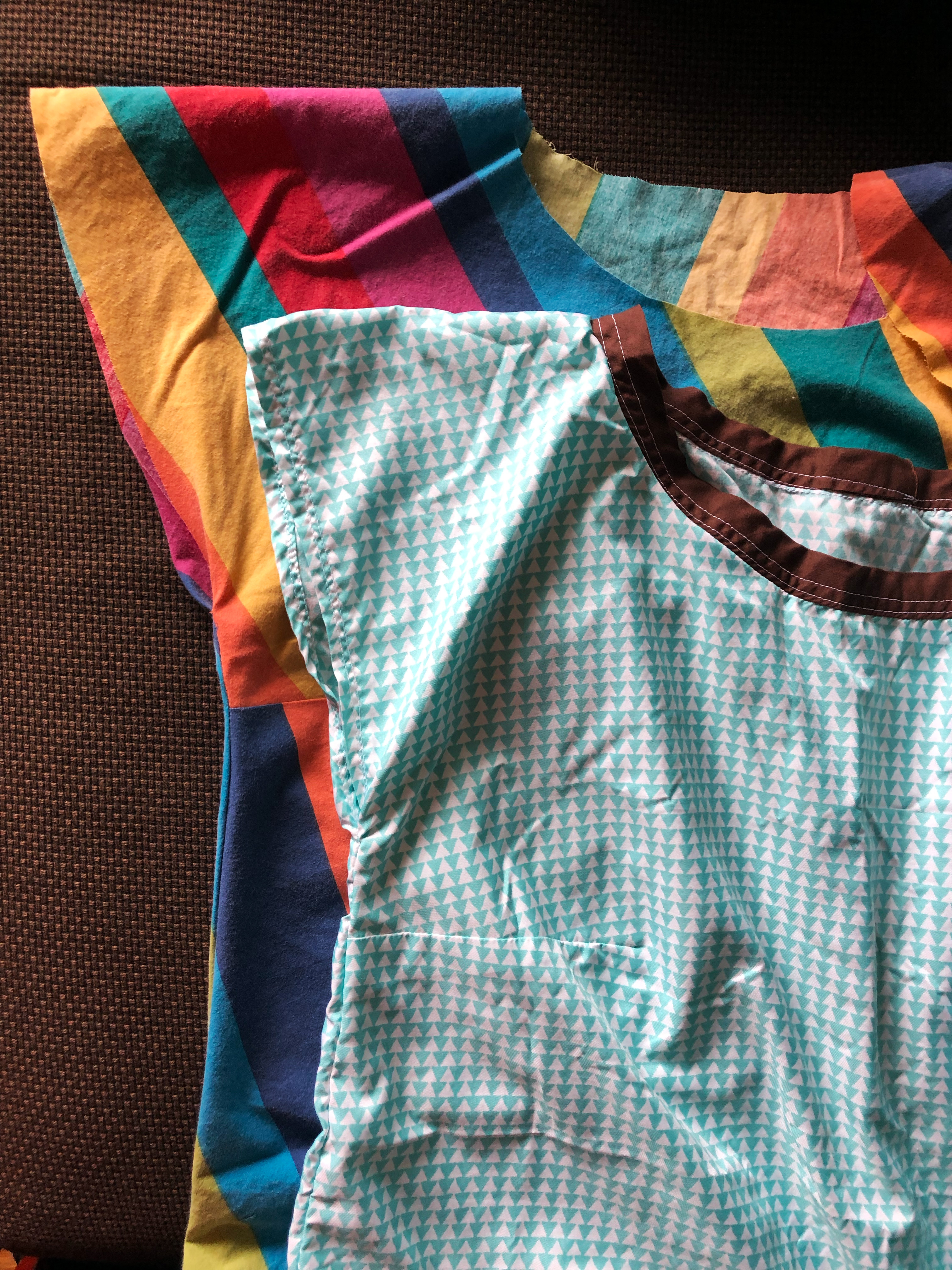
rainbow tee

And I played around with the Mix and Match Wrap Dress some more, making two more halves. I still don’t have a complete wearable dress that I like, but maybe someday I’ll break out the pattern again and make something good from it!

two more dress halves

Another River dress from a flannel sheet that I LOVE (I think flannel is my favorite kind of fabric!):

plaid flannel dress

And an Akita top from that same sheet.

plaid flannel top

I made another Akita top that did not work very well and is for around-the-house wear only, and I attempted an Akita dress hack that I did a terrible job of drafting the bottom on and I need to just chop it into a top or tunic and then finish it so I can wear it… maybe I’ll do that this weekend!

two tops

I used the free York top pattern to try set-in sleeves for the first time:

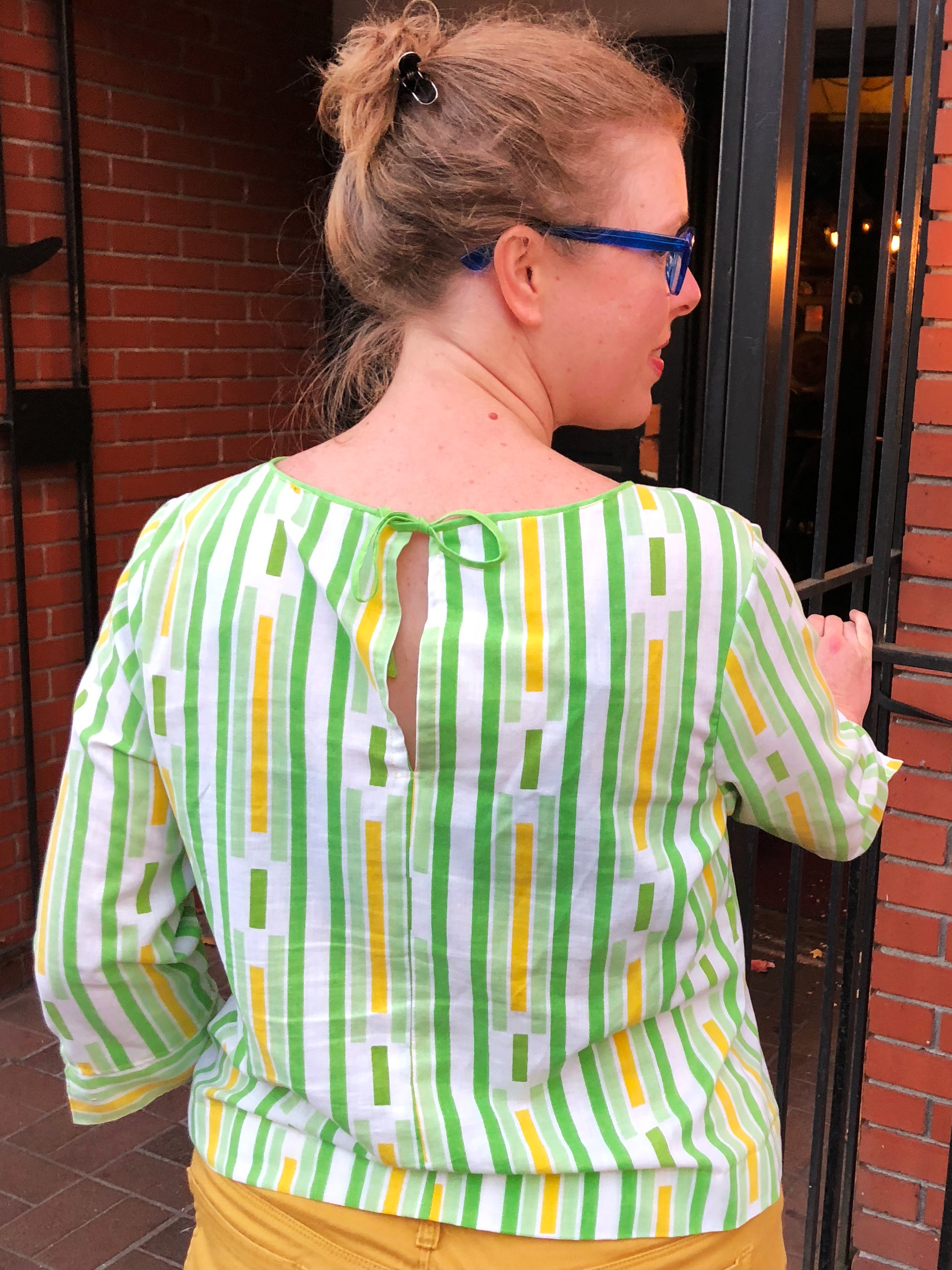
top with sleeves

And I made a simple tank top to match the wrap skirt I made long ago:

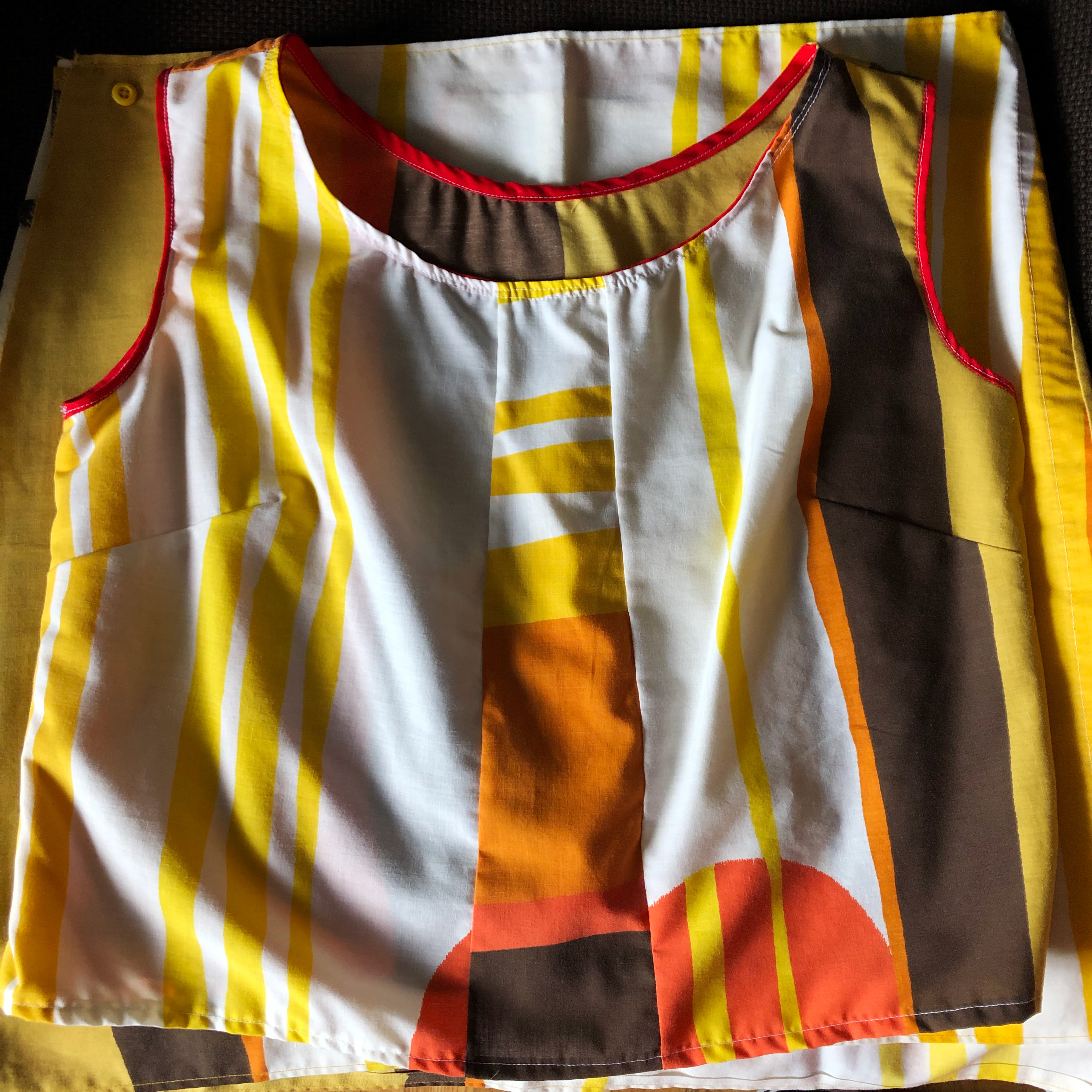
tank top

Side note: I grabbed this pattern at JoAnn because the basic tank top, basic dress, basic pants all seemed like good things to have. I am not used to using big-4 patterns and I think I was supposed to add seam allowance and didn’t, so it turned out way too small (I added the panel in the center to make it fit, which I like, so everything worked out!), so I need to be more careful about that in the future… but then another weird thing is I can’t find this pattern anywhere online, to link it—all I can find is one ebay listing. It doesn’t exist on the Simplicity site, the JoAnn site, or anywhere else. I don’t understand how big-4 patterns work! So weird.

tank pattern

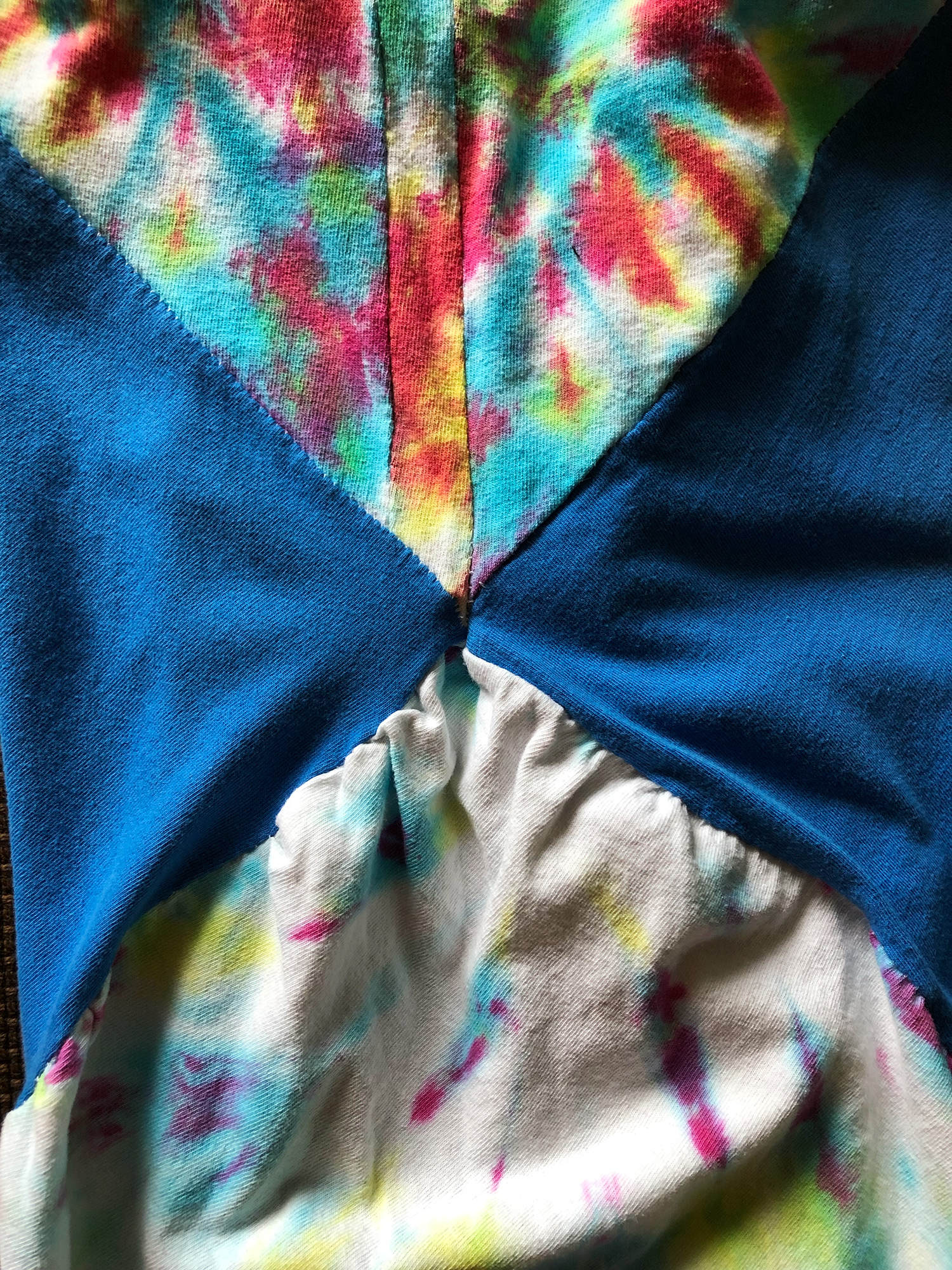
During this same time (basically all last summer, into early fall), I also made a dress from t-shirts that was an idea I want to develop more… it may turn into a blog tutorial or a free pattern download or something! So you get a sneaky closeup photo of that only—it’s a surprise!

t-shirts sewn closeup

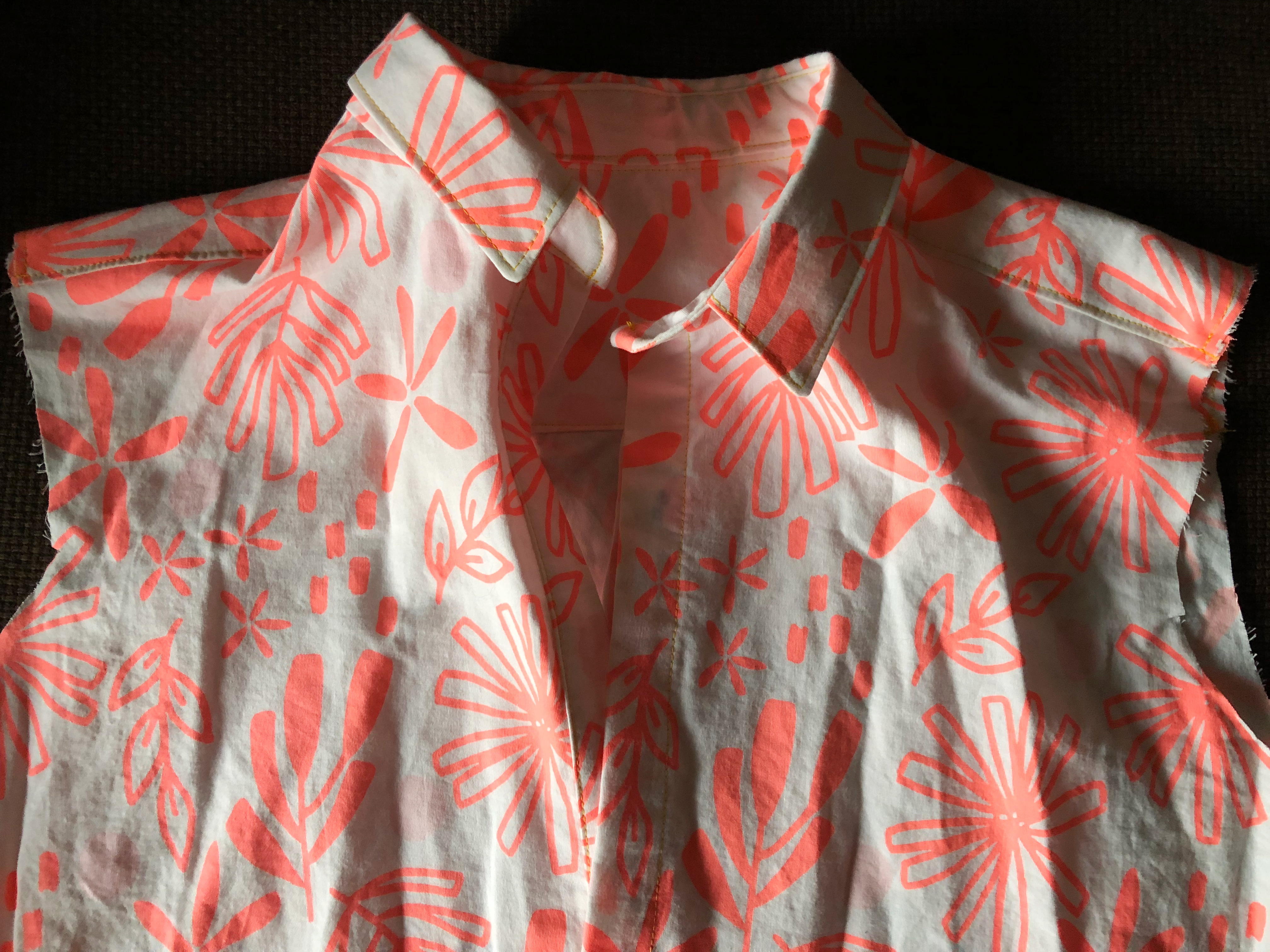
That last stuff was made right before I started my job and lost my momentum. I jumped back on the machine in December when I decided to make a shirt for Pete for a gift! I got a bit ahead of myself… I bought the Negroni pattern to make his shirt, but then I had this plan to make a shirt for myself first to learn how it worked, so I bought the Archer pattern for myself…

shirt collar

I read a bunch of tutorials and stuff, learning how things like collars and sleeve plackets worked, but I really learn best by doing (can you tell?) so I started making myself a sleeveless Archer to make a collar, yoke, buttonband, as practice. But hey, guess what, there are different ways to make shirts! Turns out, basically every single element of the Archer shirt is different from the Negroni shirt—yoke, collar, buttonband, sleeves… completely different constructions. So I mostly made mine anyway, but since it was December and my shirt was sleeveless I still haven’t gotten around to finishing the hems and buttonholes…

two shirt collars

And I just went for it with his, but in a silly flannel fabric for the test run. And then I plan on making him a good one in nice fabric in the future. But it worked pretty well! The only major problem is the sleeves are WAY too long!! That’s an easy fix for the next one I make.

pete's flannel shirt

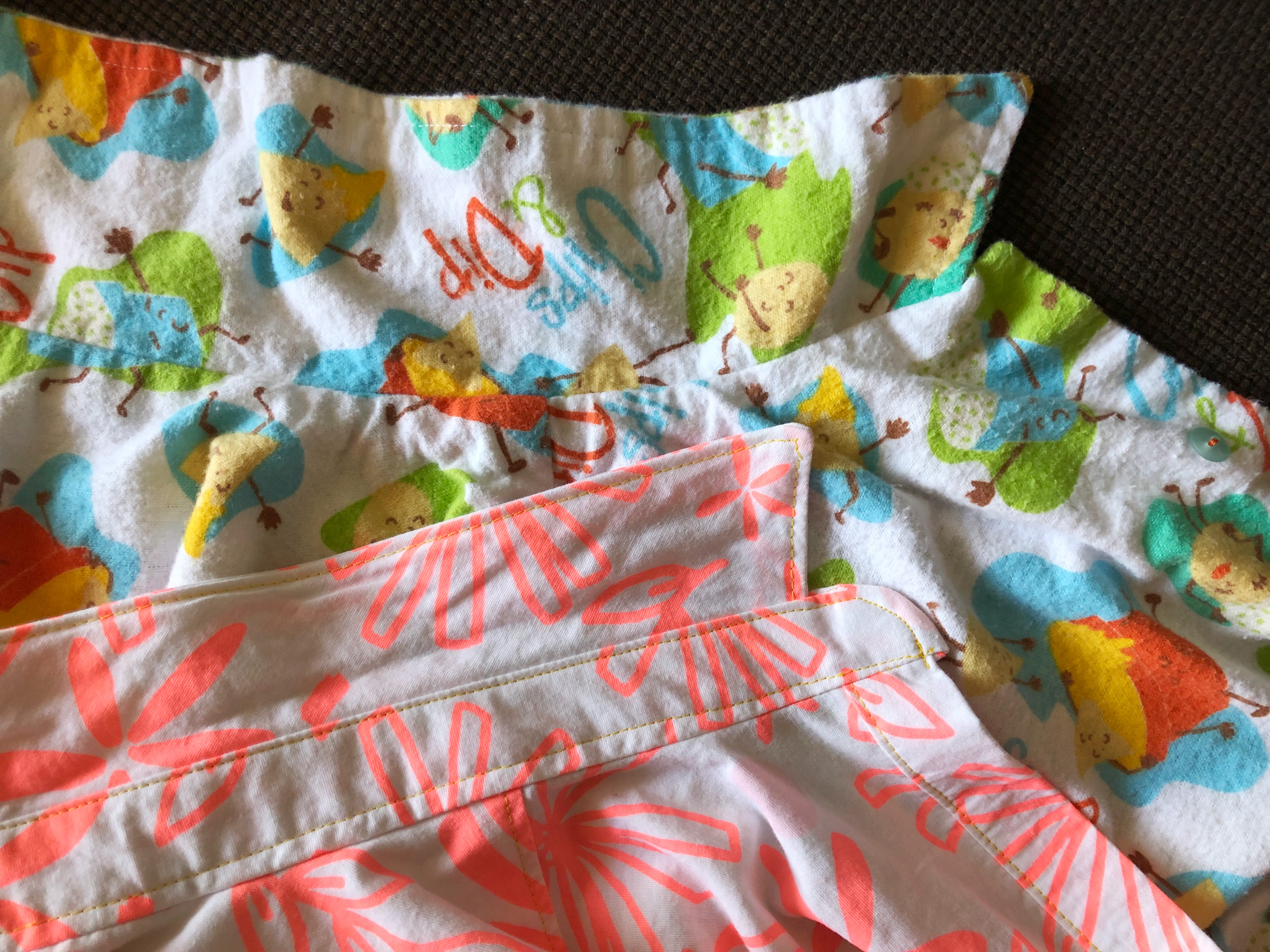
The yoke and the sleeve plackets were both SO COOL and magical to make! Crazy sewing origami-esque trickery.

flannel shirt closeups

Those projects taught me about flat felled seams, which was a game-changer, since I don’t have a serger. I did flat felled seams in my recent York Pinafore, LB Pullover projects, flannel Mojave. So much nicer than zig-zagging or pinking!

seams closeups

So those two shirts were so intense and I learned so much that I kind of burned myself out again, which leads us back to the top of this post when I finally gathered my sewjo back up a couple of months ago! Yay! And now it’s full-circle back to Me Made May, and I’ve sewn enough in the past year that I’m attempting to wear a handmade GARMENT every single day in May! I’ll be posting my outfits in small batches over on instagram.

a bunch of handmade clothes hanging

Handknit garments count, but I haven’t made very many of those. By the end of the month, I’ll probably be wearing some of my older reconstructed and improvised garments. Some of these, I want to re-reconstruct, fix them up now that my skills are built up. Like making nice, even hems on the old t-shirt skirts I made way back, and add pockets!.

tee skirt

Something else I’ve been doing since I really started sewing clothes is collecting fabric from my favorite fabric stores: thrift stores! Duh. Sheets can make awesome garment fabric, with great yardage! Of course, lots of thrift store sheets are too worn & pilly, or bad fiber contents, or just plain ugly, etc etc… there are lots of times I find zero good fabrics at a store. Then sometimes I’ll hit a jackpot shop and leave with like five awesome pieces of fabric. Sometimes it’s in the form of actual fabric, like with the selvedge still on, but actually that can be riskier than a sheet because sheets (and curtains) have tags that tell you the fiber content and washing instructions. I’ve bought a few pieces of fabric from actual fabric stores (that LB Pullover flannel came from JoAnn, and I have nice pieces from Bolt and Fabric Depot [RIP] that I’m saving for the right projects), or Ikea, but most of my stash came from thrift stores, Scrap, and then a bunch of free scores from work (I’m in the same building as Connecting Threads!).

fabric stash

I do plan on getting more from Spoonflower; that’s pretty pricey, so I like the idea of mostly using extremely inexpensive, reclaimed fabrics from thrift stores, and then putting that savings into treating myself occasionally with Spoonflower yardage.

spoonflower fabric swatches

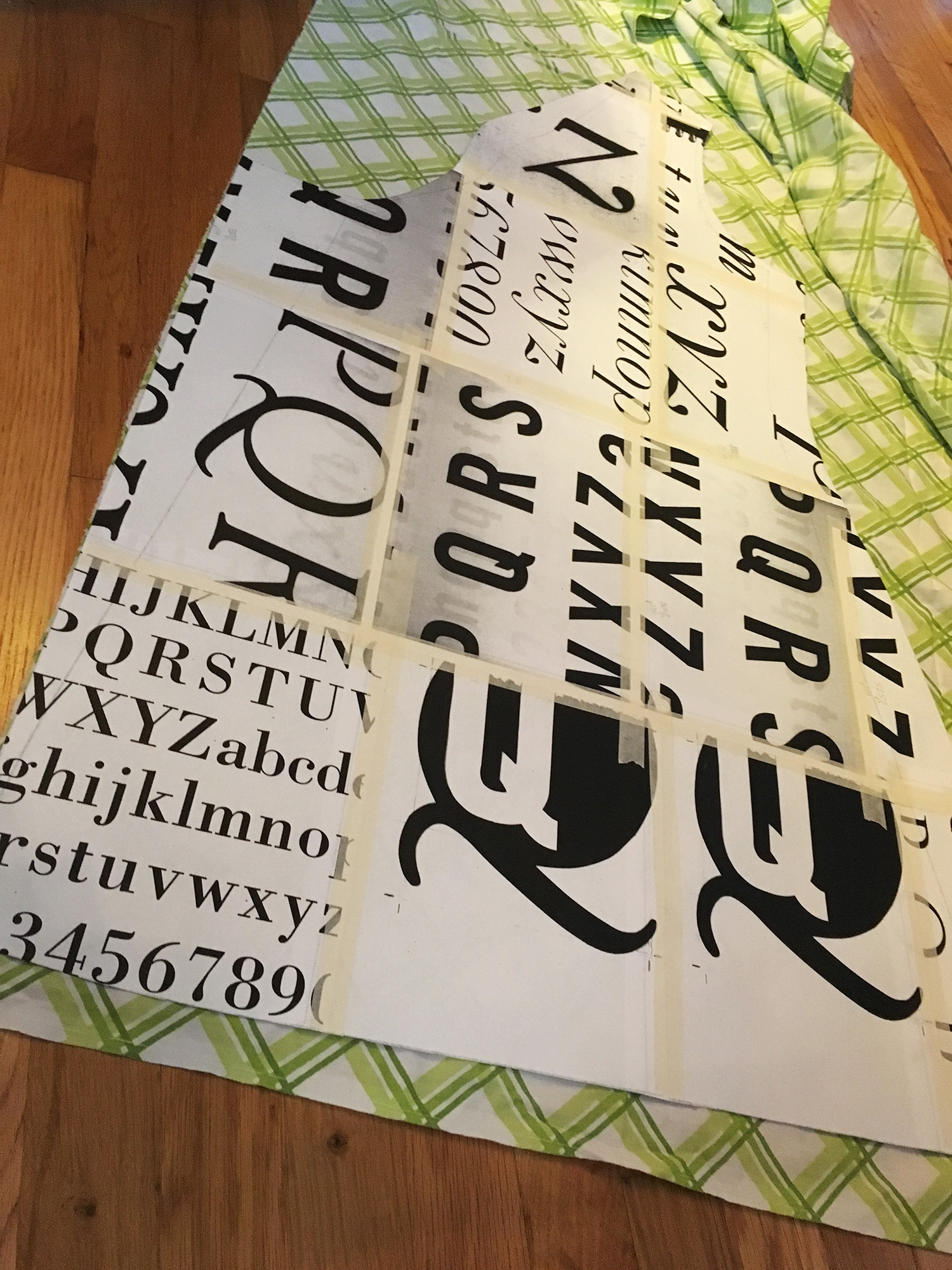
Something else I’ve been brainstorming about is ways to use fat quarters (also Spoonflower swatches). I’ve gotten tons free from work, and I love treating myself to a couple of awesome fat quarters from places like Bolt, donna and toots, and Cool Cottons, or shops I find while traveling. But I need ways to use them! If I try one of my ideas and it works well, that might be another blog tutorial in the future.

pattern piece

That’s a shot of a pattern piece I printed on papers from graphic design school… for years, I brought home all full-size sheets that were blank on one side, knowing I’d find a use for them! Yay PDF patterns! Okay I need to stop writing and start trying out my new Bernina. May has already knocked my sewing energy up a notch and there are so many things I’m excited to make!!

Ch ch ch ch changes…

Ohmygosh hi! I’m thinking about blogging again! My life has changed so much over the last few years, and at this point there are basically two paths this old blog could go down… it could just stop, and be nothing but an archive of past posts, or I could try to revive it as something like what it started as in the first place, over eleven years ago: a personal blog for sharing all sorts of projects and things, whatever I feel like writing about. I’d like it to be that!

So, as often as I feel like it, I plan to post here for fun: personal knitting and craft projects, garment sewing (the new thing I’ve just recently gotten into!), occasional tutorials perhaps, maybe food things sometimes, maybe I’ll show you graphic design projects sometimes, who knows. Whatever I feel like writing/posting about, here’s the place for it. Whenever I want to use more words than an instagram caption!

River dress!

So that’s the plan for the future—as for the past, if you follow me on social media, you probably have some idea of what I’ve been up to, but I’ll go ahead and tell you, all here in one place, and in a bit more gritty detail… a timeline, ish:

I was trying to design knitting patterns full-time, for many years, and it was going well, mostly a little better each year, until 2015… it just stopped getting better. Sales were dropping, I was struggling to make ends meet, and I finally came around to accepting that it didn’t matter how hard I worked, it was becoming impossible for me to design patterns for a living. I could switch gears to pursuing teaching as my main gig, or get a part-time job at a yarn shop, or something else within the knitting/designing world to keep on designing… I started really thinking seriously about what I wanted to do. Who I wanted to be when I grew up.

To be honest with you here, because why not, late 2015 / early 2016 was a REALLY hard time. When that realization hit me, that there was no amount of effort I could put in to make my knit design career work the way I wanted it to (meaning, pattern designing being the main way I spent my time and earned a living) I had major feelings of failure, many panic attacks, and lots of sad times. My life as I knew it could no longer go on, on this path I’d been on for a decade. I didn’t know what I was doing, with my whole life. The past ten years felt wasted. It was a shitty time. It was November 2015 to be exact, when this hit; I started crying over pizza with Pete at Rudy’s that night and couldn’t stop. There were lots of days when I started crying, but I also started seriously brainstorming about what the heck to do. For the past ten years I’d kind of gone where life took me, my career just finding itself, or something, which is probably part of the problem of why it failed? But now it was like I hit a wall at the end of that path and I was completely discombobulated, and needing to find a totally different path.

Oh, this is complicated and blurry; I’d already started thinking about doing things other than knit design earlier than this. I wasn’t totally deluded. Sales had been getting weaker for like another year before that, or showing signs of no longer getting better. The truth is, I was never making close to a living wage, my whole knit design (etc) career, so I’d always kept going with the expectation that if I worked my butt off things would keep getting a little better each year, and eventually I’d be earning maybe barely a living wage? But when I could see that it wasn’t continuing in the slight upward slope needed to keep going as I’d been going… I was aware that I needed to start rethinking things. But until late 2015, I’d been thinking along the lines of adding new streams of income to knit design, not changing paths completely. I’d started thinking about offering layout services for other designers’ patterns, because that was something I’d always enjoyed doing for myself, and I thought I was decently good at it. But, I was using iWork Pages (Apple’s version of Word), so even though my patterns looked okay, I didn’t feel like I could charge for a professional service using an unprofessional program. If I wanted to pursue this, I needed to learn InDesign.

So I started looking into learning graphic design, for real, beyond the self-taught design work I’d been doing for myself for my whole knit design / leethal career. I found out that my local community college had a really great intensive 2-year program, but what I thought I wanted was just a few classes. I just wanted to learn the programs—InDesign and Illustrator—enough to be able to fill in the blanks with online classes and practice. I could just do online classes, sure, but I didn’t think I’d learn as well as with a real life class. So I went to the info session about the PCC program, in the summer of 2015, and it seemed really cool, like a great program and like a really good fit for my interests and strengths. They tried to discourage people from doing it, saying how hard it is and how many people don’t make it past the first classes. It seemed really fun and interesting to me, but it would be such a big chunk of my life, I still didn’t want to commit to the whole program. Anyway, after it all broke in November and my life became sadness and panic attacks, and I knew I needed more than just a side gig option, but rather a whole new career, I decided that program would be a good life decision. The way the program worked, I had to take some classes as prerequisites at some point in 2016 and then the actual program would start in winter 2017, so in the spring I registered for some summer classes and I was on track.

In the meantime, my brainstorming about what I could do that wasn’t knit design led to my book idea! I started playing around with the idea in 2015, got an agent, and then worked with her on my proposal throughout the first few months of 2016… I got the deal with Clarkson Potter in spring and then spent the second half of 2016 going back to school and creating my book at the same time! It was busy and good. Exciting stuff.

I was still designing patterns a bit during this time, but it was no longer my main focus. I worked on finishing the designs that were already in the works throughout 2016, and I did my VIP club hats throughout that year, then released the Two Texture Trio during my first full-time school term in winter 2017—that was a BUSY quarter!—and I designed a pair of mitts for Stranded in spring of 2017. And that was that. No more knit designing. I’ve since re-knit and released Flit as a self-published pattern, and I will be releasing a couple of Stranded patterns and re-releasing at least one of my very old patterns as a newly updated design. So I’m not like retired from knit design 100% but I have no plans to design any new patterns. I’m not that sad about it; I have 174 patterns in my ravelry shop, I think that’s enough :-p

So, I did school, it was hard and good, and I graduated in June of this year. I spent a couple of months freelancing, job-searching, and working on personal projects. And I did a bunch of fun volunteer design work:

Volunteer graphic design work

I designed several for-fun graphics (scroll down to Printable Designs! to see them) that I stuck up on print-on-demand sites in case anyone was interested. These sites make the designers very little money, like I’ve seriously earned maybe 20 bucks from all my designs combined that I’ve put up in the last six months. But I like all the designs I made so I wanted them to be available to anyone else who wants them. They are also on my site as free downloads to print out on postcards or use as a desktop wallpaper or whatever.

Oh same deal with Spoonflower fabrics—I really love designing patterns (I even put a surface design page on my website in case anyone wants to license designs!), so I’ve put some of them up on Spoonflower as fabrics, and I’ve sold none, but they’re there in case anyone’s interested, and for myself to maybe buy some. Basically, since graduating, I had fun doing some personal projects that earned no money, which helped me get over any lingering feels of wanting to be self-employed anymore. It’s just no longer my path. I really enjoyed some of the freelancing but it’s also pretty stressful, and would be much more so if I needed to have enough jobs going at once to earn a living wage doing it.

Surface design!

So, I was looking at both part-time and full-time jobs, thinking that if I found a really great part-time job I would keep pursing the freelancing, and I do love working from home, not commuting, so there seemed to be strong pros to both a part-time and a full-time job… I applied to around 30 jobs total and heard nothing back from most of them; the graphic design job market in Portland is intense! One job application required a photo of me with my favorite vegetable (they never responded).

self-portrait with broccoli

And then I found a full-time job! Yay! But weird. I’m working in an office for the first time ever in my life. I’m working a structured 40 hours a week which leaves me with tons of time that I’m not working, and I’m basically not doing any work from home anymore now, aside from the possible occasional freelance gig I want to take on, and random knitting pattern updating I still plan to do, and some personal projects I still have in the works or rolling around in my head, but these things have no deadlines. Point being, I’m not constantly working or thinking about work like I have been for my entire adult life, and it’s pretty cool! I can sit and watch a movie and knit a just-for-fun project with no deadline and not feel guilty because I should be doing something else. A couple weekends ago, while Pete was working, I spent the day seeing a movie downtown and then walking around the city, all the way to southeast Division, in the perfect sunny fall weather, just enjoying the day and not thinking about work. It’s so nice! And then I just get a paycheck deposited into my account every two weeks, that’s unrelated to how many people decide to buy what I create. After so many years of my income being dependent on how popular my creations were, and how many people decided they were worth actually paying for (not just hearting on instagram)… I am not missing that at all.

It’s weird to talk about money, but I think it’s good to share these things sometimes. My situation has always been really privileged/lucky in that I had parents helping me through college, so no student loans, and then the whole time I had my self-employed career I had a partner with a steady income and some savings who could help me out when there was a slow month here and there, and cover enough joint expenses that my income could be pretty darn low and we could get by. If I’d been single, I always would have had to have a part-time job or some other steady stream of income, the whole time I was designing patterns. I think it’s important to know that if you’re trying to make it work doing something creative full-time, it’s freaking hard, if not impossible… if you look to me as someone who succeeded in doing it, well, the truth is that I didn’t. Not really. So there’s absolutely no shame in needing a part-time (or full-time) job to fill in the gaps from a creative self-employed pursuit that isn’t making enough to pay the bills. I really did think for years that if I worked hard enough it could be enough; I think the myth of meritocracy was so deeply embedded in my subconscious, I just kept working nonstop for years expecting it to be enough… anyway, I’m happy with where I am now but I had some really hard times, so hopefully my honesty might help some of you feel less alone or something?

But now I have a great job! I’m the new digital graphic designer at Knit Picks. I’m using all my knitting world experience from my pre-graphic-design-school years, combined with my new skills. It really makes those ten years feel less wasted! Not that they were actually wasted in any way, but that feeling, man, it’s rough. So I’m designing the Knit Picks emails and website graphics, working on other assorted graphic tasks like product tags and labels, helping proof the catalog and books, and possibly really fun future projects… and then also helping out with other Knit Picks tasks like naming yarns! Designing yarn colorways! Sharing my expertise on the podcast! Fun stuff.

If you’re wanting to see my work, the emails are all by me now (though some bits are using established styles/formats, but I’m still putting them all together), and a few graphics on the website are by me, with more coming soon as updates happen. A weird thing about this job is that because I mostly do web graphics, I’m mostly working in Photoshop, which is what I used the least in school. It’s frustrating at times, but I am already so much better in Photoshop than I was before! Oh I’m also on a PC, so that’s a big adjustment too, but I’m pretty used to it already; not as annoying as I expected it to be. So yeah it’s been just barely a month but I think I’m adjusting pretty well!

a snippet of a Knit Picks email I designed a snippet of a Knit Picks email I designed (and photo styled)

Another fun job thing is that I get to go help out with the Knit Picks booth at Stitches SoCal this weekend! It’s not part of my graphic design job, but the company is so small, people can kind of pitch in with things outside of their jobs, and they needed an extra person to help with the show so I’m going! I’ve never been to a Stitches before, so I’m excited about it! If you’re going, come to the KP booth and say hi!

And then as for the future of this blog… I have been getting really into garment sewing lately, so I’ll save that whole subject for another post, soon hopefully! And there are some random crafty things I’d like to post about, just to share, and to have a record for myself. I think now that this blog is no longer existing for my business, I’m just going to use it for whatever would be fun for me to write about, for myself and for anyone who’s interested! I might also go back and blog about some patterns from the past few years that I never blogged at the time when they came out. We’ll see. I figure I won’t be super regular, but maybe do a post once or twice a month or so. So hopefully I’ll be seeing you again soon!

Oh one more thing: I’ve set up my mailing list account to send out blog posts as emails, in case you want to keep up with me that way. If you’re on the mailing list and you’d rather not receive the blog posts, just unsubscribe (I don’t plan on sending out any other emails, just the blog posts). If you want to subscribe, the signup is at leethalknits.com (which is in need of a major update, so I haven’t really been linking to it lately—ravelry is better for browsing patterns). Okay yeah that’s all!

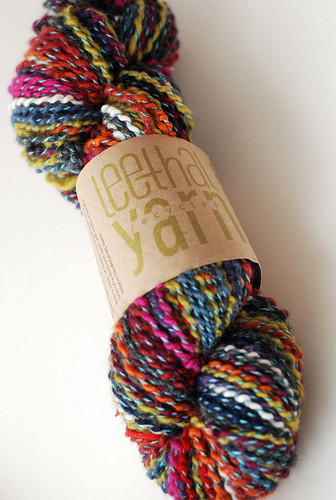
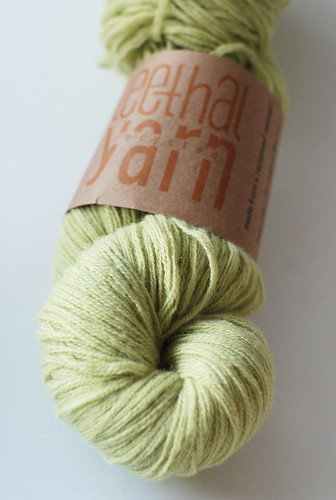
leethal recycled yarn!

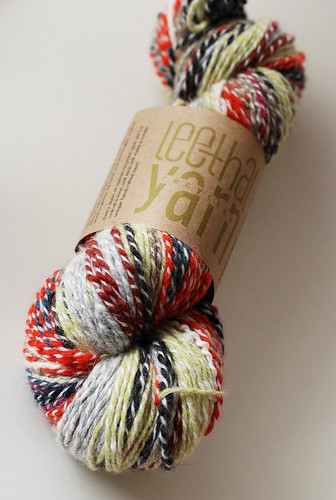
I’m selling skeins of yarn again!

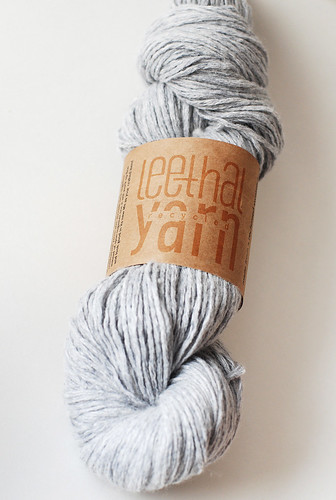
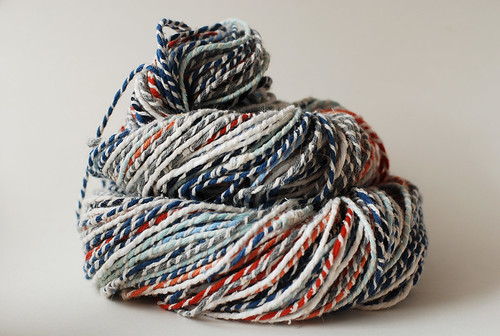
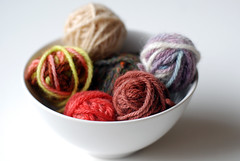
leethal recycled yarn leethal recycled yarn

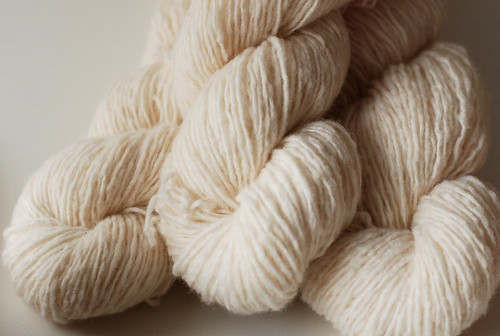
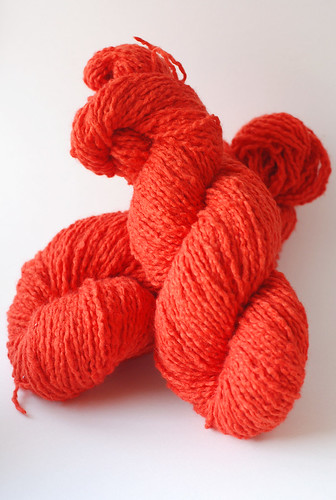
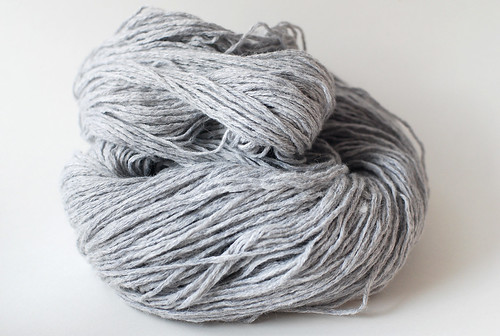
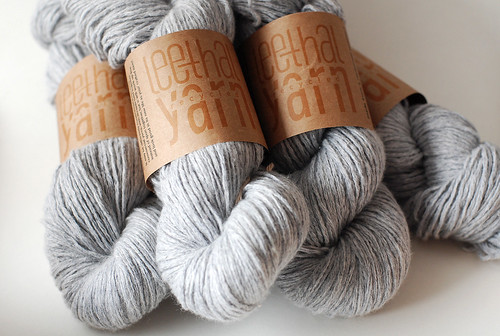
They are recycled yarns, which I’ve unraveled very carefully (minimal knots, usually 1 per skein), washed well, and sometimes spun together. There are plain skeins, which are all wool or wool blends — the white one has some camel hair and the grey has a little cashmere!

leethal recycled yarn

leethal recycled yarn leethal recycled yarn

leethal recycled yarn

There are more than one skein available of almost all of these so you can grab multiples if you want to make something big. They are all priced based on yardage (which relates to time it takes me to unravel and skein, etc) with some variation for different fiber types (some sweaters are harder/take longer).

leethal recycled yarn

And then there are spun skeins!

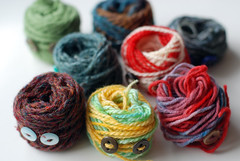
leethal recycled yarn leethal recycled yarn

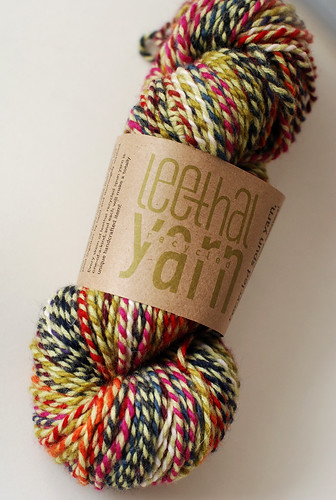
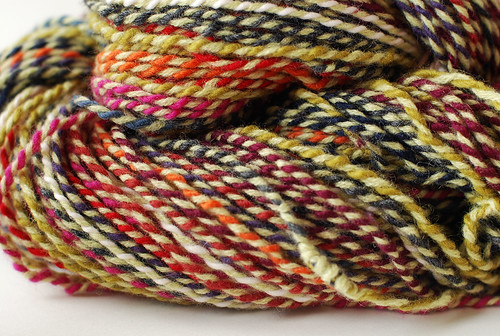
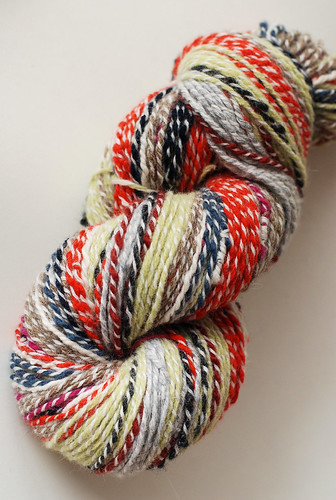
These are different recycled/reclaimed yarns and threads spun and plied together. Each of these has different colored yarn chunks, to make self-striping yarns.

leethal recycled yarn

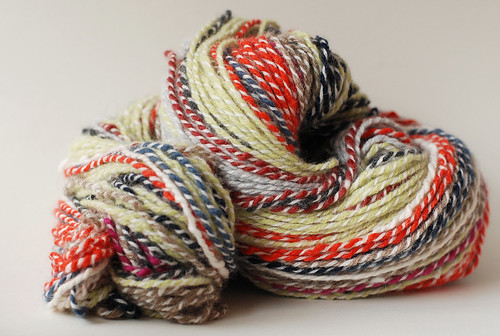
Above is all 100% wool; one strand light green, the other striping colors—it’s bulky weight, or heavy aran.

leethal recycled yarn

This one is so soft! One strand is assorted wools and wool blends, in long striping colors, and the other is white 58% nylon, 36% angora, 5% lambswool, 1% spandex—it has a nice halo from the angora. It’s around aran weight (or heavy worsted).

leethal recycled yarn

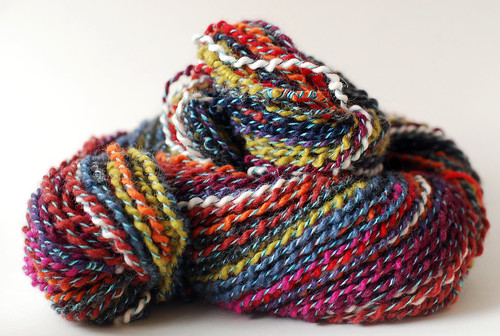
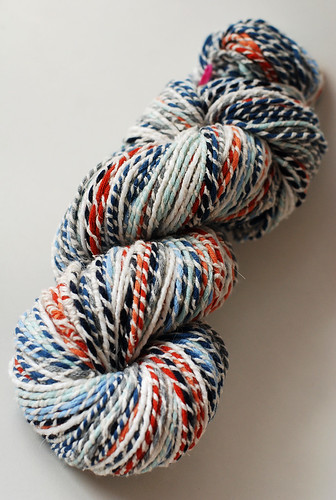
This one was made from a strand of 100% wool yarn, striping colors, plied together with three threads (of unknown fiber content) in blues and variegated colors. It has a kinky, textured look because of how it was plied; it’s a worsted weight, or heavy worsted.

leethal recycled yarn

And lastly, a yarn for knitters who might be allergic to wool: one strand is 100% cotton in striping colors, the other is 55% silk, 20% acrylic, 15% angora, 10% nylon, in white. It’s around aran weight, or heavy worsted.

leethal recycled yarn leethal recycled yarn

I love the spun yarns so much! Where colors change, the other strand wraps around to hide the ends, making fun little blobby bits which look neat when knit up. They are quicker to spin than actual handspun yarn, but they are still totally handmade, spun and plied together by me on my spinning wheel, and it does take awhile (so they are priced according). These skeins are each totally unique so whatever you make from one will be super one-of-a-kind and special 🙂

//platform.instagram.com/en_US/embeds.js

These yarns have been up on etsy for a little while, since September; I instagramed/tweeted but never blogged or sent out a newsletter to let you know about it. September 23rd was the exact release date, which was the Saturday before I started fall term on Monday. I’d meant to blog about it asap but then fall term was total insanity. Five classes and no free time at all, so I never got to it. Sadly, this post is probably too late for holiday shoppers now, but if you get some xmas cash, now you know about it! 😉

kits!kits!

kits! kits!

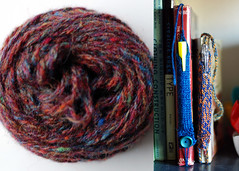
Oh and btw also in my etsy shop are cute little quick knits kits which are also with recycled yarns, some of it hand dyed. I just renewed some listings so there are lots of color options. Make pen bookmarks, light switch plates, lapel pins, cuffs, and ice cream earmuffs!

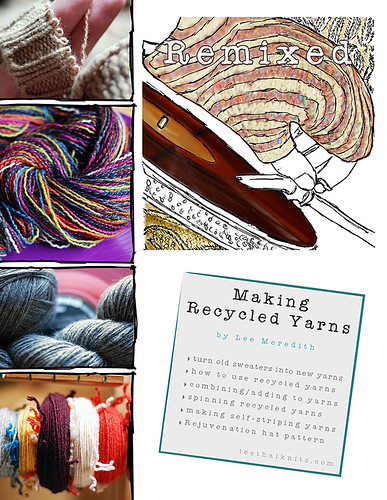
Making Recycled Yarns ebook cover

And a last note: love recycled yarn but would prefer to make it yourself? Well just let me point you to my ebook with everything you need to know about it! It’s on my site, ravelry, and also in the etsy shop now.

leethal Stencils! Four ways to use them…

New thing! In graphic design school, we used a die cutter for a couple of projects, I was really into it, I checked craigslist juuuust in case and happened to find one used for less than half the price of a new one. So I impulsively bought it, started brainstorming what I could use it for, and now I’ve designed and made a bunch of stencils! You can find them in my newly revamped etsy shop here.

leethal pattern stencil

So first, about the stencils: they are made from thermal laminating sheets, run through a laminator with nothing between the layers, so they are basically sheets of plastic. I wanted to use something better for the earth, and/or recycled/reclaimed, but I found that this option makes the best durable, reusable stencils. I played around with reclaimed transparency sheets, but they didn’t cut as nicely and they don’t hold up as well, so this was the best quality option I could come up with. They can be used over and over if you’re gentle with them.

leethal word stencil

I’ve made two different types of stencils so far: words and repeating patterns. There are three of each type (for now, maybe more later!), and since the word stencils kind of fit together, you can get all three in a set if you want. The repeating pattern designs are different from each other; they are just three random things that I love — craft tools, vegetables, and elephants!

leethal pattern stencil

So, now I will go through four different ways you can use the stencils on fabric. I’ve only used them on fabric, so that’s what I’ll show you, but of course you can use the stencils on other things as well. You can stencil them directly onto clothes, like tees or skirts, or onto pieces of fabric which you’ll later sew into things, or on pillowcases, tote bags, etc. I’ll first show each of the four methods with single stencils, then talk about repeats…

leethal pattern stencil leethal pattern stencil

Before we begin, a note about paints. Be sure to read the label of whatever you decide to use. Many fabric paints need to be heat set (by ironing the fabric once it’s dry). Others don’t need heat setting, but must set for 24-72 hours before washing.

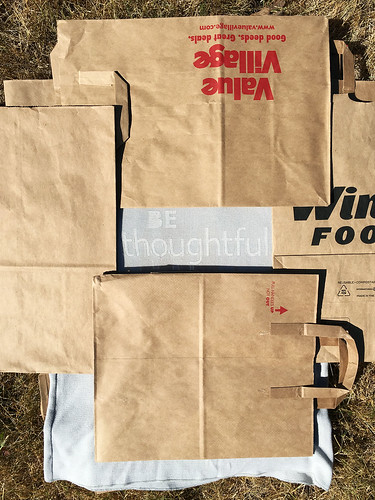
With all methods, it’s highly recommended that you put a piece of cardboard or paper grocery bag or something behind the layer of fabric you’re printing on, so the paint doesn’t bleed through to whatever’s behind it (the back side of the tee, for example, or the tabletop).

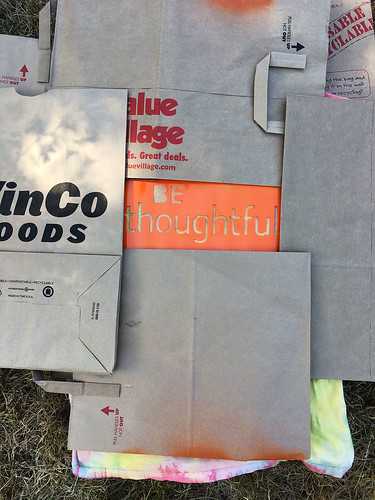
Method #1: spray paint.

leethal word stencil

Main pros of this method: it’s fast and easy. Main cons: it can be kinda blurry, and you need to do it outside or in a garage or something.

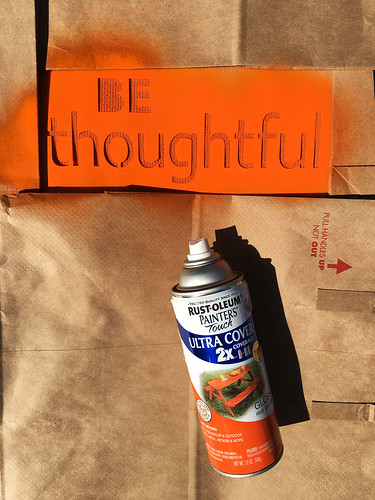
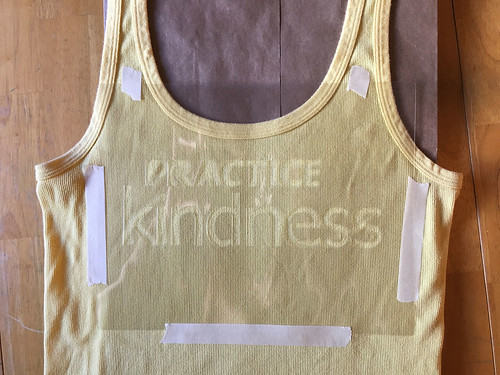
To use a stencil with spray paint, you’ll need to block out the area around the stencil, with paper or cardboard. If you want to be extra safe, tape it to the stencil so the paint can’t leak under…

using leethal stencils using leethal stencils

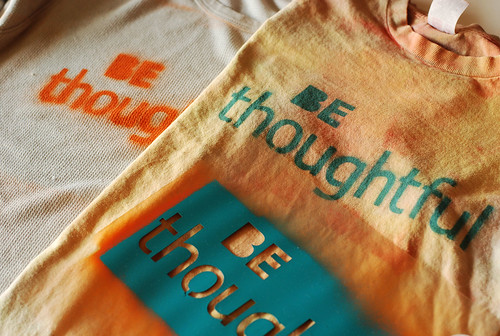
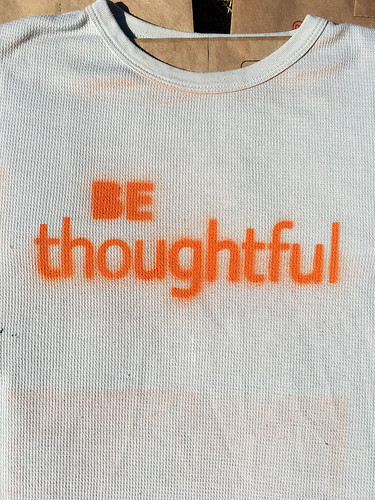
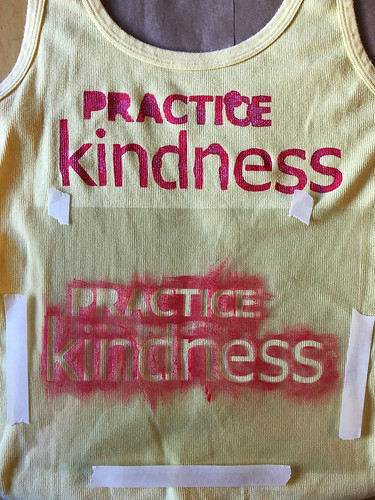
You can see below that the paint did indeed float under a bit with this one, up by the collar, and down below, there are hints of orange. Also, if you want the stenciled image to be sharper, use 2-sided tape on the back of the stencil, to stick it onto the fabric. The closer the stencil is to the fabric, the sharper it’ll be.

using leethal stencils

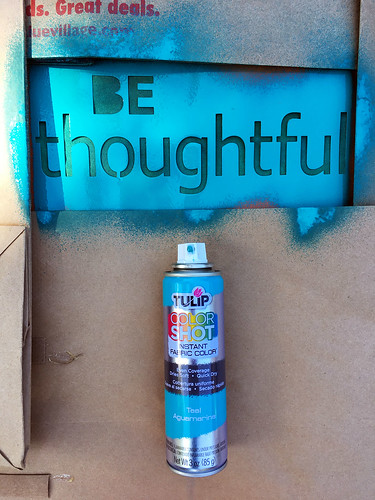
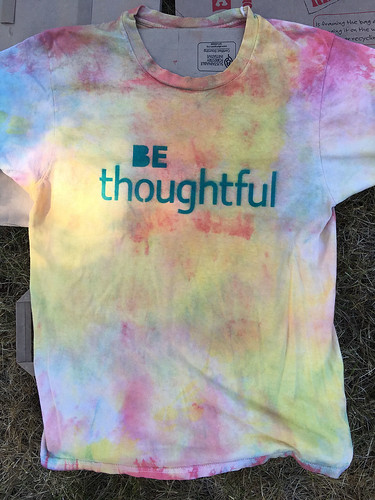
After letting the paint on the stencil dry for a few hours, I used it again with a different kind of spray paint. Above was just regular hardware store spray paint, which does work on fabric and doesn’t wash out, but it can be a weird texture. You can instead buy fabric spray paint, pictured below (bought at a craft store), which feels nicer on fabric, and I think tends to go on a bit smoother, making slightly sharper images.

using leethal stencils using leethal stencils

I painted this the same way as the orange one, no tape on top or bottom, and I think it did come out a bit better, and the paint didn’t leak under the paper at all (but maybe that’s because I held the can a bit closer, or another reason, who knows!).

using leethal stencils

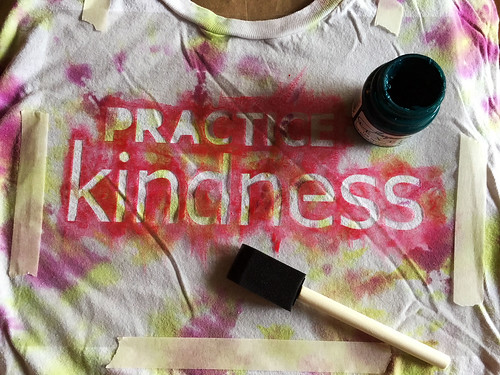
Method #2: sponge brush. (aka foam brush)

using leethal stencils using leethal stencils

Main pros of this method: can look nice and clean if you’re careful, don’t need much space. Main cons: can get blobby if you’re not super careful, not fast.

using leethal stencils

The above stencil is on its second use; the red paint has been dry for several days. For this one I used Jacquard textile color paint. I highly recommend taping down your stencil for this method so it won’t move around.

using leethal stencils using leethal stencils

Hold down the stencil right around where you’re painting as you go, with your non-painting hand. It’s a good idea to also put pieces of 2-sided tape on flappy bits of the stencil, like insides of letters like c, e, n, d, etc, for example, since it’s hard to hold those down with your fingers as you paint. I did not do that here, and I got some unsharp edges but they may have just been a result of hurrying and not being as careful as possible.

using leethal stencils

Always dab the brush up and down, or in from the edges onto the fabric, never into the edges from the fabric. And very important tip (learn from my mistakes): use minimal paint on the brush. Blobs of paint will result in blobby stenciling.

leethal word stencil

That one above turned out pretty well, mostly because I learned from my own mistakes with my first go at it, pictured below… Firstly, I don’t recommend this kind of ribbed knit; the paint went on okay but since I didn’t stretch it while painted, the letters stretch and distort when I wear it. If you do want to stencil onto something stretchy, try to stretch it approx the same amount that it’ll stretch when worn.

using leethal stencils

For this one I used craft store fabric paint, which works fine but since I squeezed it out directly onto my fabric brush (instead of squeezing some onto a plate or something and then dabbing the brush into that), I had some big blobs of paint on my brush…

using leethal stencils

So I ended up with a messy stencil job. Main takeaway about the sponge brush method: don’t rush it! A smaller amount of paint on the brush will take longer to dab onto the fabric thoroughly, but it’ll be worth it for sharp edges!

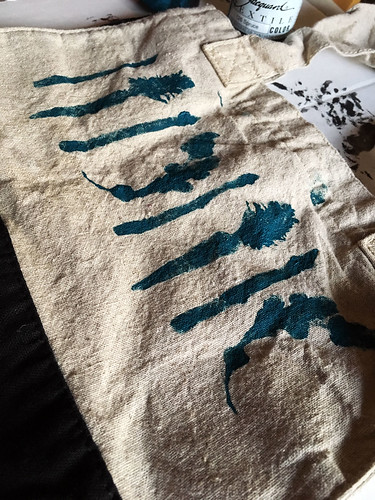
using leethal stencils

I used a sponge brush for this tote bag, which doesn’t lie flat, so I held each part down carefully with my non-painting hand and went slowly, and it turned out well. Note about this method: it would probably work similarly with a normal paintbrush, if that’s all you have and you want to give it a try; just use the same tips about going slowly, dabbing up and down at the stencil edges, etc.

using leethal stencils using leethal stencils

Method #3: fabric markers.

using leethal stencils

Main pros of this method: clean edges, easy to use multiple colors if you want to, don’t need much space. Main cons: filled color can look a bit uneven, somewhat slow (but faster than sponge brush).

leethal word stencil

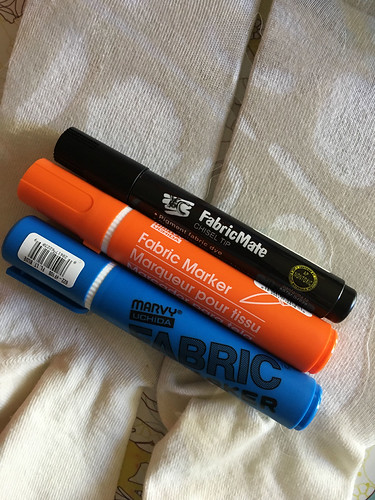
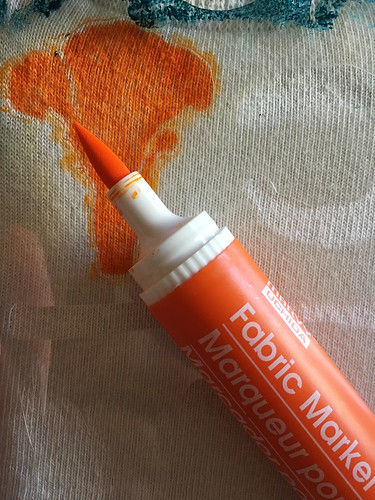
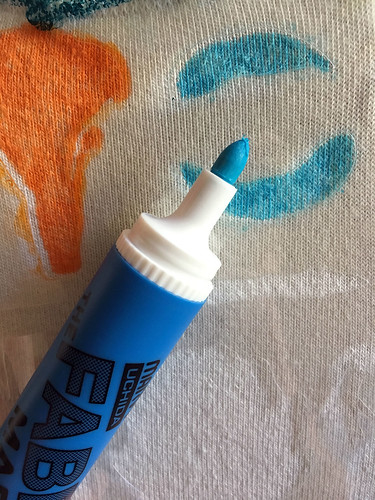
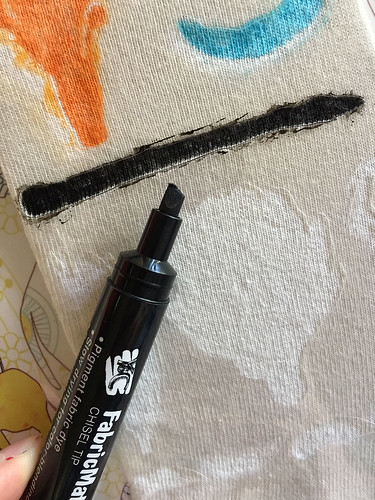
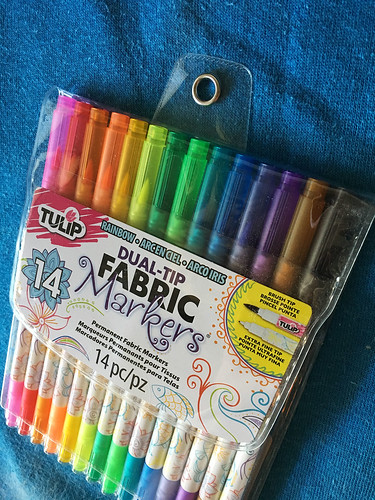
To test out this method, I first bought three different types of markers at the art store — one brush tip, one wide tip, and one chisel tip.

using leethal stencils using leethal stencils

They all worked, but the brush tip was best/easiest. So, I went and bought a whole set of brush tip (actually, they are dual-tip) fabric markers at the craft store.

using leethal stencils using leethal stencils

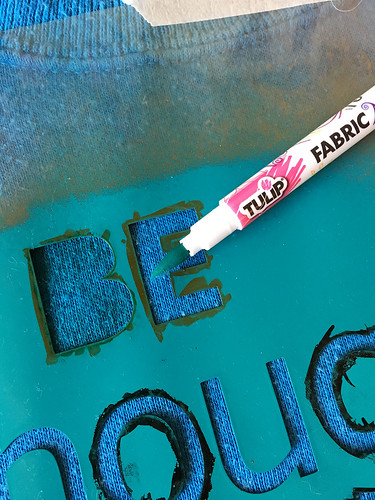
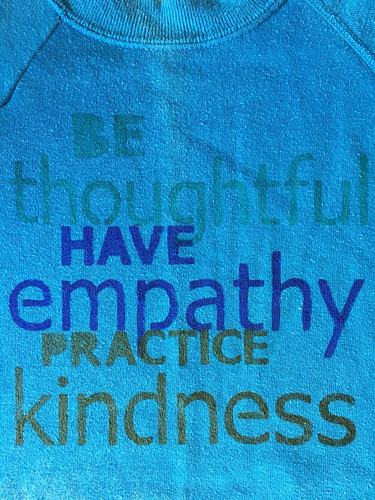
For this method, simply color in the stencil, being careful around the edges so color doesn’t get underneath, holding the stencil down with your non-coloring hand same as with the sponge brush method.

using leethal stencils leethal word stencil

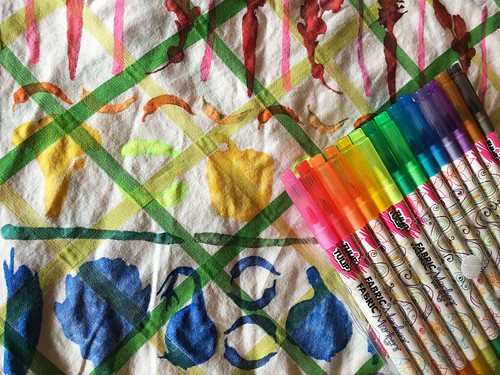
Important note: when I reused a stencil that had been spray painted (and fully dried) it seemed fine, but when I reused one that had dried Jacquard paint on it, the paint bled into the marker color; same for dried fabric marker. So if reusing a stencil, test it out on scrap fabric first, or else choose a marker color that’s the same/similar or will blend well with the dried paint. You can get some really color effects by purposely blending colors from the stencil edges!

using leethal stencils

Method #4: screen print.

using leethal stencils

Main pros of this method: can look very good/clean, the actual printing is quick and you can do multiple prints in a row. Main cons: more tools needed than other methods, and some space, and extra cleanup time.

using leethal stencils

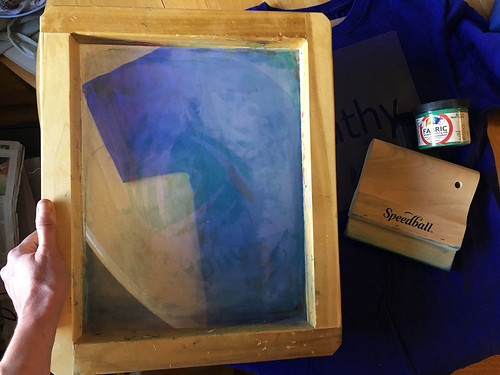
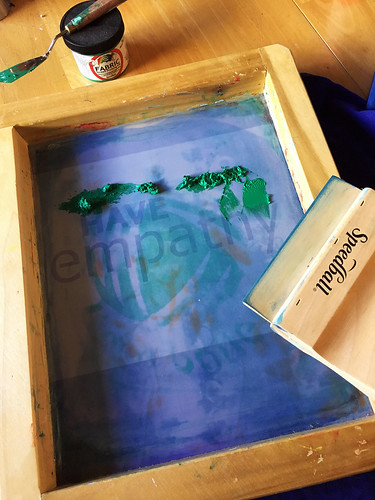
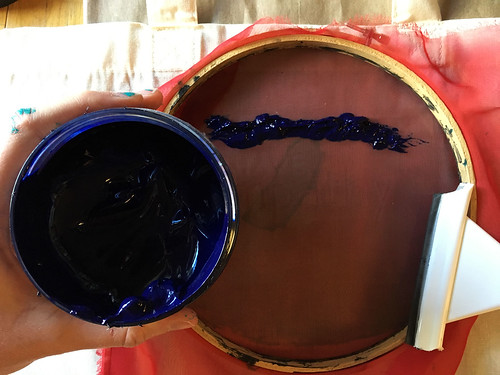
This method works like normal screen printing, but you’ll use a blank screen placed over the stencil. So you need a screen, a screen printing squeegee, a stable surface, and fabric paint that’s meant for screen printing. I also used a palette knife to get the paint from the jar onto the screen. Place the stencil where you want it on the fabric, then carefully place the screen on top. If you want to be extra careful, and/or if you’re using a stencil that doesn’t have much blank space from the image to the outside edges of the stencil sheet, place some thick paper around the sides of the stencil so that you won’t get paint onto the fabric at the edges. (I did not do that in this example, I was just careful to keep the paint within the stencil sheet.) Put some fabric paint in a row along the top, above the stencil image (but not above the actual stencil sheet!).

using leethal stencils

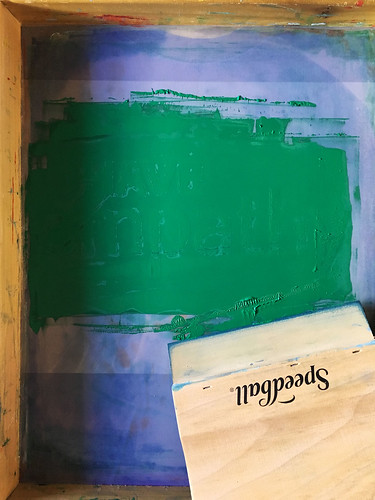
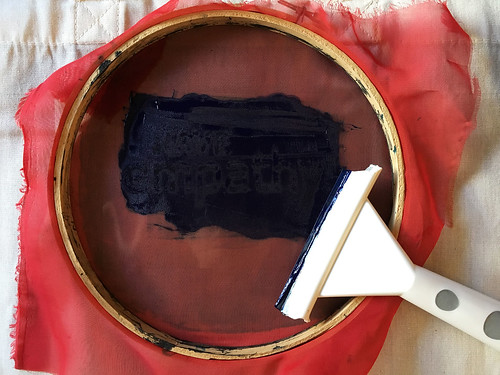
Use the squeegee to pull the paint over the stencil, with pressure to push it through to the fabric. Run it back and forth a few times. Be sure to cover the whole stencil image. I did not do that! I missed the side of the y at the end there. Also, my paint was like ten years old, so it was kinda globby, which I think contributed to how it didn’t cleanly fill in the right side there. The rest of it turned out nice and clean though! If you’re careful, the stencil will be stuck to the screen with paint, and you can set it onto another fabric item and print it again, as long as the stencil doesn’t shift on the screen.

using leethal stencils using leethal stencils

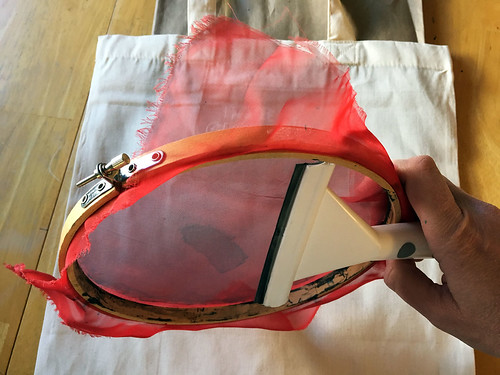
If you want to try out this method with cheaper tools, but potentially slightly messier results, you may be able to use things you already have. You need: an embroidery hoop big enough to fit the stencil, a piece of mesh fabric bigger than the hoop, a squeegee of some kind that can fit in the hoop, and fabric paint. The homemade screen I have is smaller than the stencils, so I used a mini-stencil just to show you. My squeegee is a cheapo (dollar store?) one that I broke the ends off of to make it fit in my hoop. You can also use an old credit card as a squeegee — that actually might be the better option since I think you get cleaner results from a harder squeegee and this one I used is much softer than the screen printing squeegee. The denseness of the mesh fabric will determine how much paint gets through and how clean the print is: denser mesh equals cleaner print. You can also buy screen printing mesh for this.

using leethal stencils

Same steps as above, place stencil, place screen over it, paint goes onto stencil sheet above stencil image.

using leethal stencils

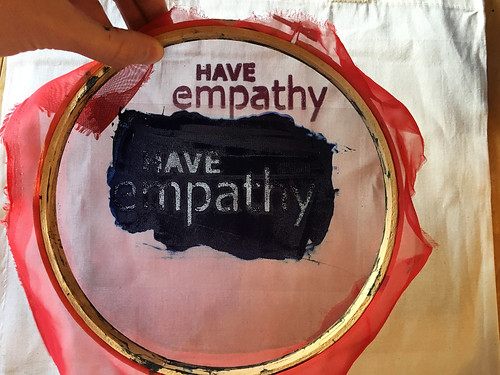
Pull the ink over the stencil.

using leethal stencils

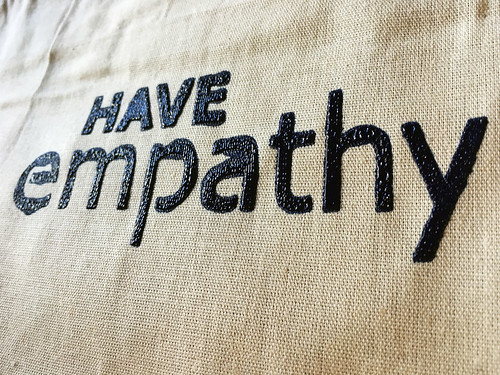
And lift it up to reveal your print! I either used a bit too much paint here, or it’s just that my mesh isn’t dense enough and/or my squeegee is too soft, because my print isn’t super clean.

using leethal stencils

But it looks okay, mostly just a bit thick. Anyway, play around with that if you have a big hoop and some mesh fabric!

using leethal stencils

With repeating stencils, I recommend any but the screen printing method, depending on exactly what you want to do. Screen printing is not recommended for this mostly because it would be difficult to line up the repeats, and you’d need a lot of space. For printing directly onto clothing, the sponge brush or fabric marker methods will give you the most control.

leethal pattern stencil

The sponge brush will take longer because you’ll need to let each repeat dry to the touch before doing the next one, since the stencil will overlap on top of the paint.

using leethal stencils using leethal stencils

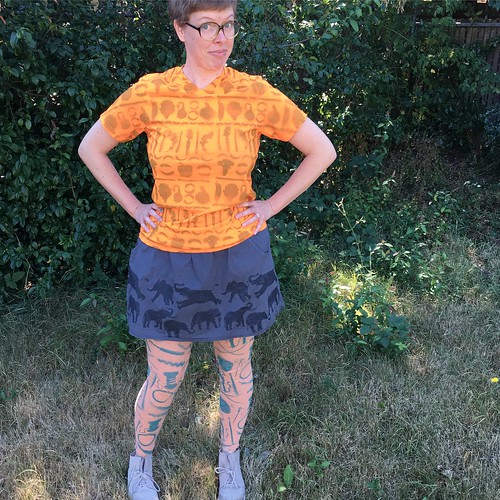
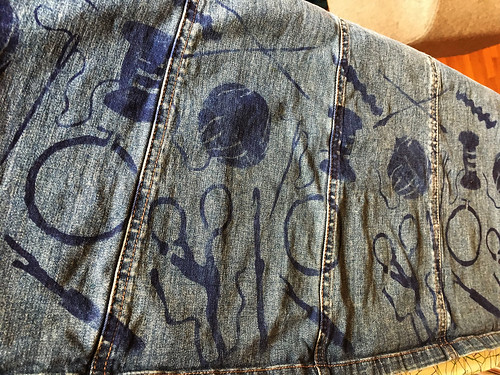
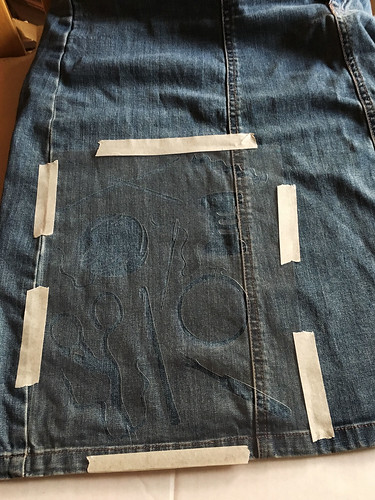
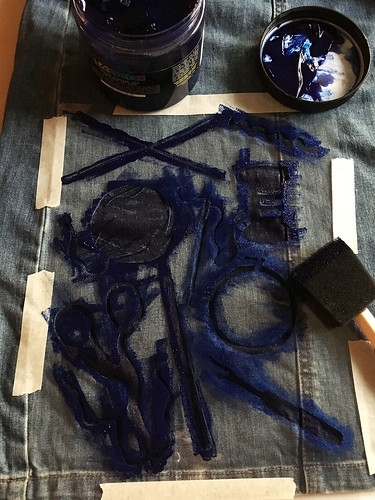
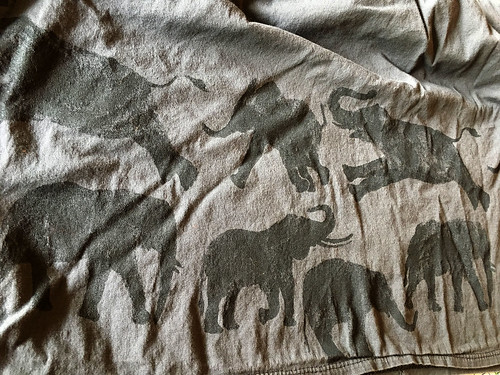
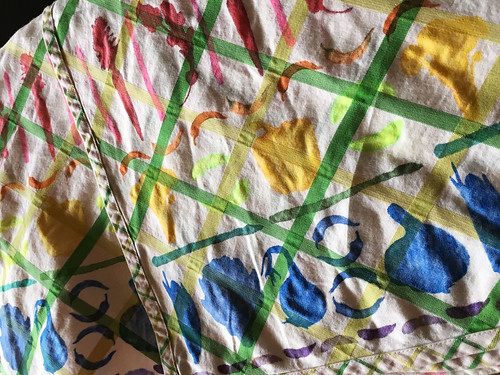
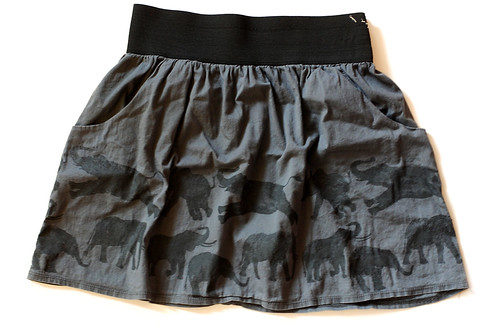
I did the craft tools on the skirt above with screen printing paint, and I sponge brushed the elephants on the skirt below using craft store fabric paint (same type of paint as the red blobby one up above, but I was careful here to limit my paint amounts and I got clean edges).

leethal pattern stencil

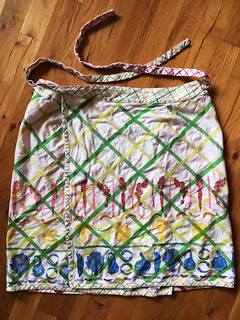
And I did the vegetables below with fabric markers. The marker method goes much faster here because you don’t need to let the paint dry between repeats, since the marker ink isn’t wet enough to be able to smear when you place the stencil overlapping the previous repeat.

leethal pattern stencil

All three of these were repeated along the bottom of the skirts, so only one row of stencil, repeated across. The elephants and rainbow vegetables go all the way around, and the craft tools are only on the front.

leethal pattern stencil leethal pattern stencil

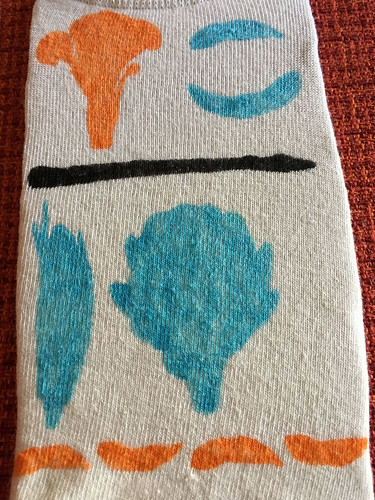
Here’s another example of using a pattern stencil on clothing, but not repeated: I stenciled some of the vegetables onto a pair of socks, pulling the socks over cardboard rectangles so that they were stretched a bit. I stenciled each side, and then turned the sock a bit around the cardboard to get the part that needed to wrap around.

using leethal stencils using leethal stencils

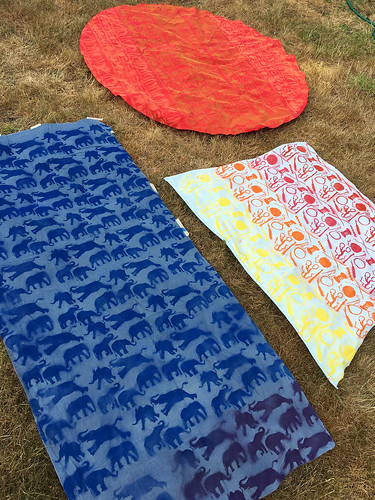
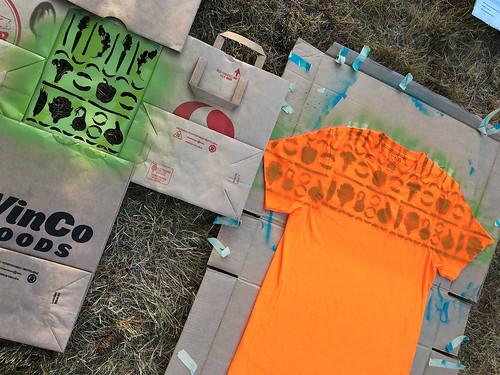
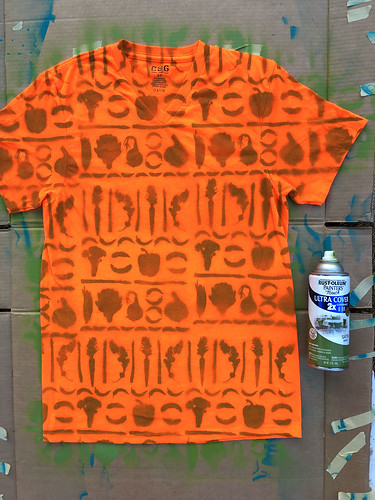
Then there’s the option of stenciling whole pieces of fabric! All the pattern stencils are designed to be able to repeat across and up and down, so they can be all-over patterns. For this, I recommend spray painting, because the other methods would just take so long.

using leethal stencils using leethal stencils

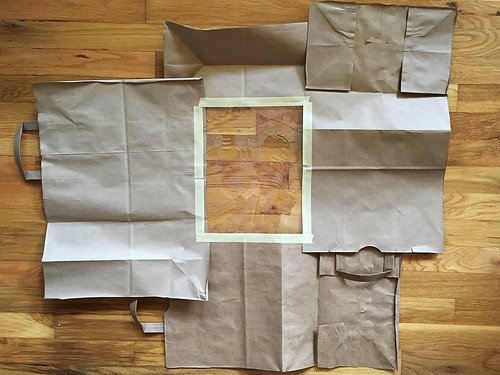
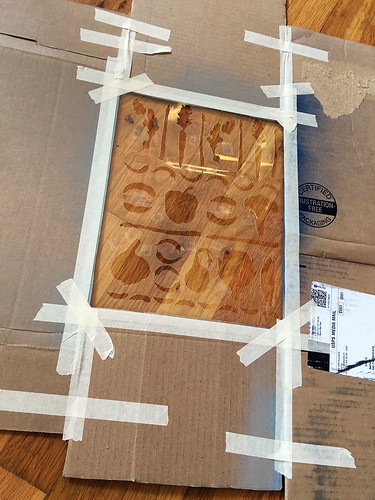
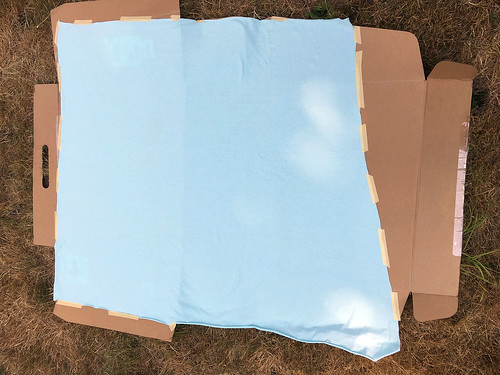
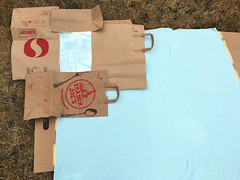
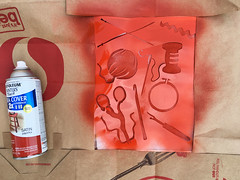
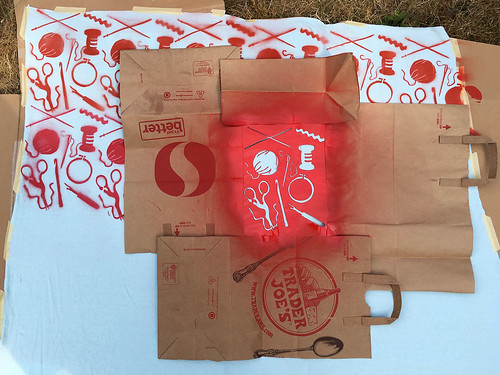
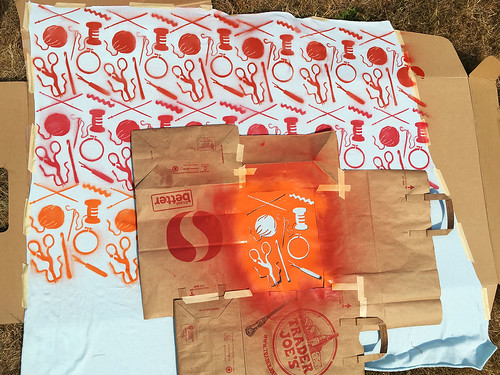
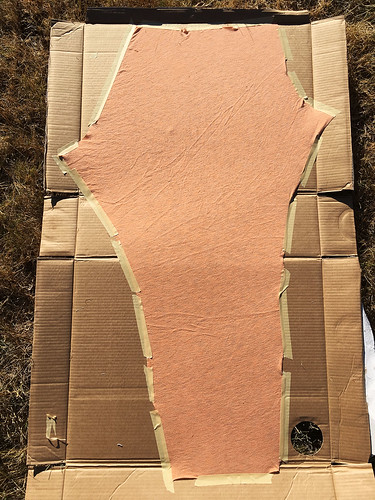
For spray painting with the pattern stencils, you’ll need to securely tape paper or cardboard around all the sides to protect the fabric from the paint.

using leethal stencils

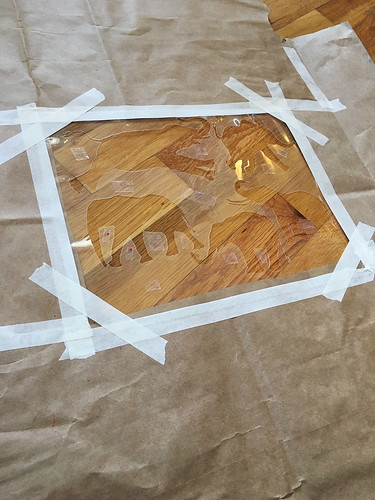
Tape it all together super securely! You don’t want things coming untaped as you’re painting (trust me)! Tape can go over the stencil, just make sure all the holes are clear. Put tape on both sides.

using leethal stencils using leethal stencils

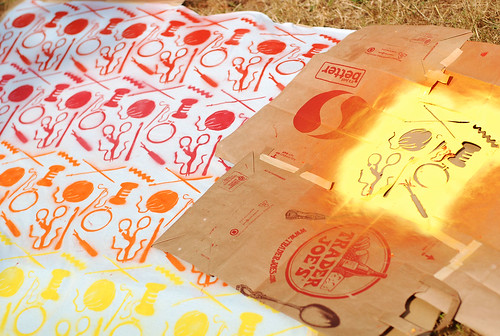
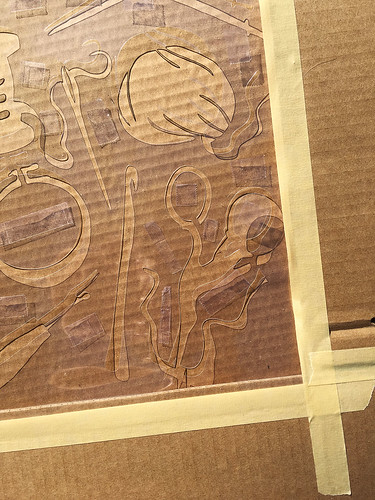
Especially if using cardboard, overlap the stencil over the paper/cardboard with the wrong side of the stencil up, so you’ll place the stencil on the fabric with the stencil side down, touching the fabric. (So the stencil isn’t raised up off the fabric the width of the cardboard.) I recommend putting 2-sided tape on the side that will touch the fabric, just to help it out to touch the fabric as much as possible.

using leethal stencils using leethal stencils

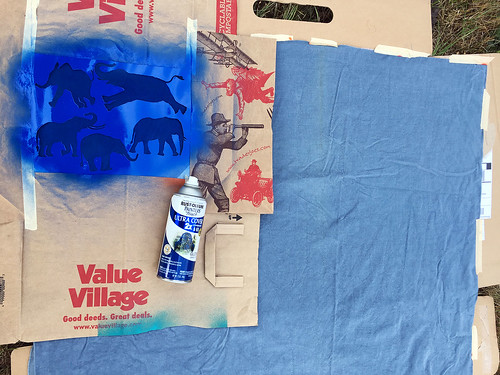
For the cleanest results, tape your fabric down (stretched a bit if it’s stretchy fabric) on a smooth surface, like a large piece of cardboard. Start at one corner, and spray your first repeat:

using leethal stencils

Now, lining up the repeats is a bit tricky since your stencil isn’t see-through anymore, once there’s paint covering it. You’ll need to look through the holes, and also pay attention to where things are lining up, like if the top edge of the paper taped to the stencil lines up with the top edge of the cardboard under the fabric, then keep those lined up as you repeat across the row.

using leethal stencils using leethal stencils

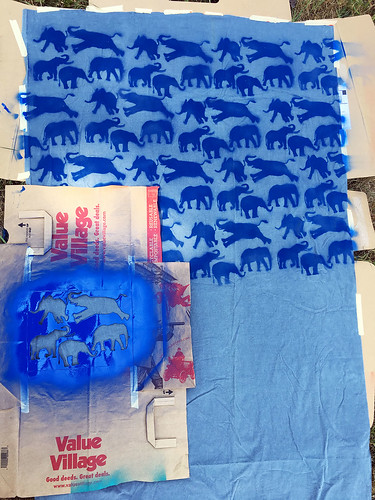
This uses a lot of paint! I ran out of blue and had to finish with purple. For this super long piece, only the top half-ish fit on the cardboard, so that half was taped flat/smooth, and I left the bottom half loose, just smoothed out over the grass. So I can show you the difference between smooth/flat fabric, and not so flat fabric. Here’s the taped down fabric:

using leethal stencils

Versus not taped down. See how much blurrier lots of the edges are:

using leethal stencils

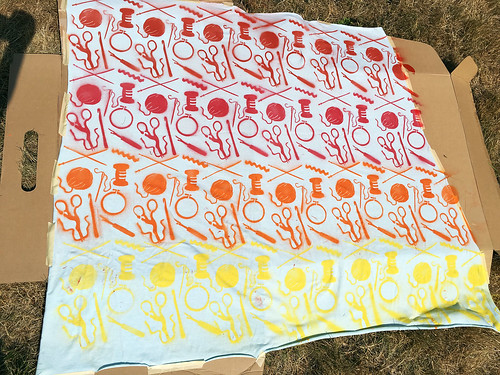
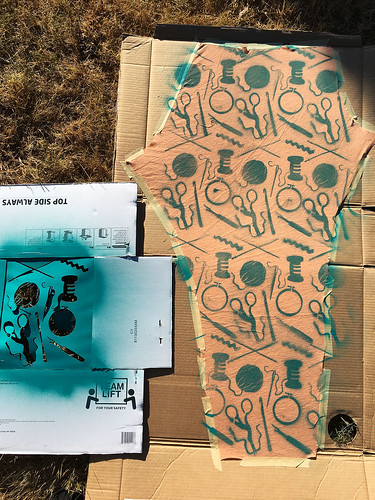
For this next one, I was using a knit fabric, so I stretched it a little, smooth over the cardboard. It went beyond the cardboard there at the bottom, but it’s taped underneath in a couple of spots.

using leethal stencils

Same deal, start at one corner and repeat across the first row. For all of these, I used normal (non-fabric) spray paint.

using leethal stencils using leethal stencils

Next row across, lining the repeats up the best I could…

using leethal stencils

And changing colors here for each row.

using leethal stencils

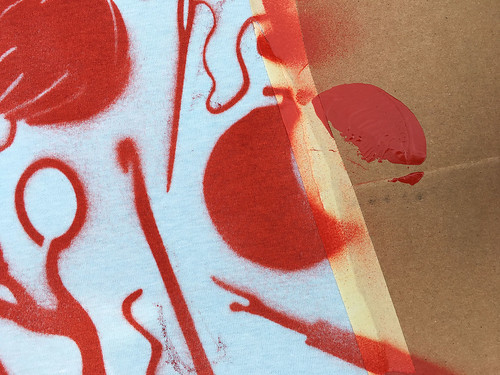
Tip: be extra careful with really floppy stencil bits, like the embroidery hoop on this one. It’s easy to accidentally smudge paint from a floppy bit onto the fabric as you place the stencil, and if you’re reeeaally not careful, things can happen like you see below:

using leethal stencils

Done!

using leethal stencils

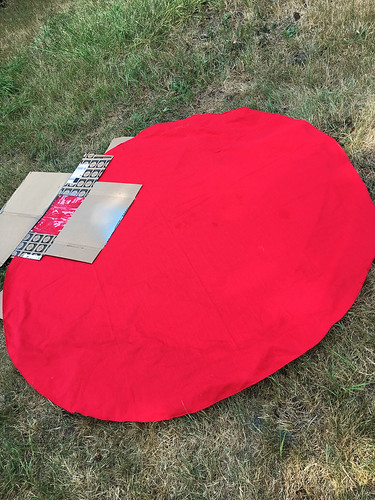
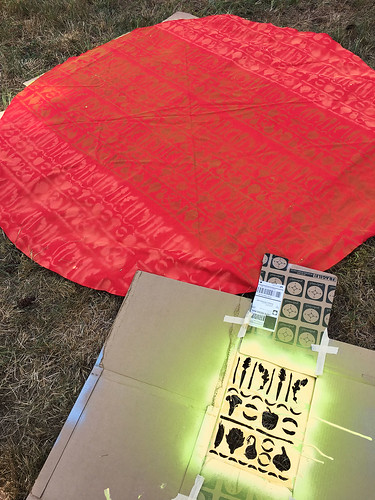
This last one had some issues. The fabric took the paint weird, I don’t know why, it just didn’t show up well at all. I sprayed extra paint on, using up the first color (it wasn’t a fresh can though!) and switching to a higher contrast color for the top and bottom rows. For the circle, I started in the center for the longest row first:

using leethal stencils using leethal stencils

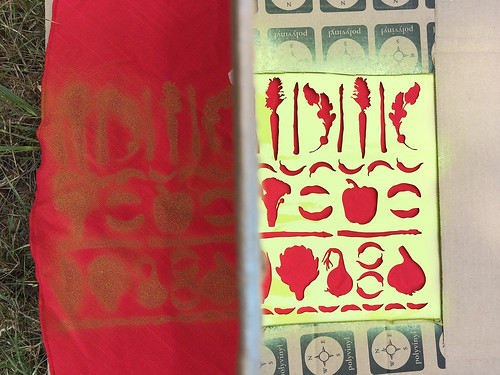
This stencil was taped to cardboard, so to line up the repeats I lifted the one side of the cardboard (the lifted side is the blurry line in the photo below) to see the previous repeat next to the stencil.

using leethal stencils

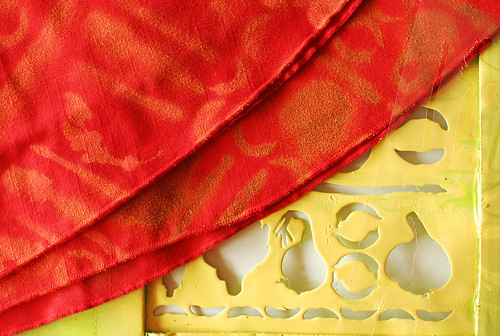
Here’s how this one turned out, kinda subtle but it works:

leethal pattern stencil

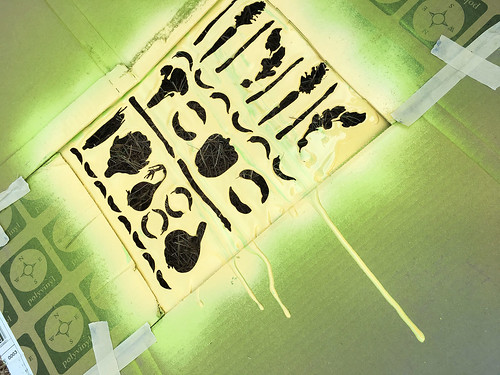
Here’s another big learn from my mistakes tip: the tape on this one started coming undone in the middle of the repeats, and I was trying to fix it, wiggling the stencil around, turning it upside down, and the paint started dripping all over the place, on the front and back sides! This made the stencil unusable until the paint could dry, since there were drips on the side that would touch the fabric. So tape thoroughly, and be careful and gentle as you use the stencil!

using leethal stencils using leethal stencils

Another tip about spray painting a lot of repeats: wear disposable rubber gloves if possible, at least on one hand, because once the paint starts to build up you may want to touch up edges of the stencil, remove globs or blades of grass, etc. If you don’t wear gloves, spray paint is really hard to get off your fingers (TRUST me).

leethal pattern stencil

Here’s a smaller repeat job I did with spray paint — the front side of a tee. Same deal, just line up the repeats across the rows.

using leethal stencils

I did this one before all those others, and I wasn’t as practiced yet at lining up repeats, so learn from my mistakes here too and be careful lining up repeats! 😉

using leethal stencils

Lastly, if you’ll be sewing your stenciled fabric into something, I recommend cutting the pieces out first. That way, you’re not painting anything that won’t get used. I cut out two pieces shaped like this to sew into a pair of leggings:

using leethal stencils using leethal stencils

Same process, tape down the fabric (stretched!) and stencil the repeats to cover the whole piece. For this, I used the fancy fabric spray paint. I was not stingy with my application, especially at the beginning when I was still getting used to it, and I ended up using up the entire can about 1.5 legs in. Had to run to the craft store to buy another can and finish the job. So, I recommend just normal spray paint for large jobs, because they use so much paint, and/or if using the pricier paint, don’t spray more than is needed.

using leethal stencils using leethal stencils

After the paint was dry, I sewed them up and here they are:

leethal pattern stencil leethal pattern stencil

Okay I think this post is long enough!! Comment if you have any questions, and I might add updates to the post with extra tips/notes if things come up. Here’s another link to my etsy shop, where the stencils live 🙂

COLOR SQUARED (my book!!)

My book is out! You can buy it! And color it! It’s fun!

Color Squared

So here’s the concept: every image page (50 of them) is a grid with numbers 1-5, and blank and x. Blank (zero) through 5 are lightest through darkest. x is the background. You color (or draw, or stamp even) however you want, to reveal the image and make a cool looking picture! Here are six more versions of the cover image all done with different coloring methods:

Color Squared Color Squared Color Squared

Color Squared Color Squared Color Squared

The book includes an intro/instructions section, which has recommendations and tips for tools to use, color choices, etc, and steps for a bunch of different coloring methods with pictured samples of each of them, using cropped-in book images like the ones below. And there’s a practice page of mini-grids for you to try out methods first before putting ink to a full page picture. (If you go to the amazon listing and click the cover, you can look inside and scan through some of those intro pages to get a sense of it.)

Color Squared

You can complete a picture (not including the background, which can be colored any way you want) with three to six colored markers—which are a range of light to dark—or with a single drawing pen, or you can kind of mix and match by using drawing methods with colored pens or fine tip markers, or use a black pen then go over it with colors. You can also use tiny stamps, or pencil erasers as stamps. I made some self-portraits to use as avatar images and stuff, to show some different methods. Here are (left to right) a black pen continuous lines method (with color added), a black pen drawn circles method, a three-color layered method with lines, and a stamped method with different sized stamps carved from pencil erasers:

Color Squared style self-portrait

And here is a book image colored with a bunch of different methods:

Color Squared

Want to see the process of a couple of the methods? Here ya go:

Color Squared Color Squared Color Squared

Color Squared Color Squared Color Squared

That’s one of the continuous lines methods. For all of these methods (there are five versions) you’ll draw lines through all the 5 boxes, then you’ll go down through each number and add lines in that number plus all the boxes that already have lines (so, through the 4 boxes and 5s, then through the 3 boxes, and 4s and 5s, and so on) so by the time you’re done, the 5 boxes have lots of lines, making them the darkest, and the 1 boxes each only have one line, making them the lightest.

Here’s the most abstract of all the methods:

Color Squared Color Squared Color Squared

Color Squared Color Squared Color Squared

For that one, you’ll draw shapes around groups of the same number, then color the grouped shapes lightest to darkest. Same as this:

Color Squared

And some coloring method videos! Here’s another of the continuous lines methods:

One of the three-color layered methods:

And a four-color layered method:

And here’s the halftone dots done with a brush tip marker (it’s the same concept as that stamped dots self-portrait above, dots ranging small to large):

For all colored images, seeing the picture is easiest when you hold it away from your eyes or step away from it, and/or squint a little. The pages of the book are made to tear out cleanly, so your favorite pictures can go up on your wall, where you can step far away and see them best! The special tear-out pages are paired with a spine that unfolds open like this, so the pages lie flat while still attached:

Color Squared

As for what to use to do your coloring/drawing, markers that can make both wide and thin lines are perfect, so this means either dual tip markers (fine point & brush or chisel tip) or markers that start wide and come to a point, so you can use the angled side to make wide strokes. You’ll use the wide option for filling in boxes with solid color, so when marker shopping, make sure you don’t choose a chisel tip that’s too wide—PrismaColor chisel tips are like this, significantly wider than the book grid boxes. The markers I used in the book (or for my own book testing), which all work well in different ways, include PrismaColor dual brush/fine point tips, Tombow dual brush/fine point tips, Blick dual brush/chisel tips, and Crayola Super Tips (these work well and are mega affordable, so I recommend getting the box of 50 of these and then supplementing with some pricier individual markers if you’re able to).

markers used for Color Squared markers used for Color Squared

And then for the pen methods, there are so many kinds of nice drawing pens out there; I tried a bunch of different ones and they were mostly great. I recommend getting a variety of thicknesses, at least one .5 mm and one 1 mm. .5 mm is pretty standard; I think Sharpie pens and others that don’t specify a size are around that. Sharpie pens are great, and easy to find at places like Target. 1 mm is wider, sometimes a kind of brush tip pen—these are good for a few of the methods. The books tells you what sizes are best for each method. A finer point, like .2 mm is good to have too, for a few of the options.

My drawing pen collection just grew by six more. Do you have a favorite pen??

And the final category of tool is stamps, if you want to try that out. It’s probably my least favorite to do, but it looks cool. You can use stamps either like colored markers, using ink colors ranging lightest to darkest, or you can do the method shown up there in the self-portrait, one color ink with different stamp sizes. Here’s a closeup of six different ink colors, used with little letter stamps:

Color Squared

How about some background on my book process! Going way way back, to college, about fifteen years ago, I learned about the work of Chuck Close and was super into it. I made a lot of self-portraits in college, and I made a few inspired by Close. First, for a drawing class, with markers and circles drawn in a giant grid:

Color Squared inspiration

(These both show up better as you get farther away from them.) And the second one, for a painting class, with acrylic paint and kind of a double grid:

Color Squared inspiration

These are both BIG pieces. This is all I did with this concept, but I loved it. I think I kind of held onto it in the back of my head for all those years. In 2015, I was beginning to realize that my career as a knit designer was not continuing on in a way that was sustainable, I was beginning to brainstorm other things I could try. Sitting in a movie theater one day—May 24th, to be exact (I kept the ticket stub)—watching Mad Max: Fury Road… my mind tends to wander during action movies, anything with long scenes of little to no dialogue… an idea popped into my head and I fixated on it. The idea was color-by-number posters, in that style. The poster is a big grid with numbers, and the back of the poster has some instructions and a few different ways you can choose to color or draw it in. I think the poster idea was a natural way to think of it first, because the only way I’d done the art in the first place was large wall pieces, so I was thinking large.

I can't show you the project I'm working on but I can show you my pretty pretty tools!

I got started kind of playing around with the idea, still thinking posters, making some test images. This was a slow process, mostly just thinking about it. It was Thanksgiving day 2015 that I colored my first test image, and once I started coloring them and playing with different grid sizes, the idea evolved into a book. I realized it made much more sense as a book than as individual posters. So I kept on playing with test images until the idea was more sorted out, and then in early 2016 I was able to get myself an agent! That was exciting. Once I had an awesome agent, she guided me on how to make a good proposal. I spent several months of early 2016 making a proposal, and then she sent it all around, and the most exciting thing ever happened: more than one publisher was interested! That was a thrilling week of my life, just over one year ago from now. The book ended up being sold to Clarkson Potter and they have been absolutely fantastic to work with and I couldn’t be happier with how the book turned out!! It evolved a ton from my original proposal, but I think everything was for the best and the final product is awesome!

The images are all kind of nostalgia-themed, mostly objects you’d find at a thrift store, or vintage shop, or antique mall, or my house. There are also some images thrown in that are just like reminiscent of the 70s/80s/90s and/or childhood experiences, for any time period; I think it’s a good variety of images. All the book images started out as photographs I took; I then converted them into the grids using a series of manual steps, making artistic choices with each step. Meaning, these aren’t just computer generated grids. I created each of the 50 grid images, choosing every single box number myself, to create the best looking picture.

Color Squared

The back of each page has the answer key image, in a plain black and white grid, so you can flip through the book and see what images are included. But then when you start coloring one it, you can not look at the back, to keep it a mystery until it’s revealed! Once you’ve completed a picture, hold it away from your face, or prop it up and step about ten or more feet away from it, to see it really come into view!

Color Squared

Oh and, if you’re super crafty, you can even use the book grids as cross stitching patterns! This took me forever, and I’ve only finished the image, still have to fill in the background, but it worked well! I did it by choosing a number/color to stitch first, making dots with a sharpie pen every spot that number appears, then stitching every dot spot; repeat for each number.

Color Squared

Okay that’s it for now. I have a book related thing I’ll show you soon, and maybe I’ll do a follow-up post with other people’s feedback and colored pictures. There are already a few instagram posts up! Use #colorsquared if you post about it anywhere, so we can all see your work!

You can buy the book wherever is your favorite place to buy books—it would be great if you support your local bookstore. If they don’t carry it, ask them if they can order it for you, they probably can and maybe they’ll even decide to order an extra copy to put on the shelf! Oh and, word of mouth is like the most important thing with this kind of book, so tell your friends if you like it! Yay! Thanks! Happy coloring! 😀

Book review (& giveaway!): Mosaic & Lace Knits

For years I’ve thought, someday I want to design something that combines slip-stitch colorwork and lace. I’ve done tons of designs with slipped-stitch colorwork, also called mosaic knitting, although I sometimes see mosaic used as something slightly different than most of my slip-stitch designs so I don’t usually use that term, but I’m not really sure what the rules are… anyway! I’ve done a few designs with lace too, and I kind of combined colorwork with lace in Adventure Knitting 2; the only time I’ve really used slip-stitch colorwork and lace (ish) together is Transversal, which does it pretty simply. SO, when I heard Barbara Benson had a book coming out that’s entirely exactly that, I thought it would be something you (my followers) would be totally into! It’s right up my designer alley, but since I’m kinda phasing out from designing this year, I might never actually design something like this, so now someday I can knit something for fun instead, from this book!

MOSAIC & LACE KNITS: 20 Innovative Patterns Combining Slip-Stitc

Mosaic & Lace Knits is a collection of 20 shawls, cowls, scarves, hats, and other accessories, plus an instructional section with the basics of knitting slip stitches, how to read the charts, how to work mosaic in the round, and tips and tricks. It’s full of big, beautiful color photos of all the projects and closeups of stitch patterns.

MOSAIC & LACE KNITS: 20 Innovative Patterns Combining Slip-Stitc

The difficulty level of the patterns varies; there are some simpler patterns in which the mosaic and lace are worked separately, and then you can progress to more complex designs with mosaic and lace worked together.

MOSAIC & LACE KNITS: 20 Innovative Patterns Combining Slip-Stitc

A few of my favorite designs are: Your Princess is in Another Castle (so squishy!)…

MOSAIC & LACE KNITS: 20 Innovative Patterns Combining Slip-Stitc

The Pinwheel Market Bag…

MOSAIC & LACE KNITS: 20 Innovative Patterns Combining Slip-Stitc

The Punctatus Mitts…

MOSAIC & LACE KNITS: 20 Innovative Patterns Combining Slip-Stitc

And the Rhipis shawl. So cool how the same motif is kind of imitated in mosaic and in lace, for very different but cohesive looks.

MOSAIC & LACE KNITS: 20 Innovative Patterns Combining Slip-Stitc

I also love Fractured Helix, the cover shawl.

MOSAIC & LACE KNITS: 20 Innovative Patterns Combining Slip-Stitc

The publisher was so generous to send me a review copy, and also offer a giveaway to a lucky reader! If you want to win a copy of Mosaic & Lace Knits for yourself, leave a comment here sharing either which project from the book you’re most excited to knit, or what two yarn colors you’d like to pair up in a mosaic lace project. I’ll choose a winner at random a week from today — make sure you receive comment replies in your inbox, or check back in to see if you won!

MosaicLace_10

Book review: Norah Gaughan’s Knitted Cable Sourcebook

dsc_6779

I’m so excited that the publisher sent me a review copy of the Knitted Cable Sourcebook, because it instantly became one of my favorite knitting books! I’ve been a fan of Norah Gaughan for years, because her designs are amazing. This new book may seem like just an awesome cable pattern stitch dictionary, which it is…

dsc_6799

…but it’s way more than just that! In addition to 152 cable stitch patterns, written and charted, she explains each cable, how they relate to each other, her design process of how one cable design evolved into another, and other notable tidbits, like reversibility and mirroring. Super helpful stuff for incorporating the cables into improvised projects, or substituting one cable for another.

dsc_6788

The designs go from very basic all the way up to crazy complex, some charts taking up a whole page or spread. The categories include: ropes, braids, and horseshoes (narrow columns); adding breadth (wider columns); expanding (wide columns or panels); finding motifs (different patterns that grew out of one); drawing (elaborate drawings made with cables).

dsc_6810

One of my favorite things is the stockinette stitch equivalent system. Every pattern in the whole book has an “SSE” number – how many stockinette stitches would achieve the same width as the cable – so that you’ll know which cables can be substituted for each other, or so you can more easily design or improvise projects using the cables.

dsc_6784

And lastly, the item patterns! There are 15 sweater and accessory patterns, all of which use cable patterns from the book, but can be switched out for other cables using that SSE system, so cool!!

dsc_6806

These are just a few of my favorites, but because they are designed by Norah Gaughan, I basically love every single design in this book.

dsc_6791

If you get easily bored, this sampler-style sweater is perfect for trying out a bunch of different cables at the same time:

dsc_6787

I think this cardigan is the project I want to knit (and wear!) the most of all. SO COZY!

dsc_6808

So yeah, love this book! Yay!

Personal side-note: I am phasing out of my career as a knit designer, which means I’m looking forward to a future of being able to knit other people’s patterns, for fun, instead of 100% of my knitting time being work knitting. I have big plans, so many sweaters, yes!!

Knit kits! And other stuff! Yeah!

Kits! I now have kits! Just barely in time for last-minute holiday gifting, they are mostly small quick knits…

kits! kits!

All kits are with recycled yarn, some of it hand-dyed, and everything else you need except the needles. There are five different kit types. First, light-switch plate cover (pattern info):

kits!

I just knit up a new one in this tweedy yarn, love it!

kits! kits!

A kit comes with enough yarn, the pattern on cardstock, and a switch plate. Some of the yarns are self-striping, and some are speckley variegated.

kits! kits!

The other two small kits are for pen tube bookmarks (bookmarks that hold a pen on the outside of the book/sketchbook, pattern info) and lapel flowers (pattern info). All the small kits come with a leethalknits I’m a baller pin, just for fun.

kits! kits!

The pen tube bookmark kits come with enough yarn, and a button.

kits!

kits! kits!

And the lapel flower kits come with three tiny balls of yarn, enough to make one flower, and a pin back.

kits!

kits! kits!

And then there are some bigger kits. The cuff kits include eight balls of yarn, each with two buttons, so you can make eight cuffs from the Ten 10 yard Cuffs pattern collection.

kits!

Each kit is packaged in a recycled tennis ball container, and includes the pattern as a high quality booklet with lots of photos of the ten cuff pattern options.

kits! ten 10 yard cuffs!

And lastly, Double Scoops ice cream earmuffs kits! (I used to sell these on my website a few years back.) Each kit includes four mini balls dyed to look like ice cream flavors, a coffee-dyed yarn for the waffle cones, and a larger ball for the lining.

kits!

The earmuffs look like this, but your flavors will be different, and your straps will be the color of the lining:

kits!

There are three kits in the shop, with different flavor options, so you can choose your favorite!

kits!

In other news, the final hat for the VIP club is being knit right now, Jalouse! And I just sent out a new treat for club members, connect-the-dots holiday cards. Pictured below is a couple of cards made by pasting the connect-the-dots print outs onto reclaimed blank greeting cards. If you join the club before the end of the year, you’ll get all six hat patterns, 20% off all my patterns, and the treats!

leethal VIP club hat #6 connect-the-dots holiday cards

Some of the VIP hats could make good last-minute holiday gift knits – the new one is for bulky weight, Provocateur (below, left) is for worsted or aran weight, and Vanguard (below, right) is for any weight, pictured here in bulky:

Provocateur Vanguard

Mokia is for any weight and has tons of options so you can definitely knit up a quick version – below left is an aran weight textured one, and right is a bulky weight cabled one:

Mokia Mokia

Some other patterns that could be fun gift kits are Incenter and Directrix from In Triplicate! The full 9-pattern In Triplicate collection is only available till the end of the year!

Incenter, by Lee Directrix, by Lee

Here are some other patterns of mine that could be perfect for quick gift knits… Twist on a Classic are super quick bulky fingerless mitts, made with stretchy sideways garter stitch and a perpendicular cable, all modularly constructed:

Twist on a Classic mitts

Haka is a fun and easy bulky hat, which can be made with or without the cables:

cabled Haka hat

Lemmy is a larger item but can be made with super mega bulky, like this sample made with three strands of bulky weight held together:

Lemmy

Barry is for any gauge, so it can be made very quickly, like this bulky sample:

Barry in superbulky

All my Remixed patterns are for any gauge, so they can be made pretty quickly; pictured below are samples of Wild is the Wind, Rumours, Rejuvenation, and Either/Or, all in bulky weight:

Wild is the Wind Rumours Rejuvenation Either/Or

Siskiyou isn’t so super quick, but it’s worsted weight so it’s not too bad, and is good for a giftee who likes trees:

Siskiyou hat

For a more specific gift, Warren was designed for the metalhead (or fan of supernatural/evil kinds of stuff) in your life, and Andrew can be made with or without secret hidden pentagrams:

A peek at the Dark Trio pattern coming later this week! There will be an evil version + a chaotic version, for those who don't want satanic symbology on their heads ;) Andrew mitts

Lastly, I have a new fabric design up on Spoonflower! It’s a repeating pattern of interlocked k‘s, hand-drawn:
fabric from my pattern design!

It’s a pattern I designed for my intro to Typography class a few months ago; the final design was filled in, but I scanned it when it was just the outlines, and put it over a yellow background. And I’ll leave you with this in-progress shot of projects from that graphic design class – I’m about a month away from starting the official graphic design program, exciting!

When my teacher saw my rough draft last week he said "I apologize in advance for how much your hand is going to hurt next week." It's now next week and I accept his apology. Still so much more to go!

Happy holidays!